 English
 Español
Damaged skirting board is a common but frustrating discovery. It can appear as a chip near the floor, a scrape from a door handle, a swollen section after a leak, or a loose board that creaks. The good news is that most damage can be repaired. The real decision is whether a specific defect is worth fixing or should trigger a replacement. The answer depends on the depth of the damage, the type of material, and the extent of the affected board. Start with a simple rule: if the damage is shallow and localised, repair it. If the board is water-swollen, cracked through, or part of a wider renovation, replacement is more straightforward and often more cost-effective than a patch job.
What Counts as Damage and Why It Happens
Skirting boards absorb a lot of punishment over time. Understanding the type of damage helps you choose the right fix. Common categories include:
- Surface scratches and scuffs: Often caused by vacuum cleaners, furniture, or shoes. Usually shallow and cosmetic.
- Dents and chips: Deep impacts from heavy objects or careless handling. The damage can reach the substrate, not just the paint.
- Water damage and swelling: Occasionally caused by mopping, leaks, or high humidity. MDF and pine can absorb moisture, causing localised swelling or even mold growth.
- Loose boards: Adhesive can fail, nails can loosen, or the board can detach from uneven walls. This is a structural issue, not just cosmetic.
- Peeling paint and chips: Caused by poor surface preparation, low-quality paint, or a bump to the edge.
Water damage is especially tricky. MDF (Medium - Density Fibreboard) swells permanently once moisture penetrates the fibre core. You cannot sand it back to flat because the fibres will have already expanded and weakened. For that reason, water-damaged MDF is almost always a replacement candidate. On the other hand, pine and solid wood can be sanded back, treated with wood filler, and repainted, as long as the structural integrity remains.
Repair or Replace: A Practical Decision Framework
Here is a quick way to evaluate whether to repair or replace a damaged skirting board. Check the four factors below, and if more than one points to replacement, consider replacing rather than spending time on a repair.
- Depth of damage: If the damage goes deeper than 3 mm (about 1/8 inch), wood filler may be difficult to build up and may crack over time. For deeper damage, replacement is safer.
- Material: MDF does not respond well to filling, especially in areas of high moisture. Pine and solid wood are more forgiving because they accept filler and sanding well.
- Extent: If the damage covers more than 20% of a single board, or if you have multiple boards with similar damage, replacement saves time and ensures a uniform finish.
- Location: Damage in high-visibility areas, such as the main hallway, is more likely to be noticeable if repaired. A visible patch job may be more expensive than simply replacing the board.
When replacement wins, the next step is to choose the right material and size. Boards come in different heights (e.g. 3 inches, 4 inches, 5 inches, 6 inches) and thicknesses (usually 0.5 inch or 0.75 inch). Measure the existing board carefully: height, thickness and profile. If you cannot find an exact match, check whether your local joinery supplier can produce a similar profile. Understanding your skirting board profile makes the replacement process easier.
How to Repair Your Skirting Board: Step-by-Step
Repairing a damaged skirting board is a simple process if you prepare properly. Follow these steps for most shallow damage.
Step 1: Clean and assess the surface
Wipe the area with a damp cloth to remove dust and grime. Then inspect the damage. Is it soft to the touch? If it is, you may have water damage. If it is solid but just chipped, you can proceed with filling.
Step 2: Apply a suitable filler
For shallow scratches and small chips, a two-part epoxy wood filler is best. It is easy to sand and holds up well over time. For larger gaps or deep dents, a two-part filler is more durable. Apply the filler slightly proud of the surface so you have room to sand flat.
Step 3: Sand and shape
Once the filler is fully dry (usually 30-60 minutes), sand with a fine-grit paper (180 to 220 grit). Work carefully along the profile of the board. If your skirting board has a decorative profile, use a piece of sandpaper folded into a shape that matches the profile, or use a small sponge sander. The goal is a smooth, flush surface with no visible seam.
Step 4: Prime and paint
Apply a high-quality primer to the repaired area and allow it to dry. Then paint with the same colour as your skirting board. The primer is essential to prevent the filler from absorbing paint differently from the surrounding area.
Step 5: Seal any gaps
If your skirting board is loose, check the edge where it meets the wall. A bead of adhesive will secure it. If the board is off the wall, you may need to remove it, clean the back, apply a strong adhesive (PVA or wood adhesive), and re-fix it. A proper paint technique on a repaired board ensures a long-lasting finish.
When to Consider Replacement Instead of Repair
Replacing a skirting board is not as difficult as it may seem. If you are replacing a section, you need to carefully cut the old board out, remove the old adhesive, and set the new board in place. Here are the scenarios where replacement is the better choice:
- Water-damaged MDF: Swelling from moisture will not go flat, and it can grow mold inside.
- Large holes or missing chunks: A patch may be visually noticeable, even after painting.
- Multiple boards affected: Filling and painting many boards is time-consuming, while a simple replacement project is often faster.
- Remove for a renovation: If you are redecorating a room, replacing the entire skirting run gives a clean, uniform finish.
When choosing a new board, consider the material. For high-moisture areas (such as kitchens or bathrooms), avoid MDF and choose solid wood or a water-resistant option. For painted areas, primed MDF is affordable and easy to install, but it is not the best choice near water sources. If you need a pre-finished board, choose a PVC-wrapped option, which is non-porous and does not need painting.
Skirting Board Material Comparison for Durable Repairs
| Material | Damage Tolerance | Ease of Repair | Best Use |
|---|---|---|---|
| MDF (Medium-Density Fibreboard) | Low. Swells on water contact, cracks if deep damage. | Low to moderate. Filler and repaint work for shallow dents, but not water-swelling. | Living rooms, bedrooms, and other dry areas with low moisture. |
| Pine (or similar softwood) | Moderate. Scratches can be sanded out; water stains can be treated. | High. Easy to sand, fill, prime and paint. | Any painted area, including stairs and corridors, where paint durability matters. |
| Solid Wood (e.g. oak, walnut) | High. Tolerates impact and moisture better than MDF. Can be sanded back many times. | High. The wood grain may require matching stain, but the repair hides well. | High-traffic areas and spaces where natural wood texture is a design feature. |
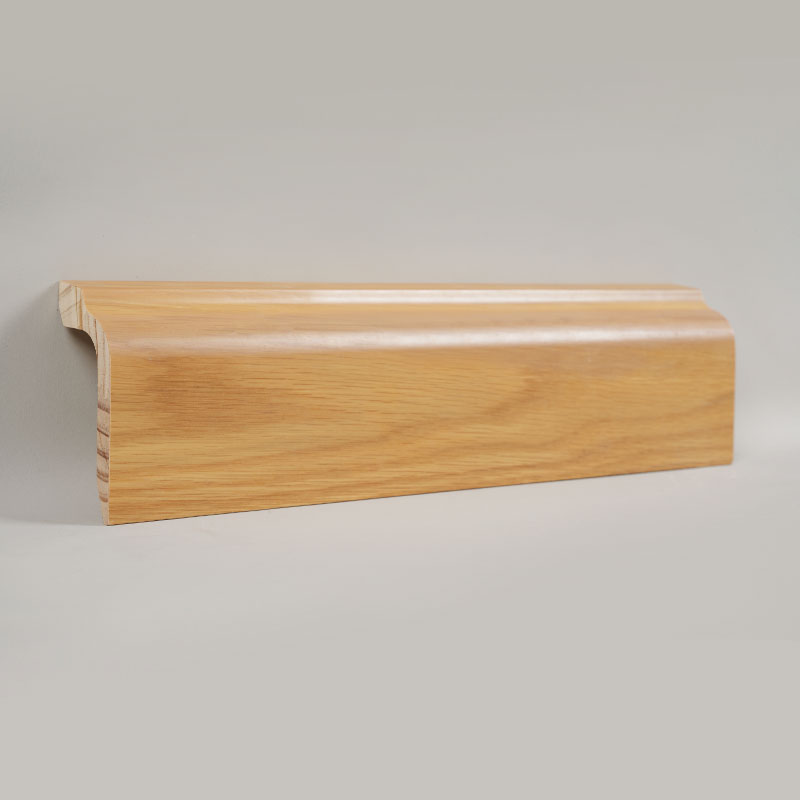
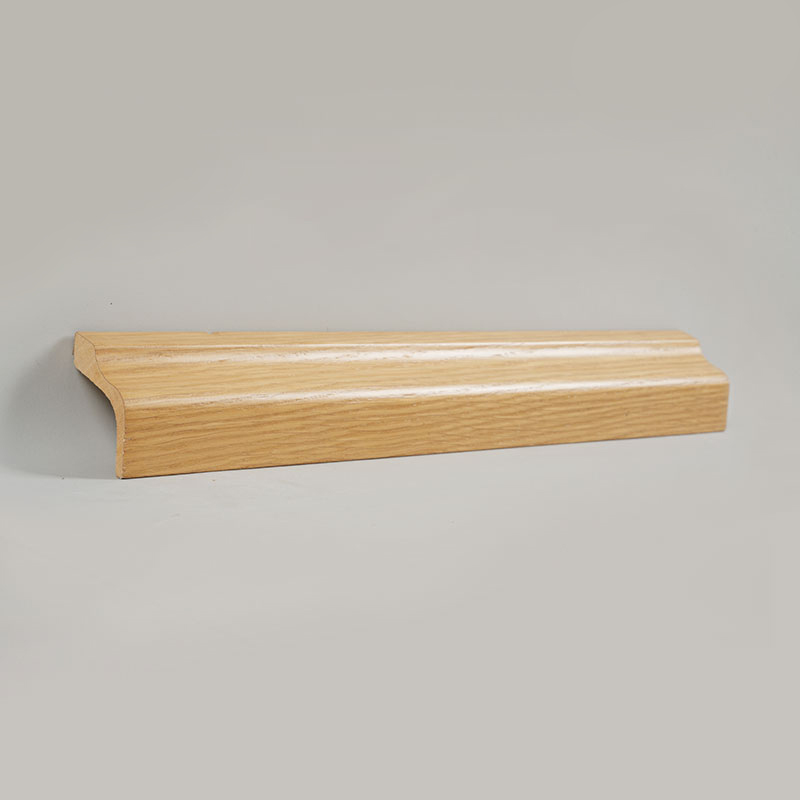
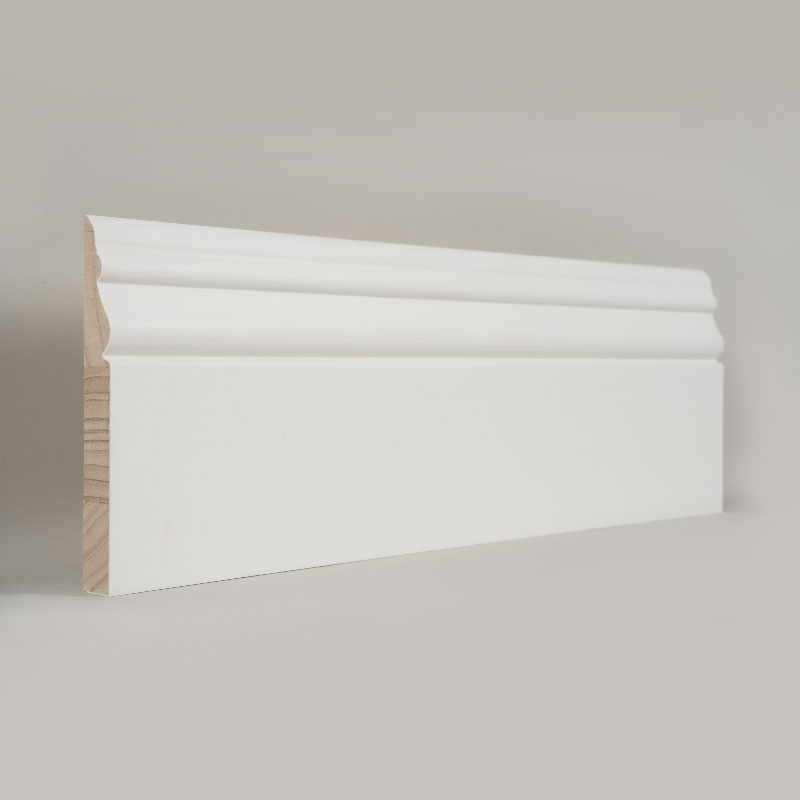
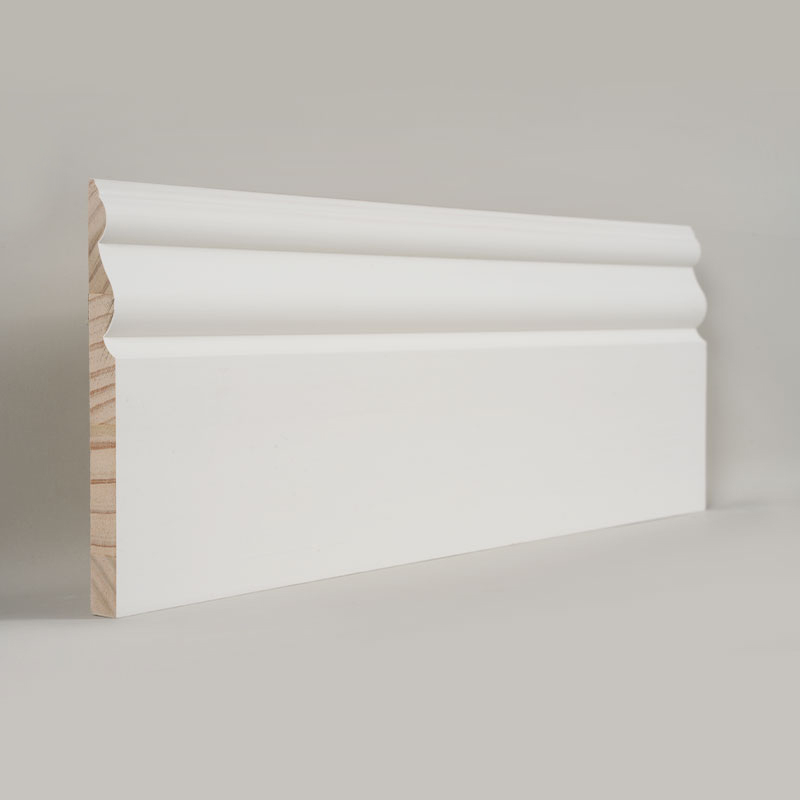
For many homeowners, a primed MDF board is an excellent value option if the room stays dry. A white primed MDF skirting board gives a smooth finish for painting, and it is easy to cut for your room dimensions. If you want a more durable option that handles scrapes and moisture a little better, pine skirting board is the next step up. A white primer pine skirting board is a solid choice for a bare area where you plan to paint. For the highest natural beauty and durability, a solid wood skirting with red oak finish can be used right after installation without painting, but it will need periodic care with furniture polish or occasional repainting if it is scuffed.
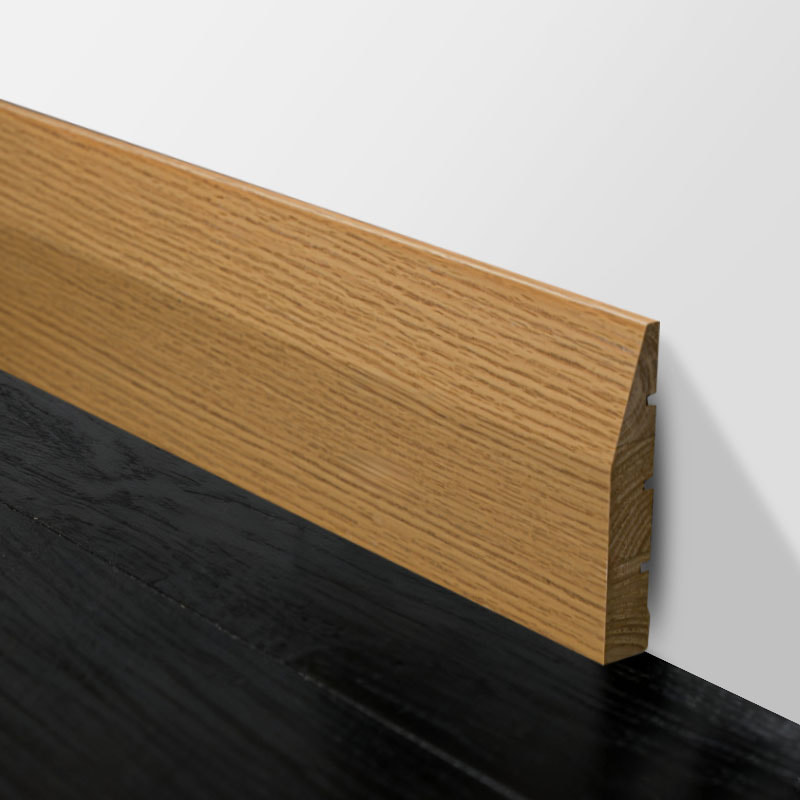 Solid Wood Skirting Board with Red Oak VeneerFeaturing a solid wood core and red oak veneer, this pre-finished skirting board provides natural beauty without painting, though periodic care is needed to maintain its appearance.View Product →
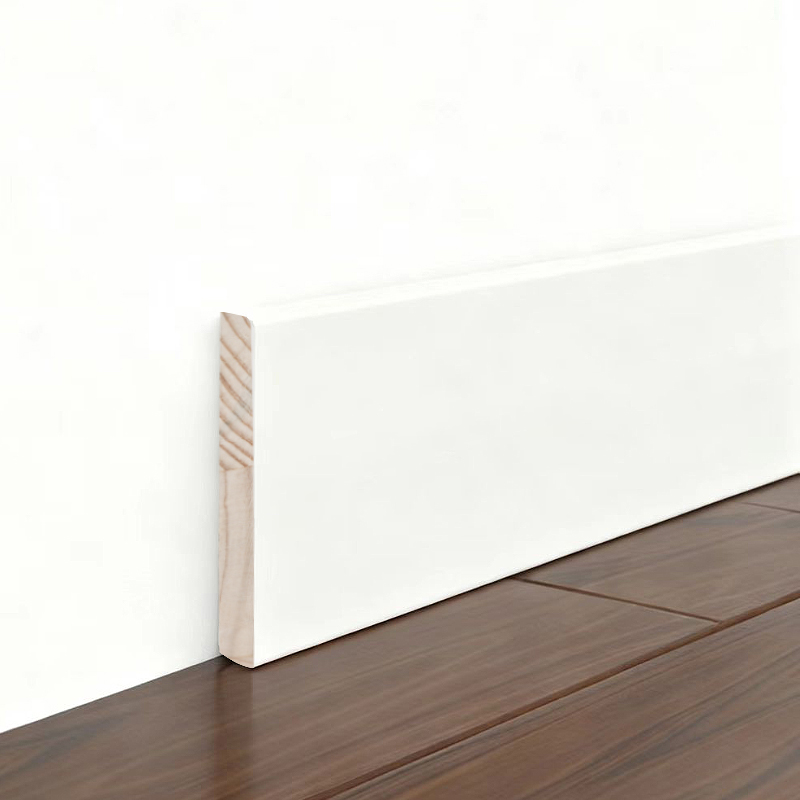 Kiln-Dried Pine Skirting Board with Pearl White FinishMade from stable pine with a filler-primed finish, this skirting board resists moisture and scuffs better than MDF, making it suitable for kitchens, bathrooms, and painted areas.View Product →
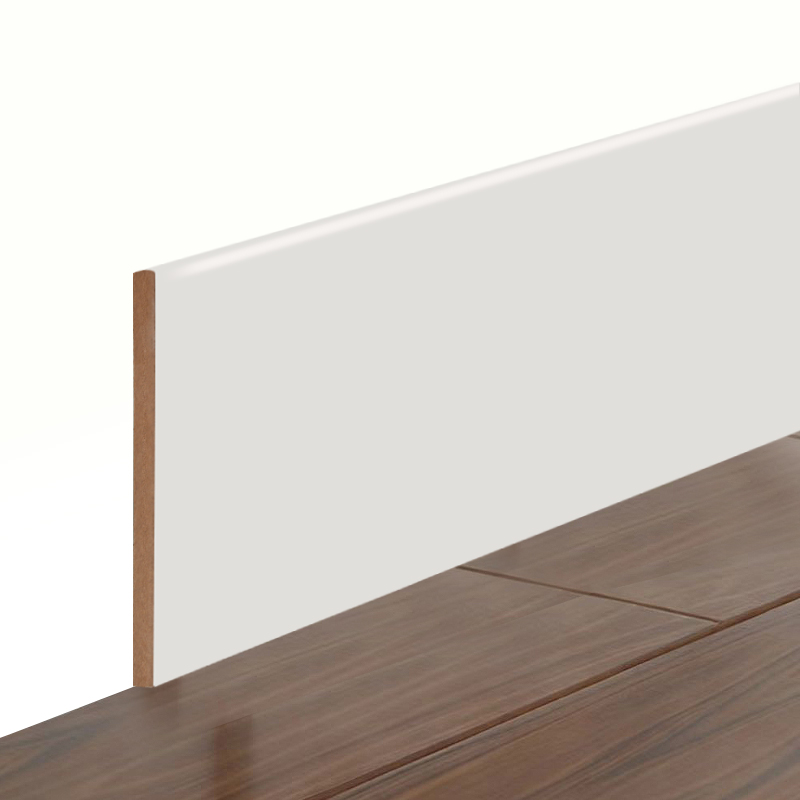 Primed MDF Skirting Board with Pearl White FinishThis MDF skirting board offers a smooth, filler-primed surface that is easy to paint and cut, making it a cost-effective choice for dry rooms and simple interior trim projects.View Product →
Preventing Future Damage
After a repair or replacement, a bit of preventative care will save you time later.
- Fit furniture with soft pads: Chairs, tables, and sofas can leave dents and scratches. Soft felt pads on furniture legs prevent most damage.
- Add door stoppers: A door handle can chip a skirting board. Use a wall-mounted door stopper to prevent the handle from reaching the board.
- Use a damp cloth, not a soaking wet mop: Moisture can seep into the gap between the board and the wall, leading to swelling.
- Check for leaks: If you see a damp patch behind the skirting board, investigate the source (e.g. radiator valves, pipe runs) before sealing.
- Use quality paint with a primer: The primer protects the underlying material from moisture. In kitchens and bathrooms, choose a low-sheen, moisture-resistant paint.
Regular inspection helps catch small problems early. Once a year, run a hand along your skirting boards. Check the top edge for dust and the bottom edge for moisture. If you spot a chip early, it is a thirty-minute repair. If it turns into a full water-damaged section, you may need to replace a board.
Frequently Asked Questions
Q1: Can I fix a dent in a skirting board without replacing it?
Yes, if the dent is shallow and the material is pine or solid wood. Clean the area, build up the dent with a two-part wood filler, let it dry, sand flush, and then prime and paint. For MDF, a shallow dent can also be filled, but you must be careful that moisture does not get in later.
Q2: How do I repair a swollen skirting board from water damage?
If the board is MDF, replacement is the only reliable option. Remove the swollen section, check for leaks behind it, and install a new board. For pine or solid wood, you may be able to dry the board, plane or sand the swollen area, and then repaint. However, if the swelling is severe, the wood may have weakened, and replacement is still the best approach.
Q3: What is the best wood filler for skirting board repair?
A two-part epoxy wood filler is the most durable option. It dries hard, sands easily, and does not shrink much. For small scratches, you can use a standard cellulose filler, but it will not be as tough as the epoxy type.
Q4: Should I replace the whole skirting board if one section is damaged?
If the damage is isolated and small, a repair is fine. If the board is over 6 feet long and the damage is in the middle, you can cut out the damaged section and insert a new piece using a scarf joint. If the damage is in a corner, it is often easier to remove the entire board and fit a new one.
Q5: Can I use caulk to hide damage before painting?
Caulk is not a structural filler. It is too soft and will crack or sink over time. Use wood filler for any dents or chips, and use caulk only for the gap between the board and the wall at the top edge.