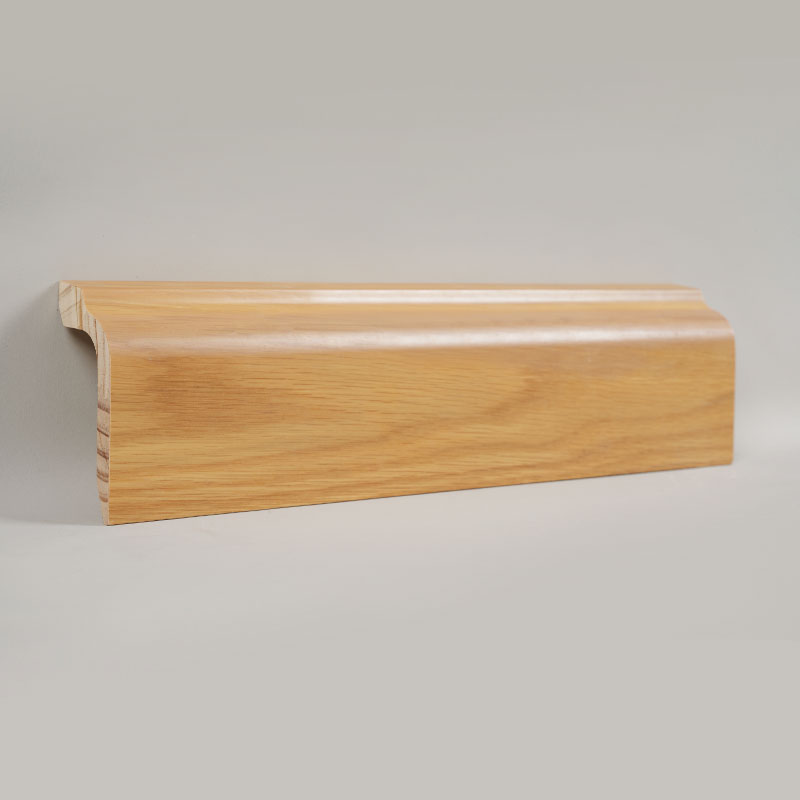
Pine Wood Skirting Board (Wrapped with White Oak Veneer + Paint) - Oak Color 1 3/5"x3 5/9"
Specifications mm Length 2440 Width 90 Thickness 41 Core material Radiata pine Surface Tr...
View More →HUICHENG DECOR / PRODUCT TOPICS
White Oak Wood Trim is a premium hardwood decorative component featuring natural grain patterns, durability, and a refined appearance. It is widely applied in residential, commercial, and hospitality interior projects, including wall decoration, flooring transitions, cabinetry details, and architectural finishing elements. Different surface treatments and profile designs can meet diverse design requirements.
PRODUCT CONNECTIONS
Specifications mm Length 2440 Width 90 Thickness 41 Core material Radiata pine Surface Tr...
View More →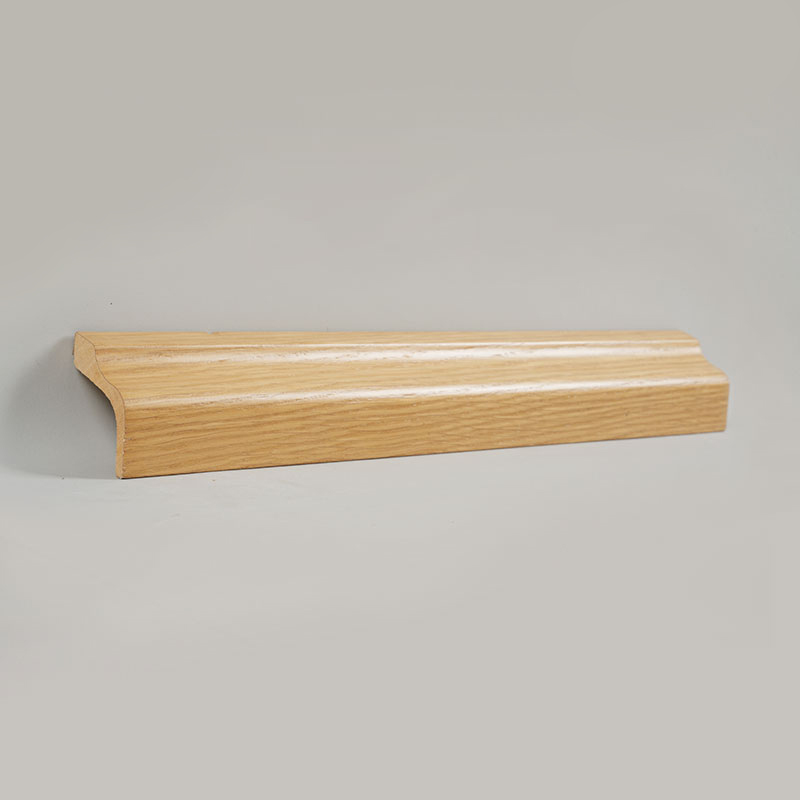
Specifications mm Length 2440 Width 55 Thickness 38 Core material Radiata pine Surface Tr...
View More →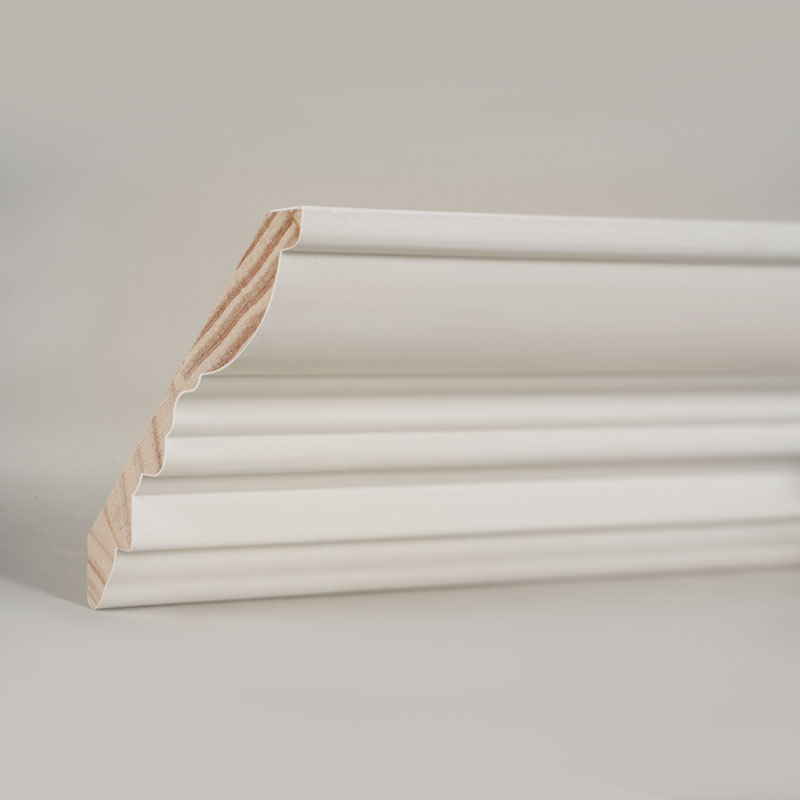
Specifications mm Length 2440 Width 115 Thickness 15 Core material Radiata pine Surface T...
View More →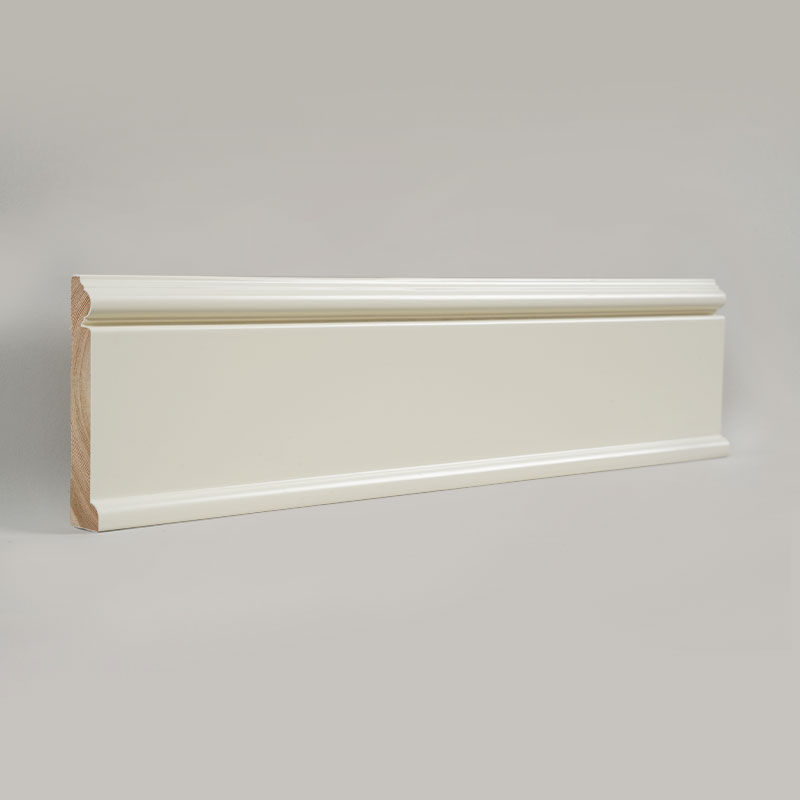
Specifications mm Length 2400 Width 100 Thickness 21.5 Core material White pine Surface T...
View More →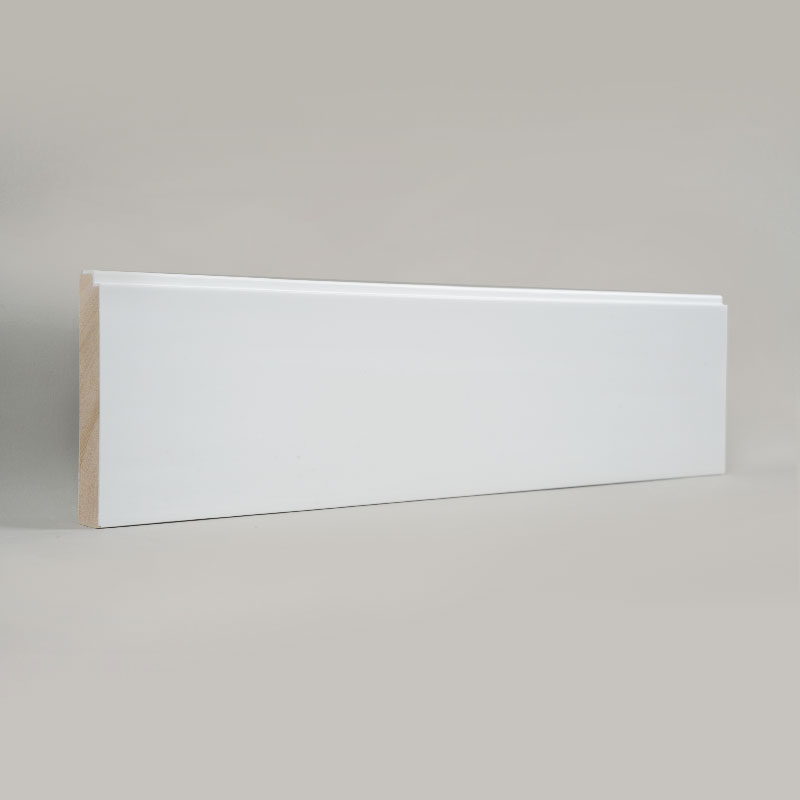
Specifications mm Length 2400 Width 100 Thickness 15 Core material White pine Surface Tre...
View More →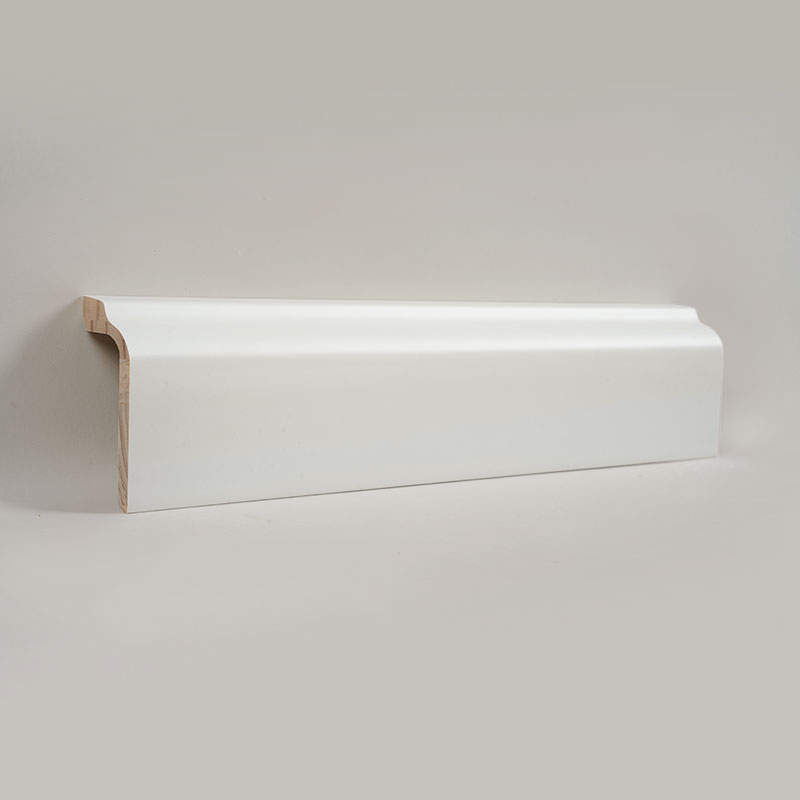
Specifications mm Length 2440 Width 90 Thickness 41 Core material Radiata pine Surface Tr...
View More →TOPIC OVERVIEW
Key considerations for material selection, profile design and project planning.
White oak wood trim refers to skirting, casings, mouldings, stair parts and floor transition pieces made from the white oak group of hardwoods, most commonly Quercus alba and closely related species. The timber is dense, fine to medium in texture and light to medium brown in colour, which makes it a standard choice for interiors that show natural grain under oil, lacquer or stain.
Compared with painted softwood or fibreboard trim, white oak offers a harder surface and a more durable edge. It is usually specified where trim must match oak flooring, stairs or furniture, or where a clear finish is part of the design. This page covers the wood characteristics, forms, finishes and sourcing points that buyers compare before placing an order.
High density resists knocks and wear at skirting height, stair edges and door surrounds.
Tyloses block the vessels in the heartwood, giving better moisture tolerance than open-pored oaks.
Plain sawn faces show a cathedral pattern, while quarter sawn faces show ray fleck and straight lines.
Properly kiln-dried oak holds its shape well, provided it is acclimatised and sealed on all faces.
Cuts clean with sharp carbide tooling and accepts oil, lacquer and stain evenly when prepared correctly.
Natural tannins can react with iron and water to leave dark marks, so fixings and cleaning tools need attention.
How the log is cut changes the look and the movement of the finished profile. The diagram shows two common methods, and buyers can specify one or accept a mix depending on budget and style.
Cut tangent to the rings. Produces a lively cathedral figure and is the most economical use of the log.
Cut along the radius. Gives straight grain, visible ray fleck and generally lower seasonal movement.
Cut between the two methods. Produces a linear grain with little fleck, often chosen for a quiet, modern look.
White oak trim is supplied in several constructions. The choice affects appearance, cost, stability and the way the profile is finished at the factory.
| Aspect | Solid One-Piece | Finger Jointed | Veneer Wrapped on Core |
|---|---|---|---|
| Appearance under clear finish | Continuous natural grain | Joint lines visible | Consistent veneer grain |
| Material use | High, needs long clear boards | Efficient, uses short sections | Efficient, thin oak face only |
| Dimensional stability | Depends on drying and cut | Good when well made | Good, stable core |
| Profile detail | Full depth detail | Full depth detail | Suited to wrapped profiles |
| Typical use | Stair nosing, handrails | Painted or stained trim | Skirting and casings in bulk |
| Aspect | White Oak | Red Oak | Pine | Painted MDF |
|---|---|---|---|---|
| Colour tone | Light to medium brown, olive undertone | Pinkish to reddish brown | Pale cream | Painted colour |
| Pore structure | Closed in heartwood | Open | Resinous softwood | Not applicable |
| Relative hardness | High | High | Low to medium | Medium surface |
| Moisture tolerance | Better among oaks | Lower | Moderate | Depends on board type |
| Staining response | Even, rich tone | Absorbs readily | Can be uneven | Not stained |
| Typical use | Clear, oiled or stained trim | Stained trim | Painted trim | Painted trim |
Hard-wearing edges that match oak stair treads and risers.
Wall-base trim that matches or complements oak floors.
Reducers, end caps and T-shaped pieces between oak flooring and other surfaces.
Solid sections that handle regular hand contact.
Stained or oiled surrounds for a natural interior.
Rails and battens for feature walls and wainscot layouts.
Leave bundles in the room before cutting, so the oak reaches the indoor humidity level.
Dense oak can split when pinned. Pre-drill, and use coated or stainless fixings to avoid black marks from iron reacting with tannin.
Hard oak dulls tools quickly. A sharp fine-tooth carbide blade gives clean mitres without burning.
Coat the back and cut ends as well as the visible face to balance moisture movement.
Use a soft cloth and a cleaner suited to the finish. Avoid steel wool, which can leave iron particles that stain the wood.
The term covers the white oak group, led by Quercus alba and several related species with similar structure. Names vary by region, so a written species statement from the supplier is the safest reference.
White oak usually has a more neutral to olive tone and closed pores in the heartwood, while red oak tends to be pinker with open pores. Appearance alone is not fully reliable, so rely on supplier documentation.
Its closed pores make it more tolerant of moisture than many other oaks, but it remains an interior material. Seal every face and keep it clear of standing water.
Oak tannins react with iron in the presence of moisture. Use coated or stainless fixings, and avoid steel wool or damp steel tools on the surface.
Yes, but the open grain texture remains visible unless a grain filler is applied before priming. If a smooth painted look is the only goal, other substrates are often more economical.
Compare finished samples against the floor under the actual room lighting, and allow for batch variation. Ordering floor and trim from the same species group and finish system helps.
It offers a consistent oak face on a stable core and uses less solid timber. It suits long runs of skirting and casings, while solid sections are preferred for stair edges and handrails.
It is harder than softwood, so sharp carbide tooling and pre-drilling are advisable. With these in place, clean mitres and tight joints are achievable.
Most clear finishes and bare oak deepen gradually with light exposure, and oil finishes can add a warmer tone. Test the chosen finish on a sample and keep it for comparison.
Provide the profile drawing, length, quantity, cut type, grade, construction form, finish, packaging needs and destination. A photo of the flooring or furniture to be matched also helps.

ABOUT THE MANUFACTURER
Huzhou Huicheng Home Technology Co., Ltd. is China wholesale White Oak Wood Trim manufacturers and White Oak Wood Trim suppliers, manufactures wooden skirting boards, crown mouldings, wooden acoustic wall panels, White Oak Wood Trim and customized decorative mouldings. Founded in 2002 in Nanxun, Huzhou, known as the Capital of Wooden Flooring, the company supplies eco-friendly wood products to customers worldwide.
With precision moulds, CNC machining and in-house quality inspection, the team can reproduce complex European, American, French and modern minimalist profiles and discuss material, dimension and surface treatment requirements for each project.
FROM DRAWING TO DELIVERY
A coordinated workflow covers profile development, machining, surface finishing and inspection, so specifications stay consistent from sample to bulk order.
OEM drawing processing and ODM design support, backed by precision moulds and CNC machining, turn a cross-section into a production profile.
Solid wood and MDF substrates are machined to shape, with wood veneer or PVC wrapping applied where a different surface is required.
An automated putty coating line, UV vacuum spraying and UV printing roll coating deliver filler-primed, painted or printed surfaces.
Finished profiles are checked, packed and stored in the company warehouses, then prepared for domestic and export shipment.
MANUFACTURING & SERVICE
From profile development to delivery coordination, Huzhou Huicheng Home Technology Co., Ltd. focuses on production consistency, flexible customization and responsive project communication.
Coordinated material sourcing, manufacturing and final delivery help maintain consistency across orders.
Materials, sizes, profiles and colours can be tailored to your drawings, from small-scale developments to larger commercial orders.
Mature mould and CNC machining technology supports accurate reproduction of complex decorative profiles.
Putty coating, UV vacuum spraying, UV printing and veneer or PVC wrapping give a wide range of surface options.
Daily capacity above 15,000 metres, including more than 8,000 metres of coated products, supports repeat orders and project schedules.
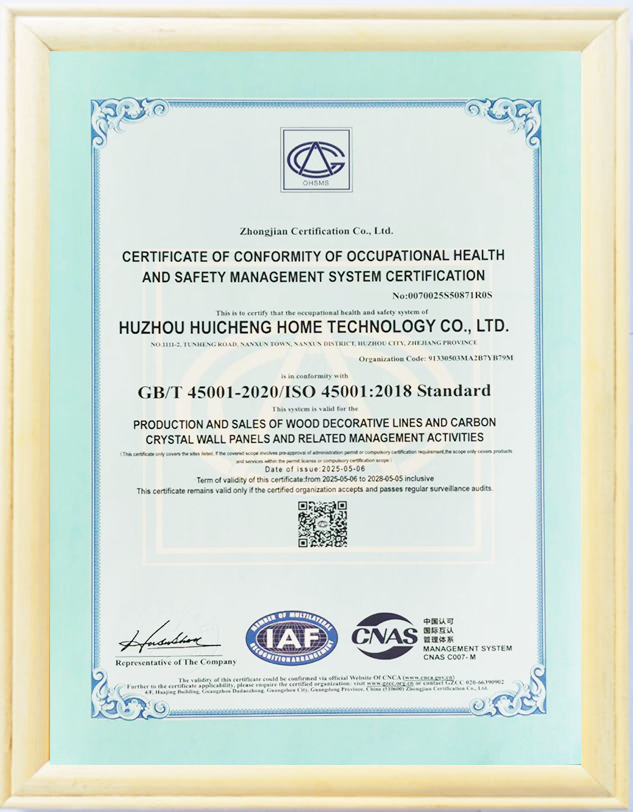
Inspection across production stages, supported by ISO 9001, ISO 14001 and ISO 45001 certificates, helps catch deviations early.
Shipment preparation and delivery arrangements support domestic and international purchasing workflows.
Support for initial enquiries, specifications and after-sales questions helps buyers manage ongoing cooperation.
INSIDE THE FACTORY
Our own production workshops and warehouses are equipped with complete production and quality inspection equipment. Select any photo to view it full size.
Factory building, Nanxun
 Timber
cutting
 Timber sorting and stacking
 Sawing and sizing
 Workshop floor
and material handling
 Profile machining
 Wrapping line
 Board
handling
 Automated machining line
 Coating and conveying equipment
 Spraying line
 UV curing
 Finished profiles
awaiting packing
 Painted boards on drying carts
 Warehouse racking
 Packing and strapping
 Finished product storage
 Reception
 Sales and order office
 Meeting room and sample display
QUALITY & MANAGEMENT
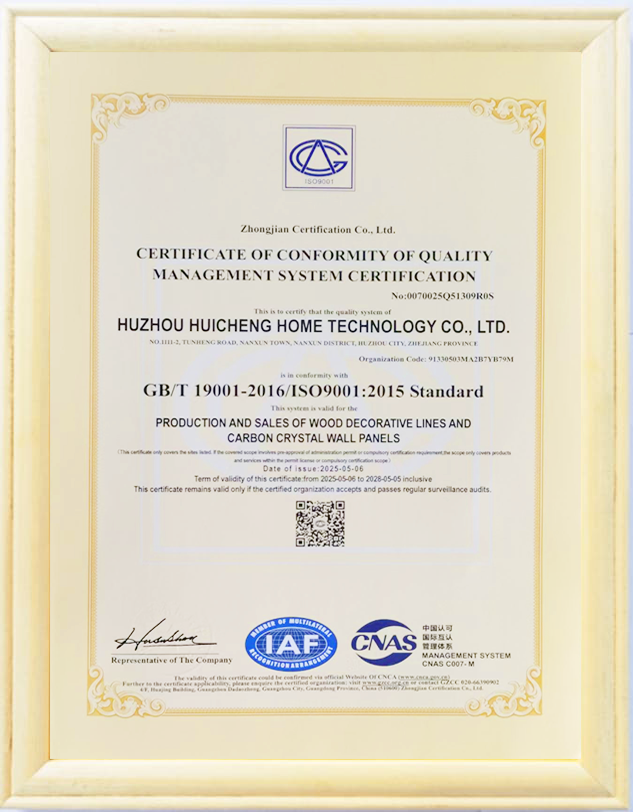
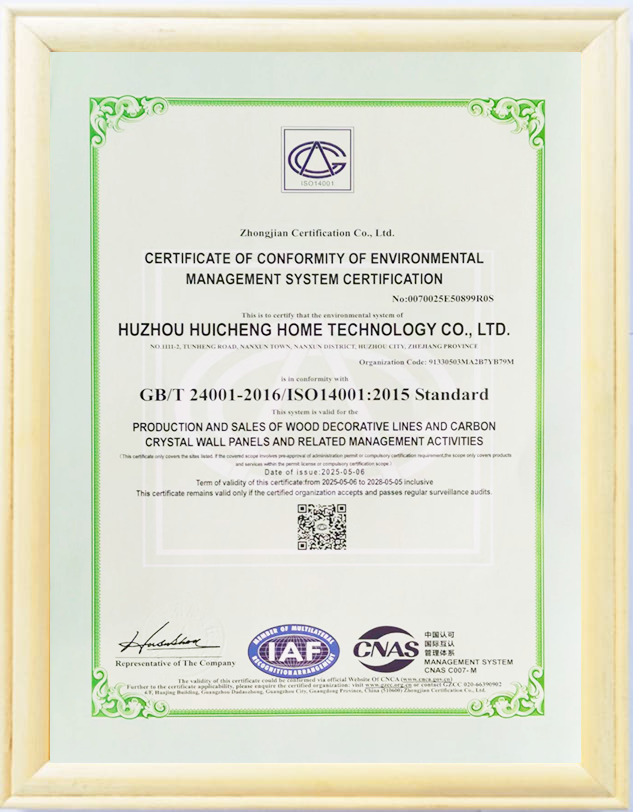
The following certificates are provided for reference. Buyers can request current documentation and scope details during supplier qualification.
RESPONSIBLE PRODUCTION
The company describes transparent, compliant wood procurement as a duty to the environment: suppliers are verified so that the legal and credible provenance of every piece of wood can be confirmed. Buyers can discuss relevant sourcing documentation and project-specific quality expectations.
Explore Sustainability →Supplier verification and material provenance considerations.
Inspection across production and packaging stages.
Profiles and finishes aligned to project needs.
SUPPLIER QUESTIONS
Quick answers on customization, materials, finishes and certification. For anything project-specific, send us your drawings and quantities.
Read the Full FAQ →Yes. The factory handles OEM drawing processing and offers ODM design support. Materials, sizes and colours can all be customized according to customer requirements.
Skirting boards and mouldings are produced in MDF and solid wood such as pine, white pine and white oak, while acoustic wall panels use polyester fibreboard cores. Surfaces include filler-primed, pearl white, painted, wood veneer or PVC wrapped and UV printed finishes.
Daily capacity is above 15,000 metres, of which more than 8,000 metres can be coated products. Please share your estimated quantities so the team can confirm scheduling.
The management system certificates shown above cover ISO 9001:2015 for quality, ISO 14001:2015 for the environment and ISO 45001:2018 for occupational health and safety. Current documentation can be requested during supplier qualification.
The factory is in Nanxun, Huzhou, Zhejiang Province, China, an area known as the Capital of Wooden Flooring. Visitors are welcome by appointment through the enquiry form.
PROJECT ENQUIRY
Send material preferences, drawings, dimensions, surface finishes and estimated quantities. Our team can review your request and discuss the next steps.
Email[email protected]
Phone+86-153 7223 8585
AddressHengjie Innovation Entrepreneurship Industrial Park, Building 6, No. 1111, Tunheng Road, Hengjie, Nanxun Town, Nanxun District, Huzhou City, Zhejiang Province, China
QUICK CONTACT
Share your product or sourcing requirements.