 English
 Español
Interior architecture relies heavily on the final finishing details to transform a construction project into a cohesive, aesthetically pleasing living space. Among these details, baseboards serve as both a functional barrier and a visual transition between walls and floors. Selecting the correct material for this architectural element impacts long-term durability, maintenance cycles, and overall interior design harmony.
For decades, solid timber was the default choice for interior trim. However, material engineering has introduced alternatives that resolve the structural vulnerabilities inherent in natural wood. Medium-Density Fiberboard, commonly known as MDF, has become a leading specification standard for residential developments, commercial spaces, and modern renovations. This comprehensive guide details the technical characteristics, comparative performance metrics, and aesthetic variations that position the mdf skirting board as the premier choice for modern interior finishing.
Understanding the Composition: What is MDF Material?
To evaluate the performance of engineered trim, one must first answer a fundamental question: what is mdf material and how does it differ from raw timber? The acronym stands for Medium-Density Fiberboard, an engineered wood product manufactured by breaking down hardwood or softwood residuals into wood fibers. These fibers are combined with synthetic resin binders and wax, then subjected to high temperature and intense pressure to form dense, stable panels.
The Structural Definition of MDF Board
The formal definition of mdf board centers on its homogeneous internal structure. Unlike natural timber, which features knots, grain patterns, and directional growth rings, an engineered board possesses consistent physical properties throughout its entire mass. When examining what is mdf wood at a microscopic level, it consists of a highly compressed network of lignocellulosic fibers. This elimination of natural grain eliminates the directional stresses that cause solid wood to warp, twist, or split when exposed to changing environmental conditions.
The manufacturing process directly influences mdf wood meaning in industrial applications. Because the raw wood inputs are completely pulverized into microscopic fibers, the resulting material lacks any voids or grain-induced weak points. This grainless composition allows high-speed industrial cutters to machine intricate profiles into the edges of the board without causing splintering or breakout, creating a perfectly smooth surface finish that cannot be replicated on natural timber without extensive manual sanding.
Industrial Applications: What is MDF Used For?
Due to its structural uniformity and ease of machining, the scope of what is mdf used for spans multiple sectors within interior architecture and furniture manufacturing. It serves as the core substrate for integrated cabinetry, architectural wall paneling, internal doors, shelving systems, and, most notably, precision-machined floor moldings. Its flat surface profile makes it an exceptional base for applying decorative wood veneers, high-pressure laminates, and multi-layered lacquer finishes.
Architectural Classifications: Types of Skirting Board
The selection of structural molding requires balancing material composition with geometric profiling. When analyzing the various types of skirting board deployed in contemporary architecture, profiles are typically grouped by their historical lineage and geometric complexity. MDF serves as an ideal canvas for these diverse profiles due to its isotropic nature.
Square & Bullnose Profiles
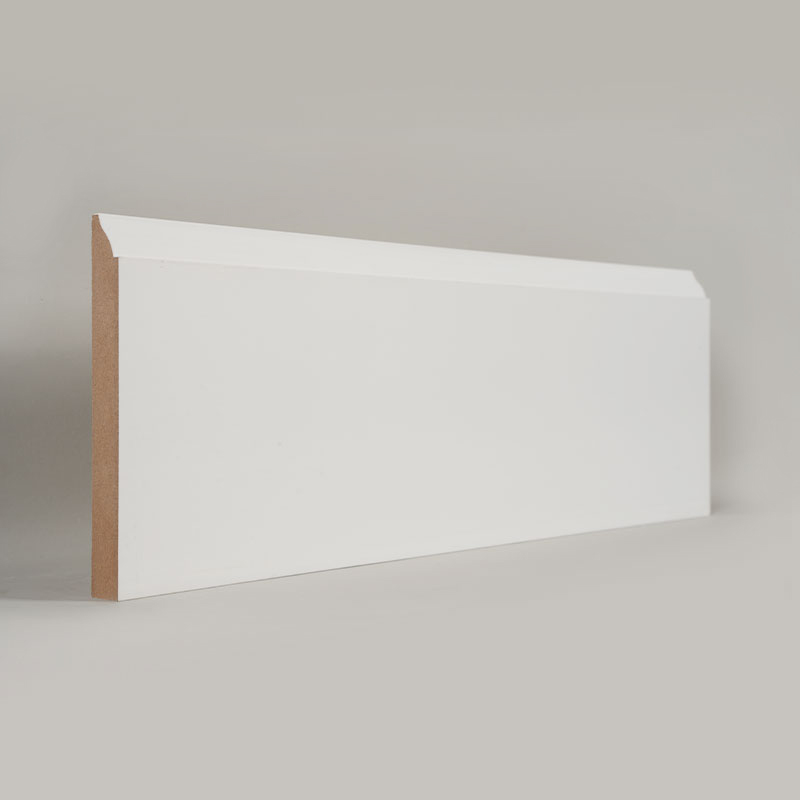
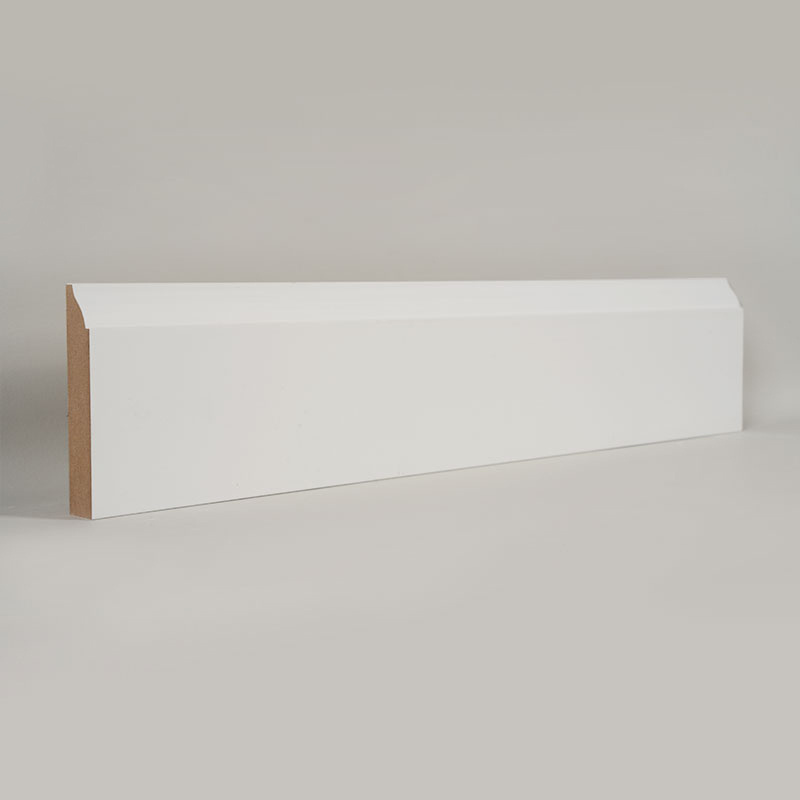
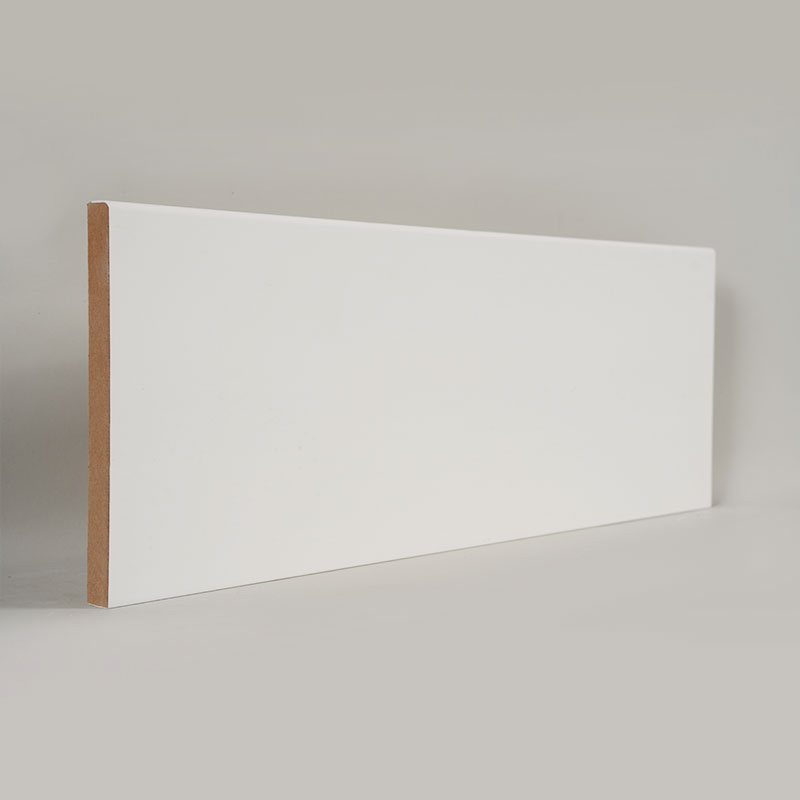
Characterized by flat faces and crisp 90-degree edges or slightly radiused upper corners. These profiles minimize dust accumulation and establish clean linear borders suited for industrial, Scandinavian, or ultra-modern residential interiors.
Ogee & Torus Profiles
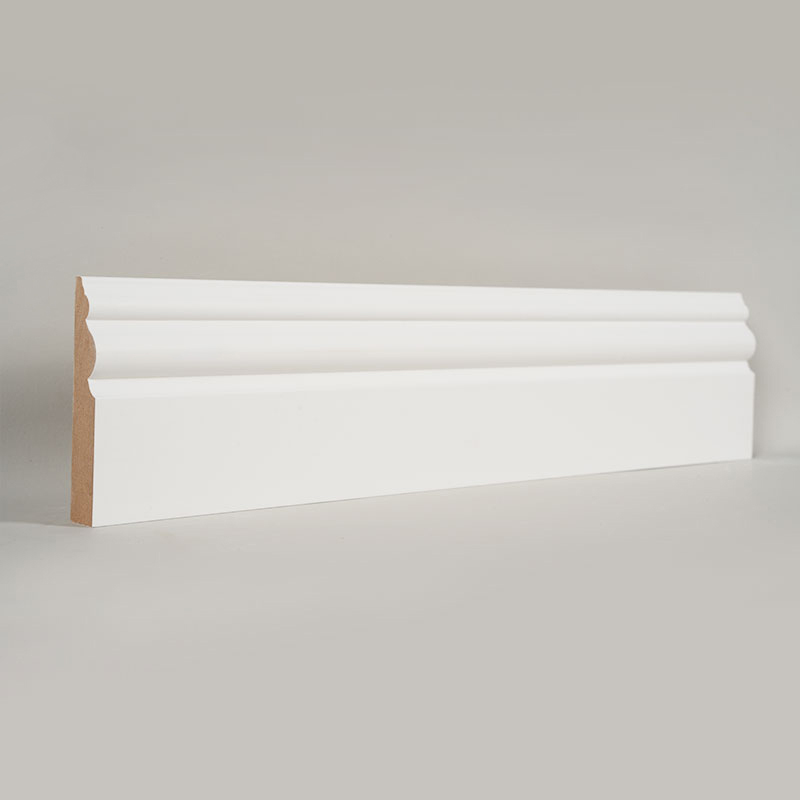
Featuring fluid, S-shaped geometric curves or prominent convex semi-circular beads. These traditional silhouettes replicate historical architectural styles, capturing complex light play and shadows along the lower wall boundary.
Grooved & Cable Profiles
Engineered with recessed lines along the front face for visual texture, or fitted with deep structural channels along the rear face to disguise integrated electrical wiring, coaxial cables, or smart home networking lines.
Beyond aesthetic detailing, the physical properties of the chosen profile dictate installation speed and finishing effort. Selecting engineered boards manufactured with advanced moisture-resistant chemical treatments ensures that intricate profiles maintain their structural crispness over decades of exposure to ambient humidity fluctuations.
Direct Comparison: MDF vs Solid Wood Skirting
Architects, interior designers, and construction procurement teams frequently weigh the trade-offs involved in specifying mdf vs solid wood skirting. While natural lumber possesses traditional appeal, engineered fiberboard consistently outperforms natural wood across quantitative performance metrics such as dimensional stability, structural homogeneity, installation efficiency, and lifetime financial investment.
| Performance Parameter | Engineered MDF Baseboard | Natural Solid Softwood/Hardwood |
|---|---|---|
| Dimensional Stability | Zero hygroscopic twisting; immune to localized thermal movement. | Prone to linear cupping, twisting, and shrinkage at joints. |
| Surface Homogeneity | Free of knots, resin pockets, open grain splits, or internal voids. | Contains structural defects requiring manual knotting treatment. |
| Finishing Requirements | Supplied factory-primed; yields an ultra-smooth finish with minimal coats. | Requires grain sealing, extensive multi-stage sanding, and knot-blocking primers. |
| Linear Uniformity | Perfect straightness across extensive 4.2-meter spans. | Natural bowing requires extensive sorting and on-site mechanical forcing. |
| Procurement Cost | Highly economical due to optimized industrial production lines. | Premium pricing subject to timber grading scales and supply chain availability. |
The core vulnerability of natural solid wood lies in its cellular memory. Timber remains intrinsically hygroscopic throughout its service life, constantly absorbing and releasing airborne moisture molecules. This process results in cross-grain expansion and contraction, which breaks caulk seals along the wall line and opens mitered corner joints. Engineered fiberboard resolves this issue through its randomized fiber alignment, which distributes internal stresses uniformly and limits directional expansion to negligible levels.
The Core Technical Advantages of MDF Baseboard
The selection of an optimal baseboard material depends heavily on its long-term performance under daily physical impacts and standard residential environmental stresses. The engineering attributes of the advantages of mdf baseboard offer substantial performance benefits for modern residential architecture.
- Resistance to Structural Deformation: The absence of an internal grain matrix ensures that long runs of architectural trim maintain straightness during seasonal changes in relative humidity.
- Superior Surface Finishing Quality: The dense, untextured surface of engineered panels allows for flat paint applications without telegraphing prominent grain patterns or resin bleed through the paint film.
- Enhanced Material Yield and Minimal Waste: Free from natural knots, splits, or structural deformities, every linear meter of purchased fiberboard is usable, eliminating the substantial scrap factors common to natural lumber.
- High Impact Resistance and Edge Integrity: Formulated with premium polyurethane or melamine-urea-formaldehyde resin matrices, modern fiberboards withstand impacts from vacuum cleaners and daily foot traffic without fracturing or splintering.
Furthermore, contemporary manufacturing protocols rely on advanced computerized routing machinery to produce consistent profiles. Every length of profile ordered matches identical cross-sectional dimensions, ensuring that complex mitered joints align perfectly during assembly without requiring extensive manual planing or shimming.
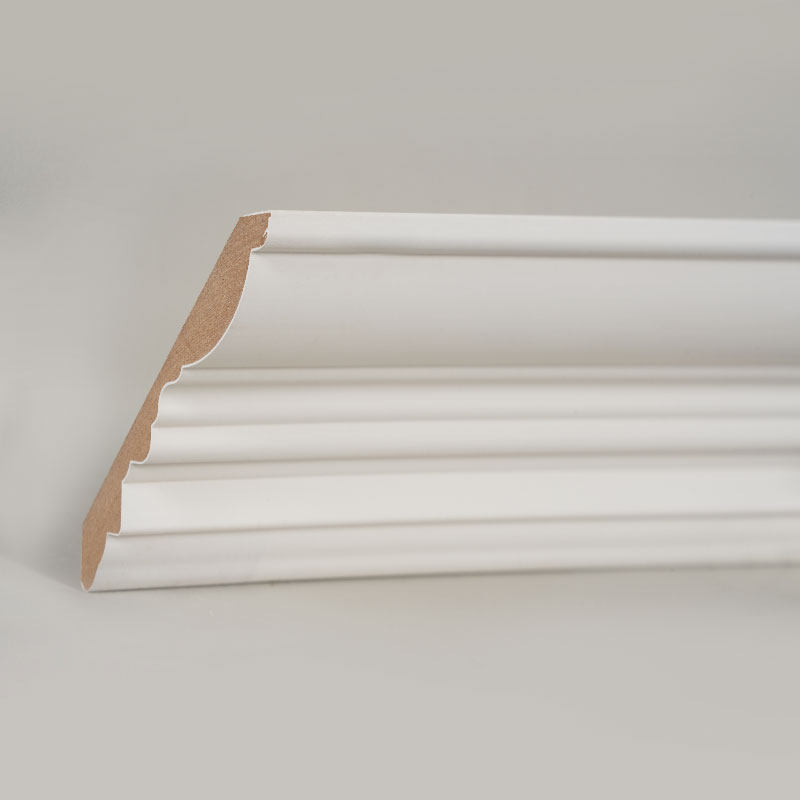
Finishing Protocols: Painting MDF Skirting Efficiently
Achieving a pristine surface finish on architectural moldings requires an understanding of the absorption characteristics of engineered substrates. When executing a project involving painting mdf skirting, installers must account for the difference in density between the face of the board and the machined upper profile.
Profile Sealing & Mechanical Sanding
The raw machined edges of the board are more porous than the compressed face layers. If applying paint directly to raw edges, the substrate will absorb liquid rapidly, resulting in an uneven, rough finish. Installers should apply a dedicated solvent-based or specialized acrylic primer to seal the exposed wood fibers. Once fully cured, sand lightly using 240-grit silicon carbide sandpaper to remove any raised fibers.
Undercoat Application
Apply a high-build, water-based or oil-based undercoat across the entire profile using a synthetic filament brush or short-pile microfibre roller. The use of factory-primed moldings reduces work on this stage, as the industrial priming coats provide uniform surface tension across both the flat face and routed detailing.
Topcoat Application
Apply two thin, uniform coats of premium satin, semi-gloss, or high-gloss architectural paint. Maintain a wet edge during application to eliminate visible brush marks. Lightly abrade the surface with an ultra-fine abrasive pad between coats to maximize interlayer adhesion and ensure a durable, smooth final finish.
By adhering to these steps, the resulting paint film forms a durable exterior barrier that protects the inner core while creating smooth linear borders that complement contemporary wall finishes and floor coverings.
Professional Installation Insights for Modern Homes
The installation phase determines whether a premium architectural material achieves its intended aesthetic potential. Unlike solid timber, which requires high-powered mechanical nailing to overcome natural curvature, engineered moldings are pliable enough to follow minor wall variations while maintaining crisp alignment at joint intersections.
When installing engineered baseboards on masonry or drywall surfaces, combining continuous beads of high-strength polyurethane grab adhesive along the rear face with occasional mechanical brad nails provides a secure attachment that eliminates localized face dimpling and minimizes subsequent cosmetic filling work.
For long linear runs exceeding individual board lengths, installers should use 45-degree scarf joints rather than simple butt joints. Scarf joints hide structural transitions by allowing overlapping profiles to blend under a single layer of flexible joint filler. When executing internal corner intersections, scribed joints are preferred over standard miters, as they accommodate out-of-square wall angles without opening up during seasonal temperature shifts.
Frequently Asked Questions
Q1: Is MDF skirting board suitable for installation in high-moisture environments like bathrooms and kitchens?
Standard fiberboard variants can absorb ambient moisture if left unsealed, potentially leading to thickness swelling over time. However, moisture-resistant variants (typically identified by a green core tint) are engineered with hydrophobic resin additives. When sealed correctly on all faces and cut edges with an appropriate primer, these moisture-resistant profiles provide excellent dimensional stability in residential kitchens and well-ventilated bathrooms.
Q2: How does the environmental sustainability profile of engineered fiberboard compare to natural solid timber?
Engineered fiberboards support sustainable forest management by utilizing timber residuals, offcuts, and small-diameter logs that might otherwise be discarded during primary lumber milling. This optimizes total biomass utilization. For projects targeting green building certifications, specifying moldings certified by recognized forestry bodies ensures the binding resins meet strict low-emission standards for indoor air quality.
Q3: Can minor dents or surface scratches on fiberboard mouldings be repaired on-site, or must the entire length be replaced?
Minor surface damage can be repaired on-site using standard water-based wood fillers or two-part polyester structural resins. Once the filler cures completely, it can be sanded flush with the surrounding profile using fine-grit sandpaper, primed, and spot-painted. The isotropic composition of the board ensures that patches adhere well without risking edge delamination or grain peeling.
Q4: What specific cutting blades should be selected to achieve clean edges on engineered fiberboard profiles?
To ensure clean, chip-free cuts on high-density engineered fiberboard, installers should use a sliding compound miter saw fitted with a sharp, fine-tooth carbide blade (typically 60 to 80 teeth for a standard 10-inch blade). Maintaining a steady, controlled feed rate prevents friction-induced heat buildup, preserving both the crispness of the profiled edge and the service life of the cutting tool.
Q5: Why is factory-primed fiberboard molding considered superior to raw untreated board for large-scale projects?
Factory-primed molding undergoes automated spray application and UV curing under optimized factory conditions. This seals the porous fiber matrix uniformly, providing consistent surface tension. Choosing pre-primed profiles saves substantial labor on-site, eliminates one to two complete sanding and priming cycles, and reduces overall paint consumption while delivering a smoother final finish.