 English
 Español
Structural Evolution of Contemporary Wall Base Profiles
Modern interior trim acts as a critical functional buffer and an aesthetic transition. The selection of materials and installation techniques directly affects long-term maintenance cycles, structural protection, and visual proportions within high-end residential and commercial spaces. Historically, interior baseboards served primarily to conceal construction gaps and protect plaster from impact. Today, architectural trends favor clean planes, crisp lines, and performance-driven materials.
Selecting the appropriate base profile requires balancing durability against installation complexity. Traditional timber options coexist with high-strength metallic alloys and specialized recessed systems. Specifiers must analyze mechanical properties, moisture resistance, and installation depth to determine the optimal solution for a given project substrate.
Comparative Analysis: Timber and Metallic Substrates
The choice between natural wood composites and architectural metals governs the longevity of a wall base. Each material responds differently to environmental loads, mechanical impacts, and chemical cleaning agents.
Performance Profile of Wood Composites
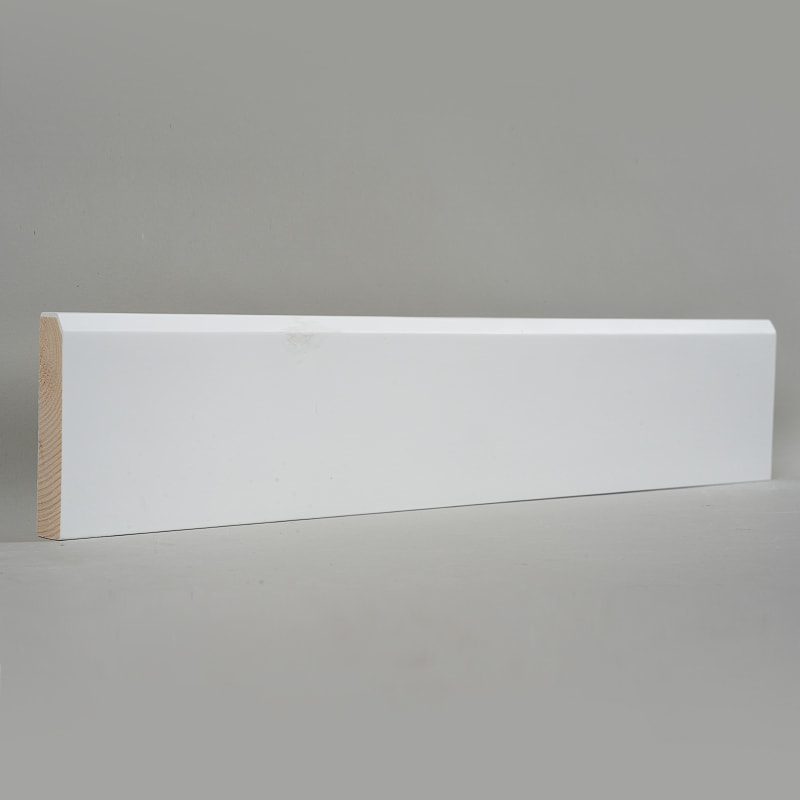
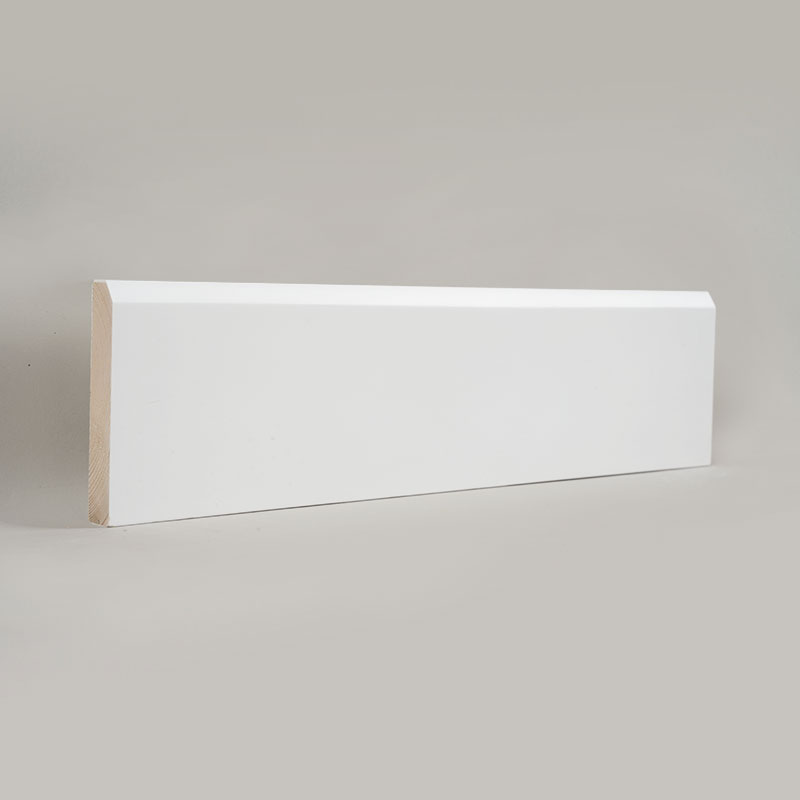
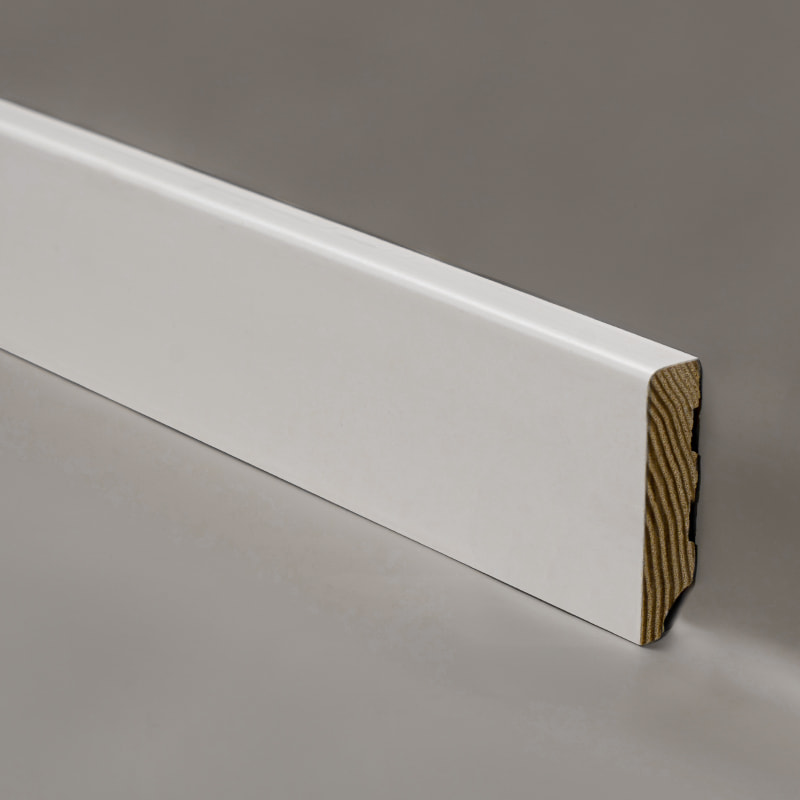
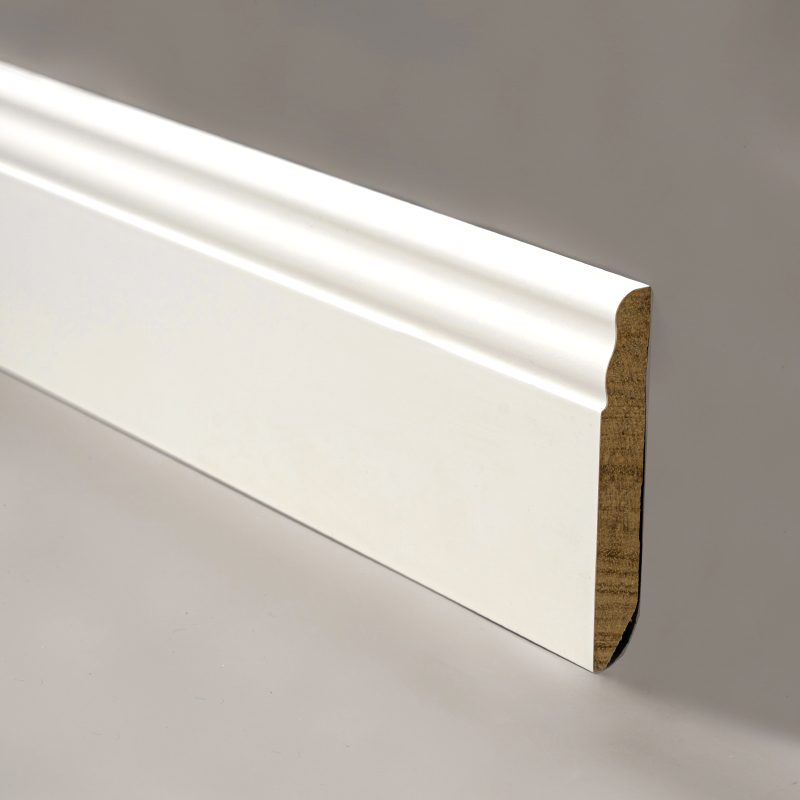
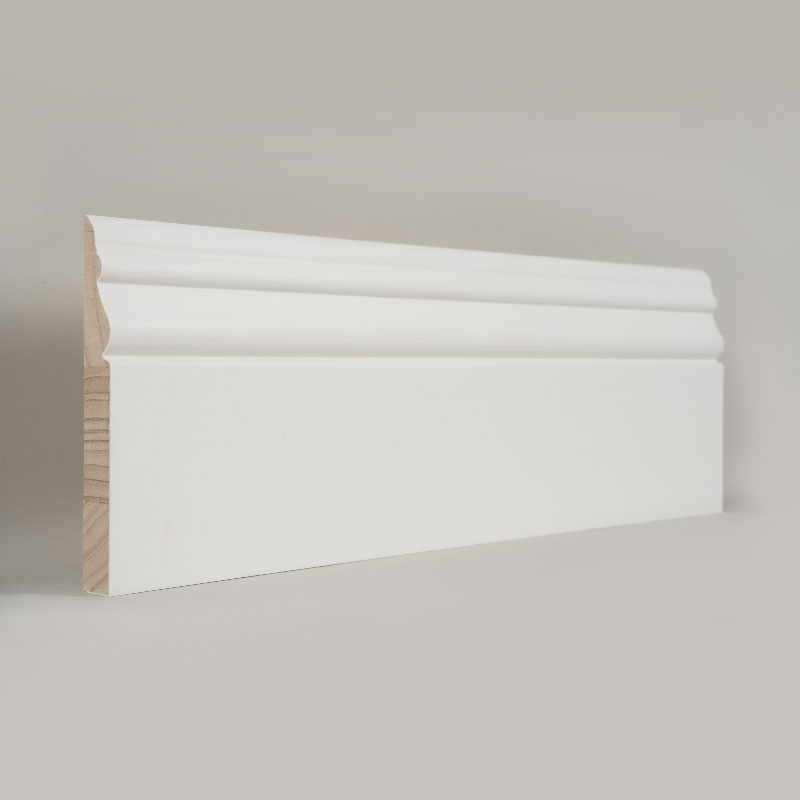
A classic wood skirting board provides natural thermal movement compatibility with traditional timber framing and flooring. Solid hardwood, Medium-Density Fiberboard (MDF), and finger-jointed pine remain prevalent in minimalist interior trim designs that require painting or natural staining. However, wood remains susceptible to hygroscopic expansion and contraction, which can cause joint separation in environments with fluctuating relative humidity.
Engineering Properties of Architectural Metals
For high-traffic environments, healthcare facilities, and precise architectural detailing, metal baseboards offer superior dimensional stability. A stainless steel skirting board offers high resistance to impact, chemical exposure, and indentation. Grade 304 or Grade 316 stainless steel is preferred for commercial wall trim due to its chromium oxide passivation layer, which prevents oxidation in wet-mopped zones.
Alternatively, an aluminum skirting board or an aluminum skirting baseboard provides a lightweight alternative with precise tolerances. Extruded aluminum alloys, typically 6063-T5, allow complex internal channels for wire management or LED integration while maintaining structural rigidity.
| Material Metric | MDF / Wood Profile | Extruded Aluminum | Stainless Steel |
|---|---|---|---|
| Density (g/cm³) | 0.65 - 0.80 | 2.70 | 7.93 |
| Moisture Resistance | Low to Moderate | Excellent | Excellent |
| Max Linear Length | 2440 mm | 3000 mm | 2500 mm |
| Impact Absorption | Yields / Deforms | Resists / Rigid | Maximum Deflection Resistance |
Flush and Hidden Skirting Architecture
Minimalist design often requires removing projecting elements to create continuous vertical planes. A surface-mounted profile catches airborne dust and disrupts furniture placement. The development of a flush skirting board solves these issues by aligning the finished wall plane directly with the base profile.
Implementing hidden skirting boards requires coordination during the structural framing and drywall hanging phases. Instead of applying the trim over finished gypsum board, installers mount a specialized aluminum structural channel directly to the studs before drywall installation. This channel acts as a plaster stop, allowing the drywall installer to finish the wall board flush with the top lip of the profile.
Technical Installation Protocols for Flush Systems
- Substrate Verification: The underlying wall studs must be perfectly plumb. Any deviation greater than 2 mm over a 3000 mm span will cause visible alignment errors where the drywall meets the metal profile.
- Expansion Gap Management: A continuous gap of 1 to 2 mm must be maintained between the bottom floor covering and the structural baseboard tracking to allow for structural deflection and floor expansion.
- Infill Selection: The internal cavity of the base channel can accept various inserts, including painted timber, solid metal strips, or matching flooring materials to create a continuous floor-to-wall transition.
Integration of Low-Voltage LED Lighting Elements
Integrating linear illumination into wall bases provides ambient path lighting and accentuates architectural boundaries. A specialized led skirting board serves a dual purpose: it acts as a protective mechanical barrier and functions as a linear luminaire housing. This integration requires careful planning for heat dissipation, electrical supply routing, and optical diffusion.
Thermal and Optical Configuration
Using raw LED tape inside a standard wood profile without proper heat dissipation can cause premature diode failure. Modern modern baseboard lighting relies on anodized aluminum channels that act as thermal heat sinks. The aluminum drawing keeps junction temperatures below 65 degrees Celsius, preserving the luminous efficacy and lifespan of the LED chips.
To avoid visible diode reflections (hotspotting) on polished floor surfaces, installers use high-density LED strips with at least 120 or 240 diodes per linear meter. This is paired with a continuous milky or frosted polycarbonate diffuser lens to ensure smooth, uniform light distribution.
Engineering Note: Low-voltage DC drivers (12V or 24V) must be located in accessible service panels outside the wall cavity. Sealing drivers behind drywall violates electrical safety standards, as these components require ventilation and periodic maintenance.
Electrical Specifications for Baseline Lighting
- Voltage Configuration: A 24V DC system is preferred over a 12V DC system for linear runs exceeding 5 meters to minimize voltage drop and maintain consistent brightness from start to end.
- Color Temperature Consistency: For modern residential projects, a color temperature of 2700K to 3000K provides warm, glare-free illumination along the floor. For commercial environments, 4000K is standard.
- Ingress Protection: Baseboards installed in zones subject to wet mopping or moisture exposure require an IP65 or IP67 rated silicone-encapsulated LED strip to prevent water infiltration.
Commercial Versus Residential Installation Requirements
Specification requirements change significantly between private residential spaces and high-traffic commercial environments. Understanding these factors ensures correct material selection and long-term performance.
In commercial spaces, wall bases face constant impact from wheeled carts, cleaning equipment, and heavy foot traffic. Heavy-gauge metal profiles provide the necessary impact resistance for these areas. Residential installations, by contrast, focus more on fine joints, flush alignment, and integrating with custom cabinetry.
- Impact Resistance Requirement
| Parameter | Commercial Wall Trim | Residential Custom Trim |
|---|---|---|
| Primary Material | Stainless Steel / Heavy Anodized Aluminum | MDF / Painted Hardwood / Slim Aluminum |
| Fixing Method | Heavy-Duty Construction Adhesive & Mechanical Anchors | Concealed Brackets / Silicone / Brad Nails |
| Maintenance Protocol | Chemical Washdown / Industrial Sweepers | Microfiber Dusting / Damp Mopping |
Frequently Asked Technical Questions
Q1: How do you handle outside corner joints with aluminum or stainless steel baseboards?
Metal baseboards require precise miter cutting using a high-speed chop saw with a dedicated non-ferrous carbide-tipped blade. Alternatively, manufacturers offer dedicated internal corners, external corners, and end caps that slip over the profile ends. This avoids sharp mitered edges and accommodates slight wall angle variations.
Q2: Can a flush skirting board profile be retrofitted into an existing completed drywall room?
Retrofitted installations are complex and require cutting away the lower 100 mm to 150 mm of the existing drywall panels. Installers must then insert the structural aluminum receiver track against the exposed studs, secure it mechanically, apply joint tape, and re-plaster the joint to create a seamless flush wall plane.
Q3: What is the maximum safe continuous length for an LED baseboard circuit before experiencing brightness reduction?
For standard 24V DC systems, the maximum continuous single-feed run is typically 5 to 7 meters. Runs longer than this can suffer from voltage drop due to the internal resistance of the copper traces on the LED strip. For longer walls, installers should run separate power feeds from a central driver to both ends of the strip or use parallel wiring.
Q4: How does moisture exposure affect wood baseboards compared to aluminum configurations?
Wood products absorb moisture from wet floors or high humidity, causing localized expansion that can break paint seals or split joints. Extruded aluminum does not absorb water and is unaffected by humidity changes, making it highly stable in wet areas or zones cleaned with industrial floor scrubbers.
Q5: Is it possible to use smart home dimmers with low-voltage integrated baseboard lighting?
Yes, provided the low-voltage DC driver supports dimming protocols such as TRIAC, 0-10V, or DALI. The driver receives the high-voltage dimming signal from the wall switch or automation controller and converts it into a Pulse Width Modulation (PWM) signal to dim the LED strip smoothly without flickering.