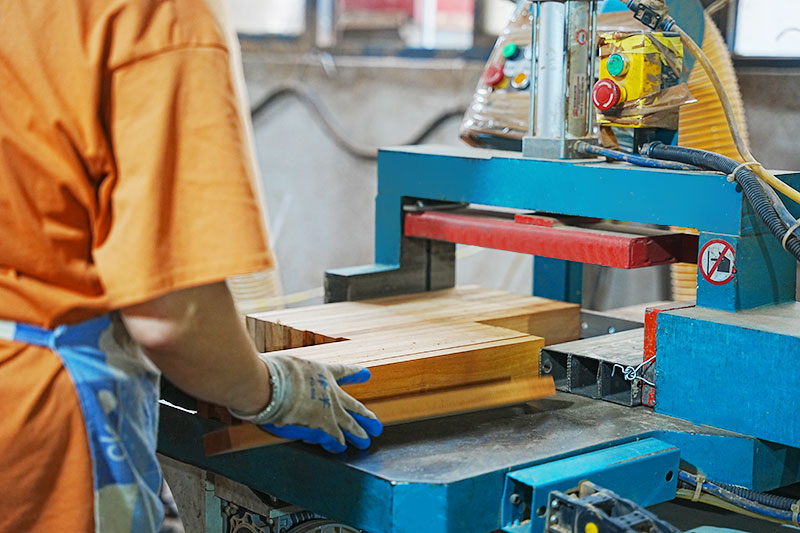
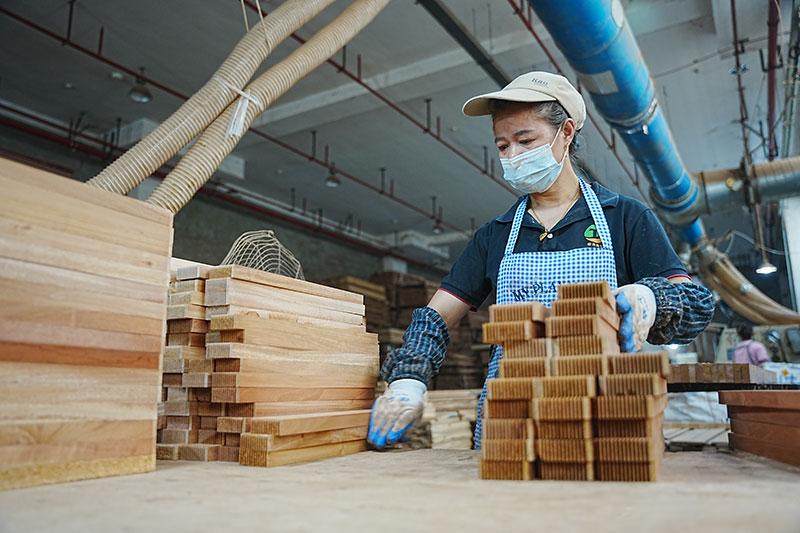
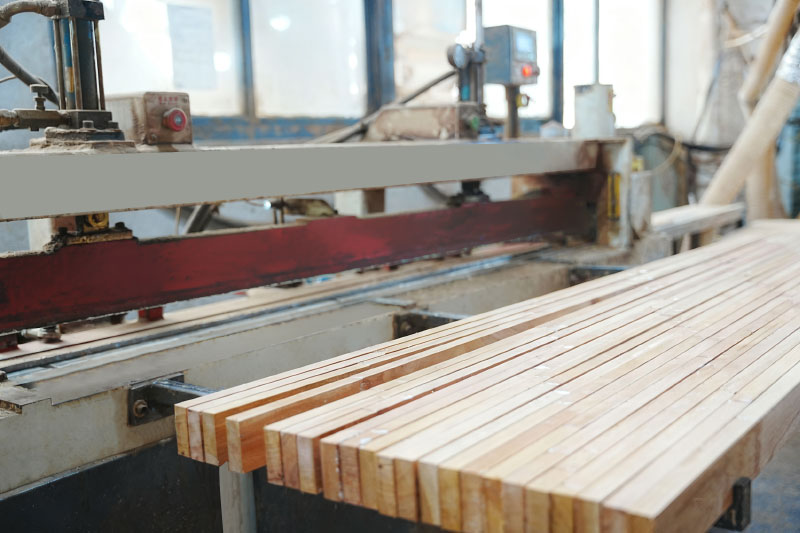
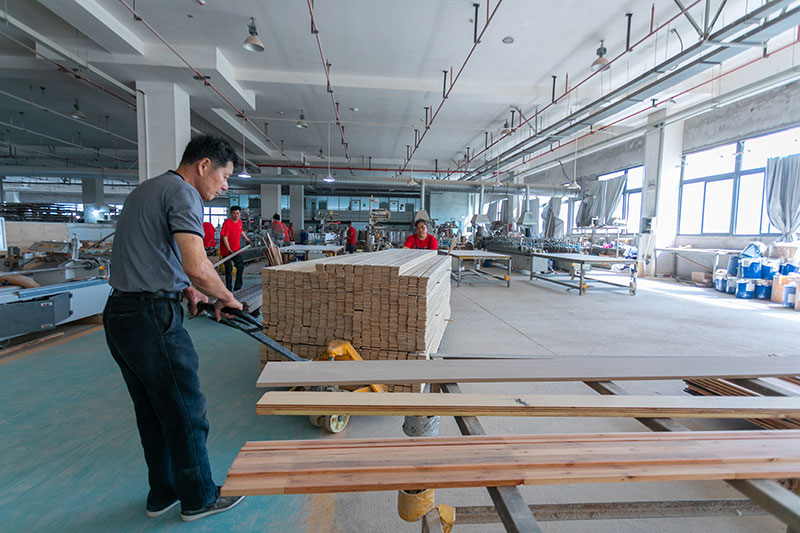
Modern square edge trim is moulding with flat faces and crisp, right-angled edges, with little or no decorative profile. It is used for baseboards, door and window casings and wall details in minimal, contemporary and Scandinavian-inspired interiors, where clean lines matter more than ornament.
The simple shape looks easy, but it shows every flaw. Straight lengths, sharp edges, tight joints and flat walls all matter. This page explains the style, how it compares with softer profiles and what buyers should check before ordering.
- Flat faces, sharp edges, no ornament
- Needs straight stock and tight joints
- Suits painted, stained or wrapped finishes
What Square Edge Means for a Trim Profile
A square edge profile has edges that meet the face at a sharp angle rather than a rounded or stepped curve. Many designers choose it because it creates strong, quiet lines and lets the wall, floor and doors take the lead. Small variations such as a slight edge ease or a shadow reveal are also common.
Square edge trim is simple to look at and demanding to install. Quality shows in straightness, edge sharpness and joint fit.
Why Designers Choose Square Edge Trim
Flat faces and straight edges suit minimal and contemporary rooms.
Without shadow-heavy profiles, the trim reads as part of the wall.
Fewer grooves mean less dust collects on the surface.
Simple shapes can be machined and finished consistently in volume.
Square Edge Compared with Other Profiles
| Aspect | Square edge | Eased edge | Decorative |
|---|---|---|---|
| Look | Sharp, minimal | Soft, simple | Detailed, traditional |
| Edge chipping risk | Higher | Lower | Varies |
| Shows wall unevenness | Clearly | Moderately | Hides more |
| Joint visibility | High | Medium | Lower |
| Cleaning | Easy | Easy | More effort |
Interior Styles That Suit It
It also works as a quiet surround for large doors, glass walls and open-plan spaces. In commercial interiors it is often used with matching door frames and wall panels.
Finish Options
White or colour finishes show clean lines best and are the most common choice.
Oak or ash with a clear or tinted finish gives a natural modern look.
Film or veneer wraps match doors and cabinets across a project.
Black or deep grey trim makes a bold graphic edge, but shows dust and marks more.
Materials and Edge Durability
Installation Demands
Flat faces reveal bowed walls and uneven floors, so check before fixing.
Select straight pieces and set aside any with bow or twist.
Use sharp blades and accurate angles for tight mitres and butt joints.
Fix at studs and keep faces flush along each run.
Fill joints and holes, caulk gaps and finish in thin coats.
Cautions to Plan For
Sharp corners can chip in transit or on site. Handle with care and use protective packing.
On flat faces, joints stand out, so plan joint positions and fill them well.
Without decorative shapes to hide them, gaps need scribing or flexible caulk.
Large flat faces show brush marks, dust nibs and uneven sheen.
Care and Finishing Notes
- Keep protective wrap on until the trim is fixed in place.
- Use a fine-tooth blade to reduce chipping at the edge.
- Apply thin, even coats and sand lightly between coats.
- Choose satin for a modern, easy to clean surface.
- Touch up chips with filler, sand lightly and repaint.
Specification Points for Buyers
Provide face width, thickness, edge type and lengths.
Agree limits for bow, twist and warp across lengths.
State how sharp edges should be and what chipping is acceptable.
Specify raw, primed, painted, stained or wrapped.
Request edge protection and flat, supported packing.
Modern Square Edge Trim FAQ
Q1: What is modern square edge trim?
It is trim with flat faces and sharp, right-angled edges and little or no decorative profile.
Q2: Is square edge trim only for modern homes?
It is most common in contemporary interiors, but can also suit simple traditional or farmhouse looks.
Q3: Why is it harder to install than decorative trim?
Flat faces and sharp edges show gaps, uneven walls and joint lines clearly, so cuts and fixing must be more precise.
Q4: Does it chip easily?
Sharp corners are more exposed than rounded ones. Careful handling, protective packing and a durable finish reduce chipping.
Q5: Can I get a slightly softened edge?
Yes. A light edge ease keeps a modern look while reducing chipping and making painting easier.
Q6: Which material is best?
MDF and finger-jointed timber suit painted finishes, while solid hardwood suits stained looks. Choose by room conditions and finish.
Q7: What height of baseboard suits modern rooms?
It depends on ceiling height and style. Test a sample against the wall to judge the proportion.
Q8: How do I hide joints?
Use tight mitres or scarf joints, glue them, fill them and sand before painting.
Q9: How should it be stored?
Keep it flat, dry and wrapped, away from direct sun and heavy loads.
Q10: What should I include in an order?
Include the profile drawing, lengths, material, edge type, finish stage, packing method and an approved sample.