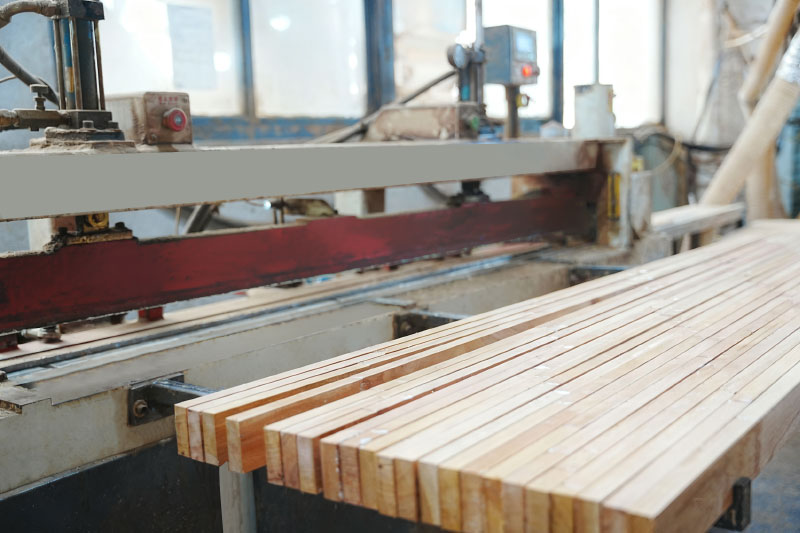
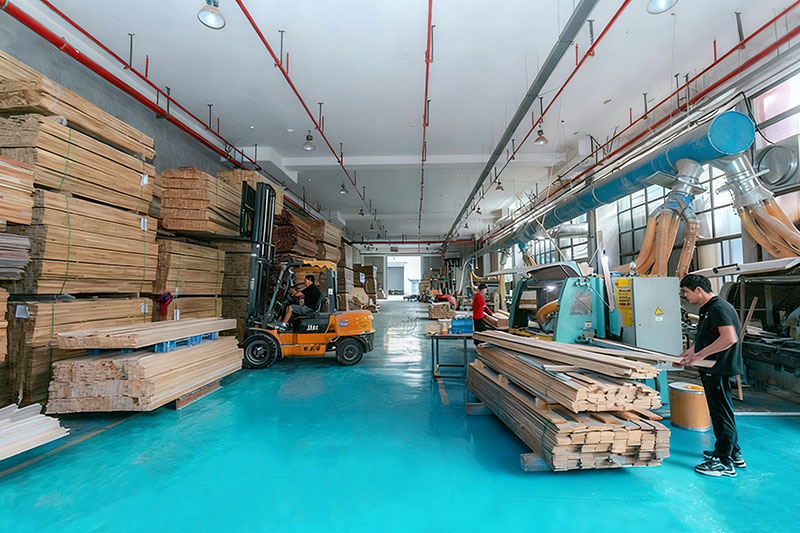
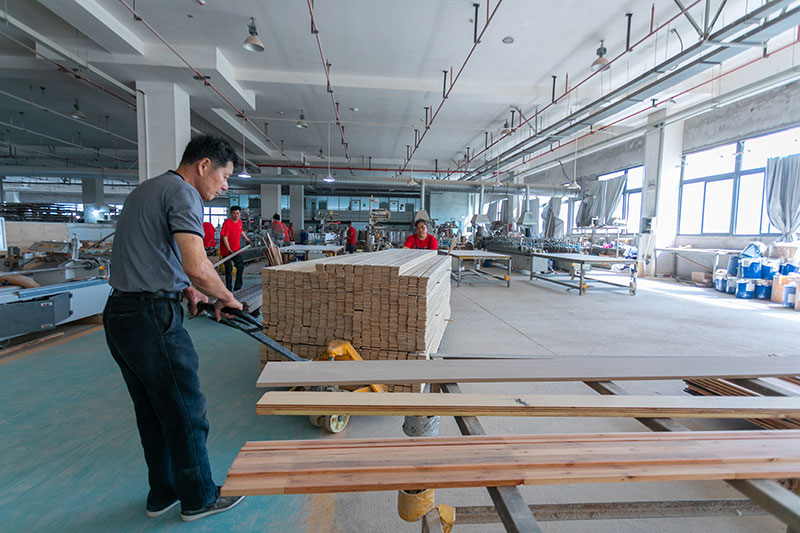
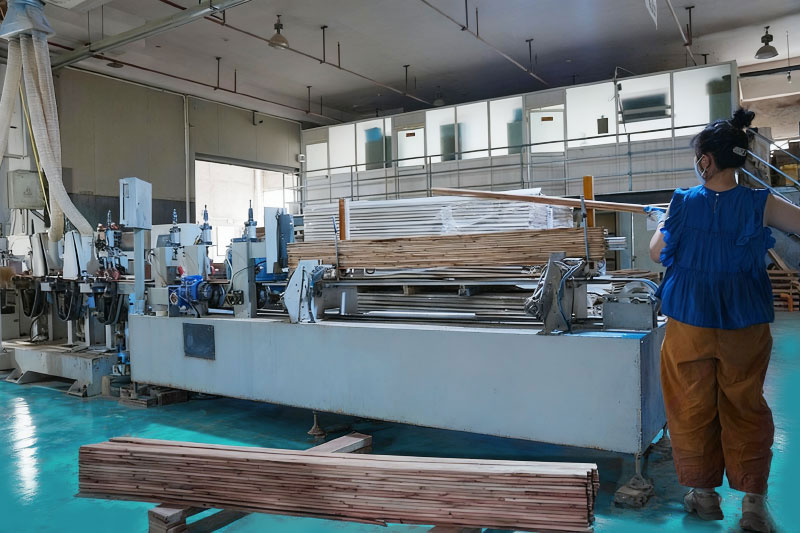
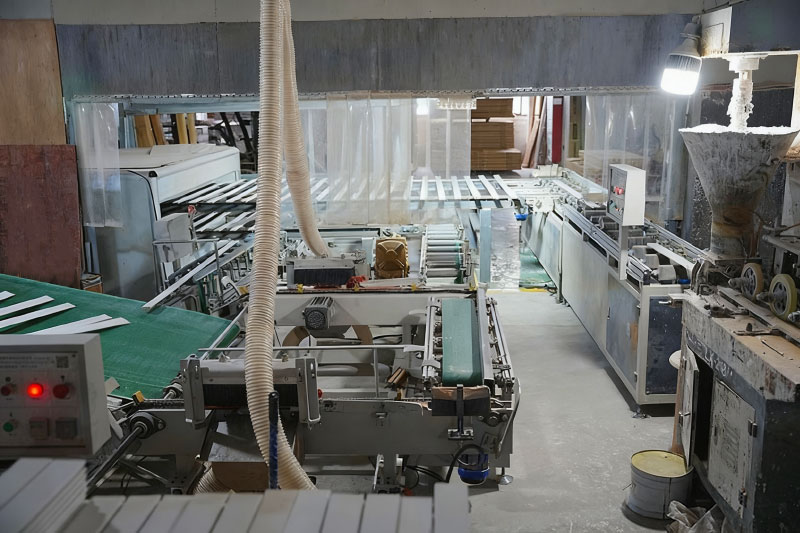
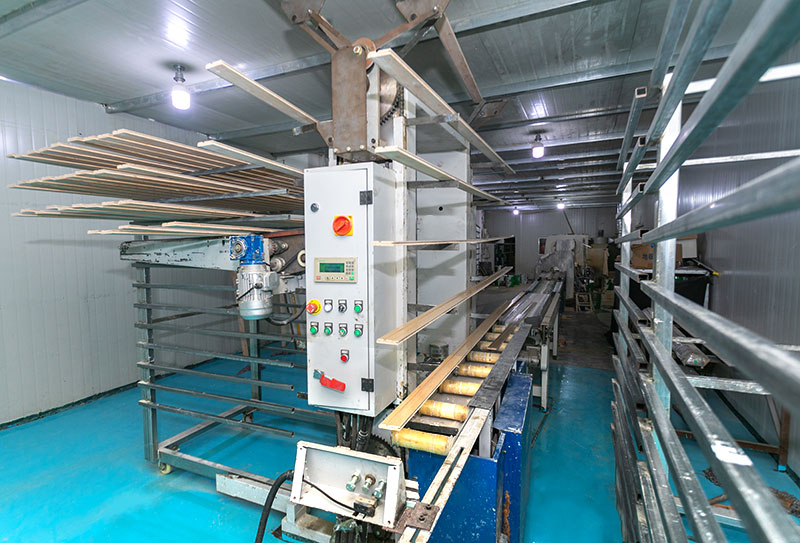
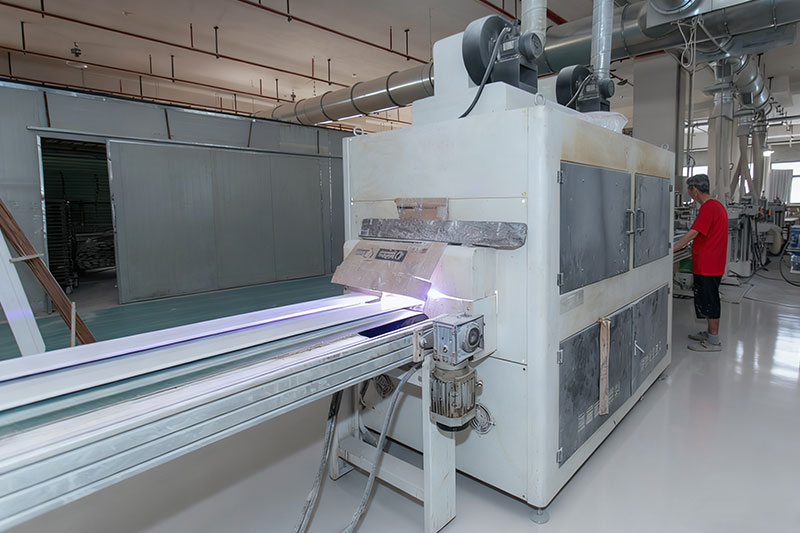
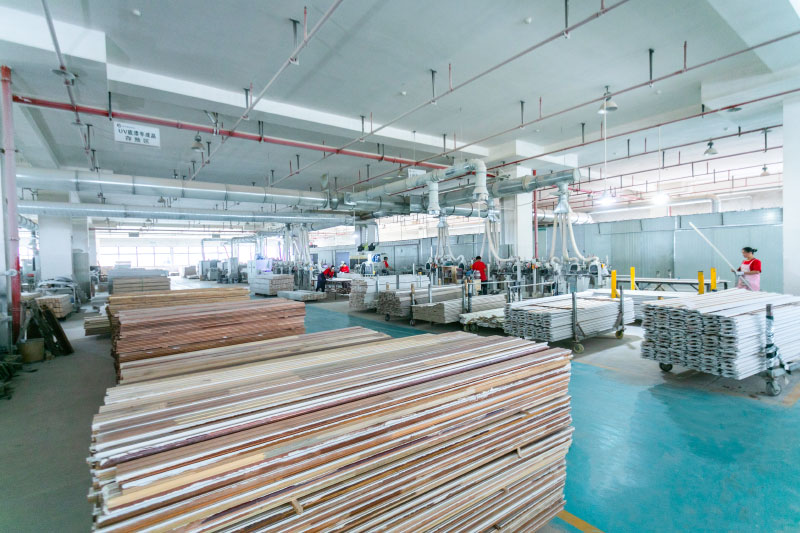
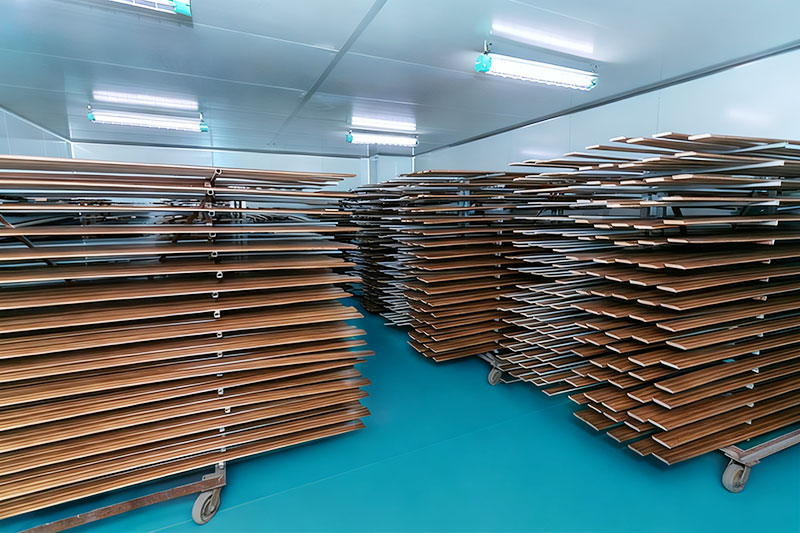
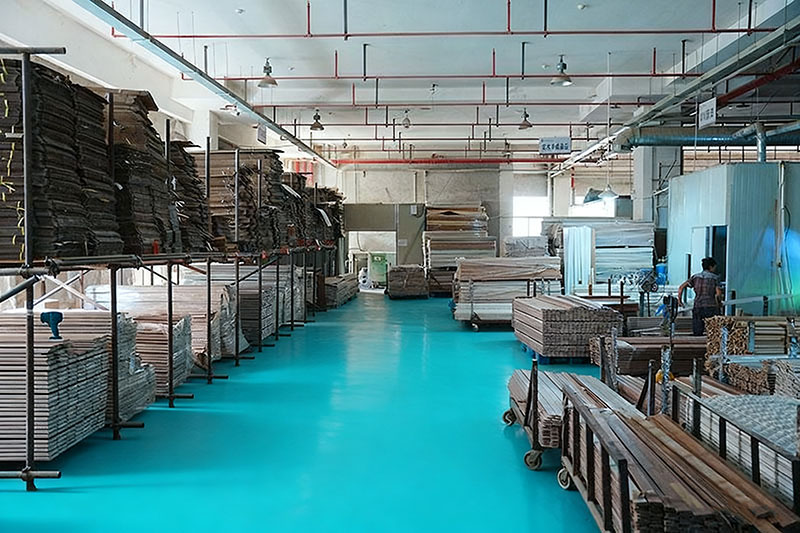
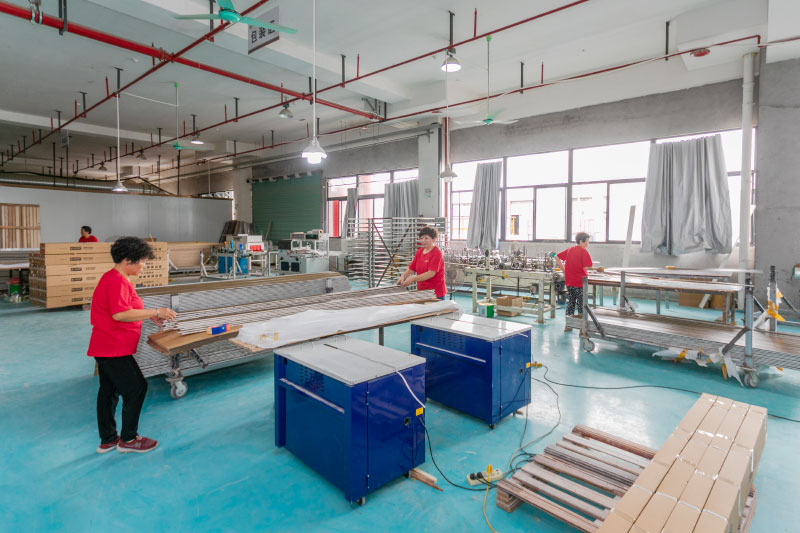
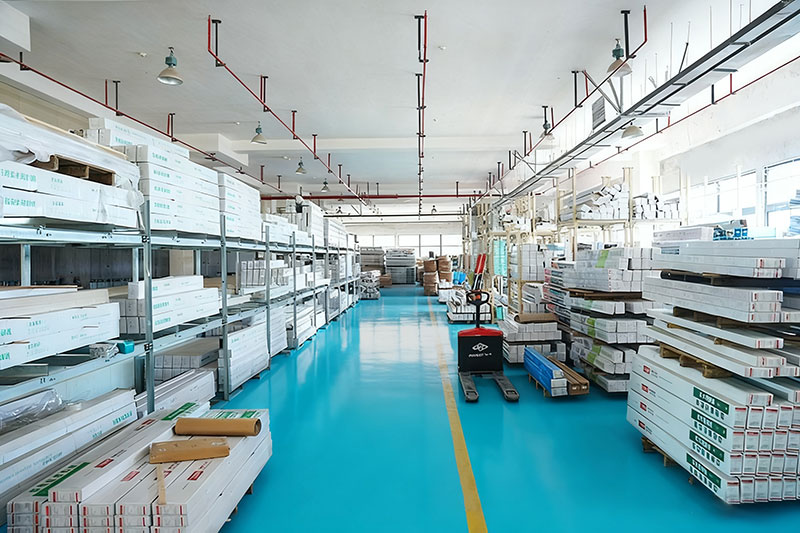
UV vacuum sprayed trim is interior moulding finished with a coating that is applied by vacuum spraying and hardened under ultraviolet light. The profile passes through an enclosed spraying chamber, where coating is applied evenly around the shape, and then moves under UV lamps where the coating cures.
The process is widely used for profiled parts such as baseboards, casings and wall panel mouldings because it can coat complex shapes with a consistent film and a short drying stage. This page explains how it works, where it fits, and what buyers should check.
- Coating applied in an enclosed chamber
- Hardened by UV light, not by air drying
- Well suited to profiled shapes
What UV Vacuum Sprayed Means for a Trim Profile
Two ideas are combined in the name. Vacuum spraying describes how the coating is applied: the profile is fed through a chamber where coating is sprayed onto it and the excess is drawn away and collected for reuse. UV describes how the film is cured: special coating reacts and hardens when exposed to ultraviolet light.
A good UV finish depends on the whole system: substrate preparation, coating type, spraying, curing and inspection.
How the Process Works Step by Step
The profile is sanded and cleaned. Putty or primer may be applied first.
Coating is applied around the profile in an enclosed chamber and surplus is collected.
Lamps harden the coating almost at once so the profile can be handled quickly.
Extra primer or topcoat layers are added with sanding between stages.
Surfaces are checked for coverage, then wrapped for shipping.
Benefits for Trim Buyers
Coating reaches grooves and curves that are hard to coat by hand.
UV hardening shortens waiting time compared with air drying.
A controlled line helps keep colour and sheen steady across an order.
A cured film resists everyday wear better than a thin paint layer.
UV Vacuum Spraying Compared with Other Methods
| Aspect | UV vacuum spraying | Conventional air spraying | Hand brushing |
|---|---|---|---|
| Coverage on profiles | Very even | Depends on operator | Variable |
| Coating waste | Low, surplus recovered | Higher overspray | Low |
| Drying or curing | Fast, under UV lamps | Slower air or oven dry | Slow |
| Batch consistency | High | Moderate | Lower |
| Best for | Volume profile runs | Mixed shapes | Small repairs |
Suitable Profiles and Substrates
Finish Looks Available
The final look depends on the coating system and the surface beneath it. Always confirm colour and sheen from a physical sample before bulk production.
Limitations to Keep in Mind
UV coating shows defects underneath, so sanding and filling quality is important.
Mitres and cuts on site expose raw material and need touch-up.
Field repairs with ordinary paint may not match the factory sheen exactly.
Very deep or complex shapes should be checked on a trial run first.
Care and Handling
- Handle with clean gloves to avoid marks on the cured surface.
- Store flat, dry and wrapped, away from heavy loads.
- Clean with a soft damp cloth and mild soap.
- Avoid abrasive pads and strong solvents.
- Seal cut ends and fill nail holes with a suitable matching product.
Specification Points for Buyers
Provide drawings, base material and length requirements.
State primer, topcoat type, colour and sheen expected.
Agree limits for dust nibs, runs and uncoated spots.
Approve a finished sample before bulk production.
Request protective wrapping and corner protection.
UV Vacuum Sprayed Trim FAQ
Q1: What does UV vacuum sprayed mean?
The coating is sprayed onto the profile inside an enclosed chamber with vacuum recovery, then hardened under ultraviolet lamps.
Q2: Why is this method used for trim?
It coats curved and grooved profiles evenly and works well for repeat production of the same shape.
Q3: Is the finish waterproof?
A cured coating helps protect the surface, but trim is not fully waterproof. Edges, cut ends and the substrate also matter in damp areas.
Q4: Can UV coated trim be repainted?
Usually yes, after cleaning and lightly sanding the surface so the new paint can grip.
Q5: Does UV curing need drying time on site?
No. The coating is already cured when the trim leaves the factory, so it is ready to install.
Q6: Which sheen levels can be made?
Matt, satin and gloss looks are common. Confirm the exact level with a sample.
Q7: How do I touch up cut ends?
Seal the cut end with primer and apply a matching paint, testing on a spare piece first.
Q8: Can it be used on veneer wrapped profiles?
Yes, clear or tinted UV coatings are often used to protect veneer while keeping the grain visible.
Q9: How should it be stored?
Keep it flat, dry and covered, away from direct sun and heavy stacking.
Q10: What should be included in an order?
Include the profile, length, substrate, coating system, colour, sheen, packing method and an approved sample.