
 English
 Español
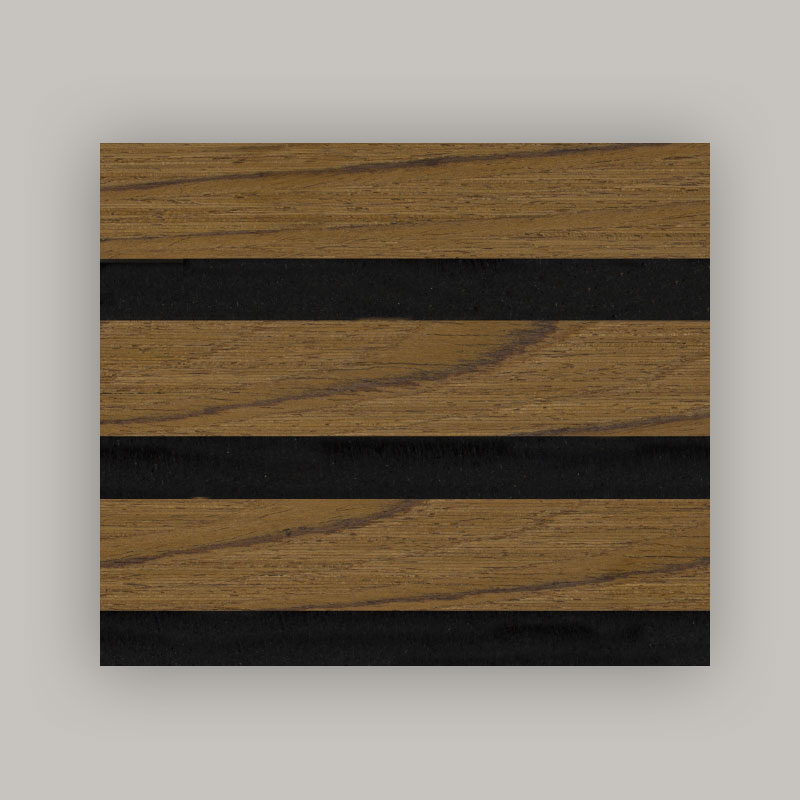
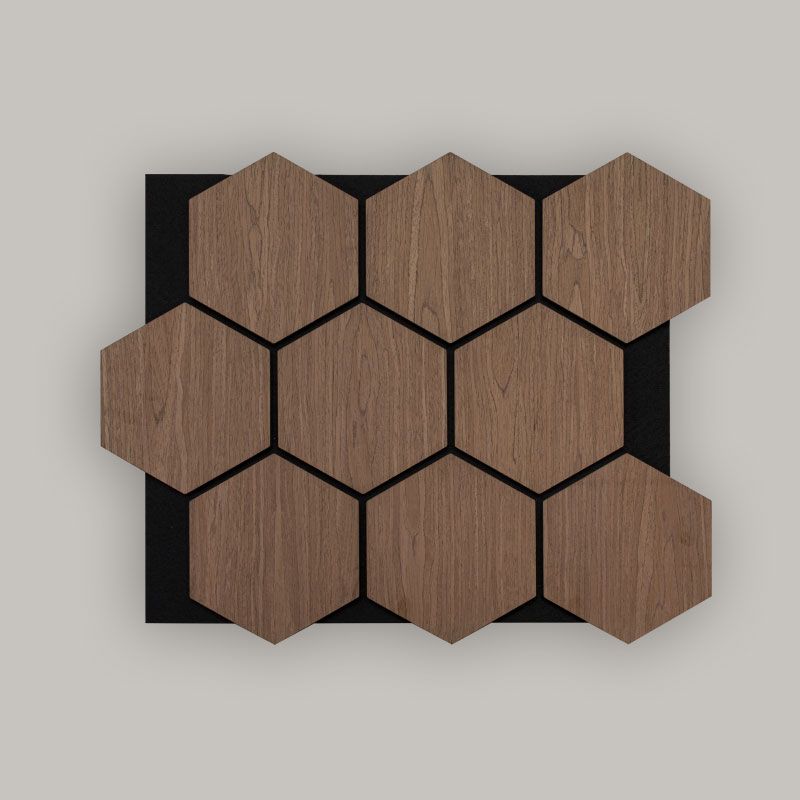



How Engineered Wood Acoustic Wall Panels Improve Sound Control in Commercial Spaces
Engineered wood acoustic wall panels are widely used in modern commercial environments because they control sound, enhance speech clarity, and create comfortable acoustic conditions. Their engineered structure, material composition, and design flexibility address noise challenges commonly found in offices, retail areas, restaurants, auditoriums, and public buildings.
1. Enhanced Sound Absorption Through Multi-Layer Structure
Engineered wood acoustic panels typically combine a perforated or slotted wood surface with a sound absorbing core such as mineral wool, acoustic felt, or PET fiber. This multi layer structure helps to reduce mid to high frequency noise generated by conversations, footsteps, or equipment, minimize echo and reverberation time by absorbing sound energy rather than reflecting it, and improve speech intelligibility which is essential for offices, meeting rooms, and classrooms. The combination of rigid engineered wood and soft acoustic cores provides balanced acoustic performance that traditional wood panels alone cannot achieve.
2. Effective Noise Diffusion for Balanced Acoustics
Many engineered wood panels feature surface grooves, perforations, or geometric patterns that help diffuse sound. Diffusion breaks up direct sound waves and scatters them in multiple directions, preventing sound concentration or hot spots. This is especially beneficial in open plan workspaces, conference rooms, hospitality venues, and performance halls. By preventing uneven sound distribution, diffusion helps maintain consistent acoustic comfort across larger areas.
3. Reduced Background Noise and Improved Privacy
In commercial environments, excessive background noise can lower productivity and create discomfort. Engineered wood acoustic wall panels lower background noise levels by absorbing sound from HVAC systems, machinery, and conversations. They also reduce sound transmission between adjacent rooms, improving acoustic privacy in offices. This makes them suitable for coworking spaces, executive offices, clinics, and customer service areas where privacy is important.
4. Structural Stability with Acoustic Performance
Because the panels are made from engineered wood such as MDF, HDF, or laminated veneers, they offer high dimensional stability and resistance to warping and moisture changes. These properties ensure consistent acoustic performance over time, an important factor in public buildings and commercial interiors with long service cycles.
5. Visual Appeal Combined with Acoustic Functionality
Engineered wood acoustic wall panels provide sound control without compromising aesthetics. They allow a wide range of wood textures and finishes and can be integrated with interior design themes to provide continuity between acoustic performance and visual appeal. This makes them a preferred solution in hotels, restaurants, corporate interiors, and cultural venues.
6. Sustainable and Low Maintenance Solution
Many engineered wood acoustic panels are produced using recycled or low VOC materials and sustainable timber veneers. They can include fire resistant and moisture resistant cores. Additionally, they are durable and easy to clean, lowering long term maintenance costs for commercial facility managers.
If you need an HTML version formatted for a product page, SEO optimized text, or a translated variant for a specific market, I can provide that as well.
How Engineered Wood Veneer Enhances Sound Absorption in Modern Interior Spaces
1. Multi Layer Construction Improves Acoustic Efficiency
Engineered wood veneer acoustic wall panels typically consist of a decorative veneer surface, a perforated or grooved MDF or plywood substrate, and an internal sound absorbing core such as mineral wool or acoustic felt. This multi layer structure helps capture, diffuse, and dissipate sound energy, reducing echo and reverberation in interior spaces.
2. Perforation and Slot Patterns Increase Sound Absorption
Acoustic wood veneer panels often feature CNC machined perforations, slots, or grooves on the surface. These openings allow sound waves to enter the panel and be absorbed by the inner acoustic material. Different perforation ratios and pattern designs can be selected to achieve the required noise reduction coefficient for specific applications.
3. Engineered Core Materials Reduce Noise Reflection
The core layer, commonly made from high density MDF combined with acoustic insulation, minimizes unwanted sound reflections. By converting sound energy into heat through friction within the porous insulation material, the panels help create cleaner acoustic environments suitable for speech clarity and music quality.
4. Stable Material Performance Enhances Acoustic Consistency
Engineered wood veneer panels offer greater dimensional stability compared with natural wood. They resist warping, cracking, and expansion, ensuring consistent acoustic openings and uniform performance over time even in environments with changing humidity or temperature.
5. Aesthetic Versatility Supports Acoustic Design Integration
In addition to functional sound absorption, engineered wood veneer provides a wide range of grain patterns, colors, and finishes. Designers can integrate acoustic treatment into interior spaces without compromising visual appeal.
6. Ideal for Modern Applications
Engineered wood veneer acoustic panels are widely used in offices, meeting rooms, hospitality spaces, retail interiors, schools, auditoriums, libraries, home theaters, and residential acoustic improvement projects. Their combination of aesthetic value and acoustic performance makes them suitable for modern interior design.
Engineered wood wall panels are manufactured using layers of wood fibers, veneers, or strands bonded together with adhesives under heat and pressure. Unlike solid wood, engineered panels are designed to provide enhanced performance characteristics while maintaining the natural aesthetic of wood. They are widely used in both residential and commercial construction projects due to their durability, versatility, and design flexibility.
Enhancing Structural Stability
One of the key advantages of engineered wood wall panels is their superior structural stability compared to traditional solid wood. The layered construction minimizes the effects of natural wood expansion and contraction caused by changes in temperature and humidity. This reduces the risk of warping, splitting, or cracking over time, ensuring long-term stability of walls.
Additionally, engineered wood panels often come in larger sizes and uniform thickness, allowing for easier load distribution and stronger wall assemblies. In applications such as partition walls, cladding, or load-bearing panels, this structural integrity ensures reliable performance in both interior and exterior environments.
Design Flexibility
Engineered wood wall panels offer significant design flexibility for architects, designers, and builders. They can be manufactured in a wide range of finishes, textures, and wood species, enabling seamless integration into different interior styles—from contemporary to traditional. Panels can also be customized in size and shape to meet specific architectural requirements, including curved or modular installations.
The panels can be combined with other materials, such as metal, glass, or acoustic insulation, to create multifunctional wall systems. Their lightweight nature also facilitates easier handling and installation, reducing labor time and allowing for more complex design applications without compromising structural performance.
Additional Benefits
- Cost Efficiency: Engineered panels often cost less than solid wood while offering similar aesthetics and enhanced stability.
- Sustainability: Using wood fibers and veneers efficiently reduces the demand for solid timber, supporting environmentally responsible building practices.
- Acoustic and Thermal Performance: Some engineered panels are designed with integrated insulation layers to improve sound absorption and thermal regulation within buildings.
Engineered wood wall panels represent a versatile and reliable solution for modern construction. By combining structural stability with extensive design flexibility, they provide builders and designers with the tools to create durable, aesthetically pleasing, and sustainable wall systems. Their adaptability ensures that both functional and decorative requirements are met without compromising performance or quality.
