 English
 Español
What Is MDF and How Is It Actually Made
Medium density fiberboard, commonly shortened to MDF, is an engineered wood panel produced by breaking down softwood and hardwood residuals into fine fibers, then combining those fibers with wax and a synthetic resin binder. The mixture is formed into mats and pressed under controlled heat and pressure until it forms a dense, uniform panel. Unlike plywood, which retains a layered wood-grain structure, or particleboard, which uses coarser wood chips, MDF has no visible grain and no internal voids, which is why it machines so cleanly along edges and profiles.
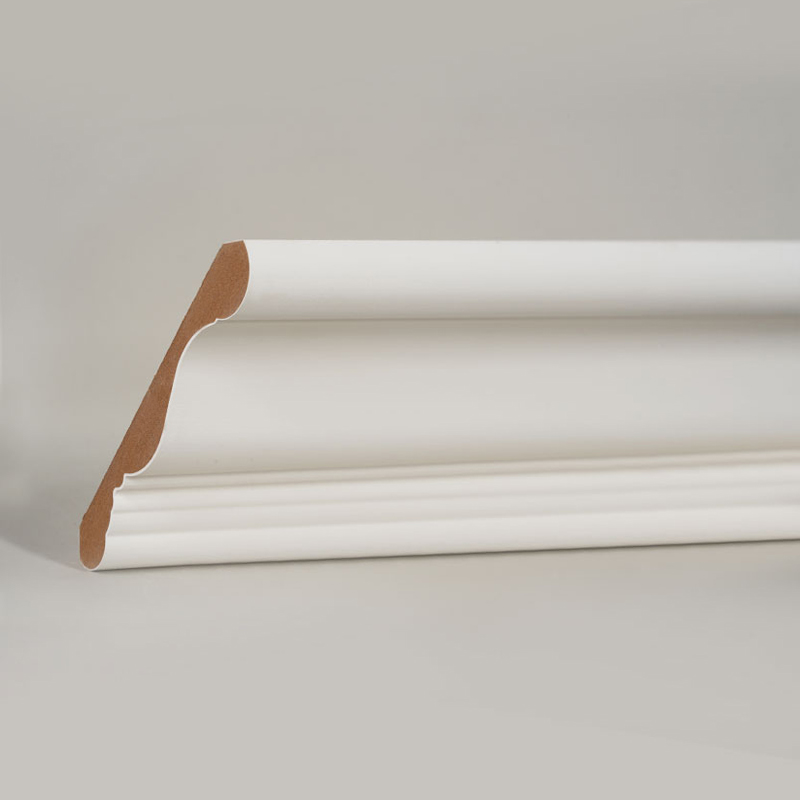
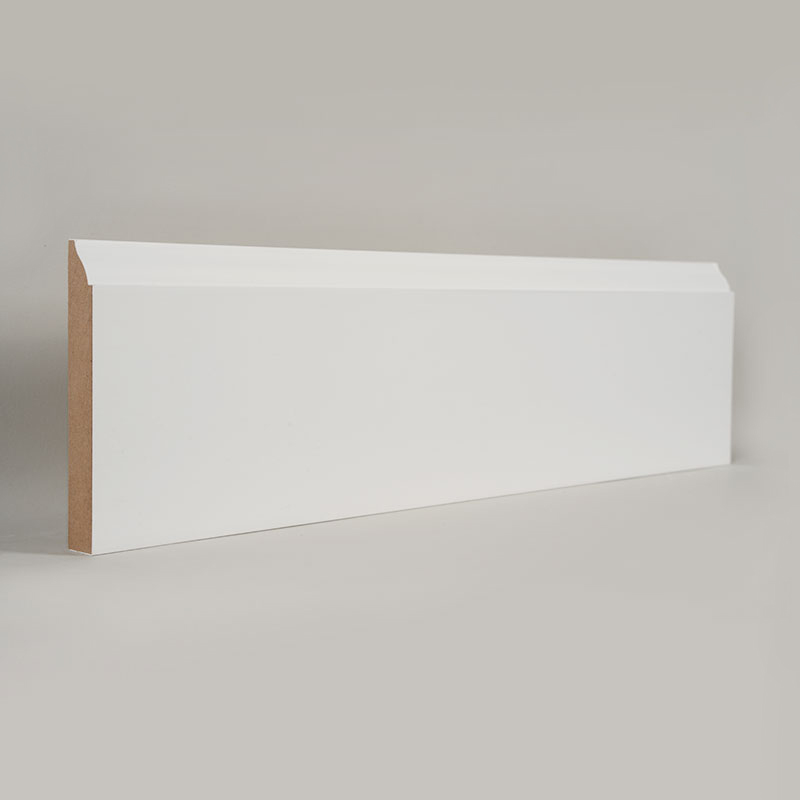
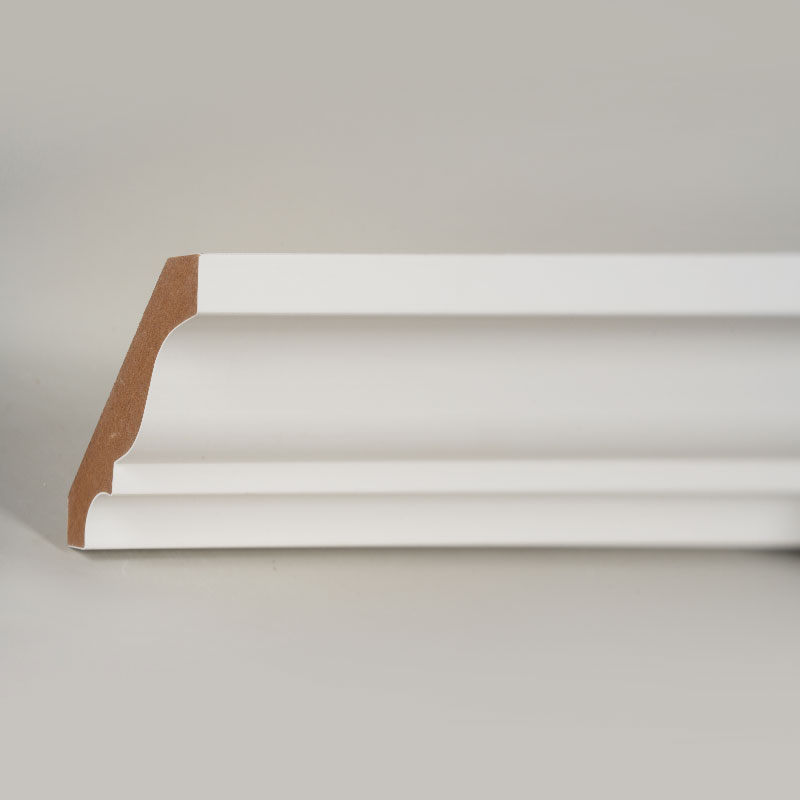
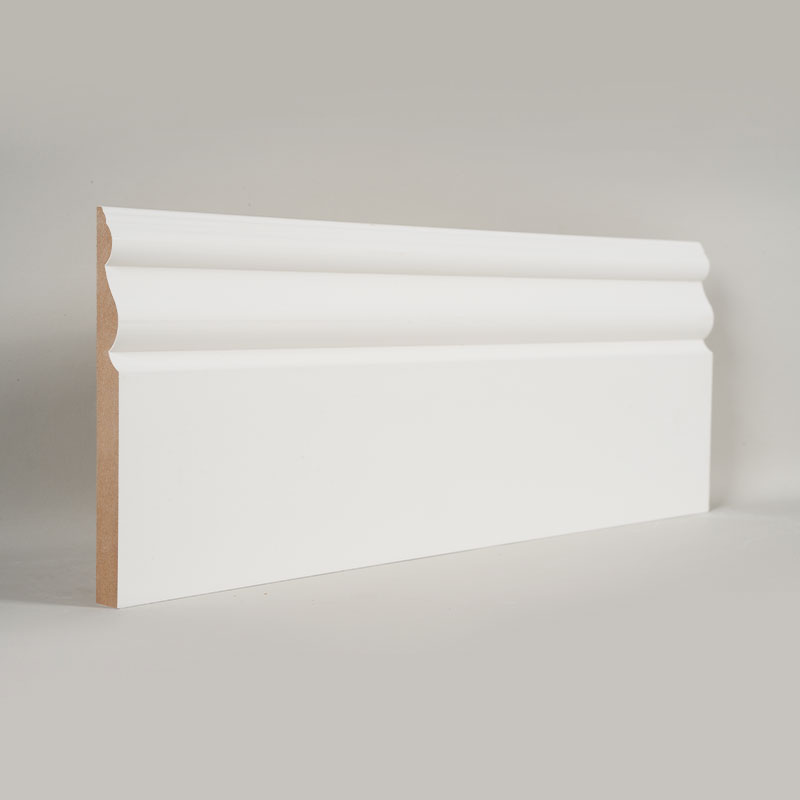
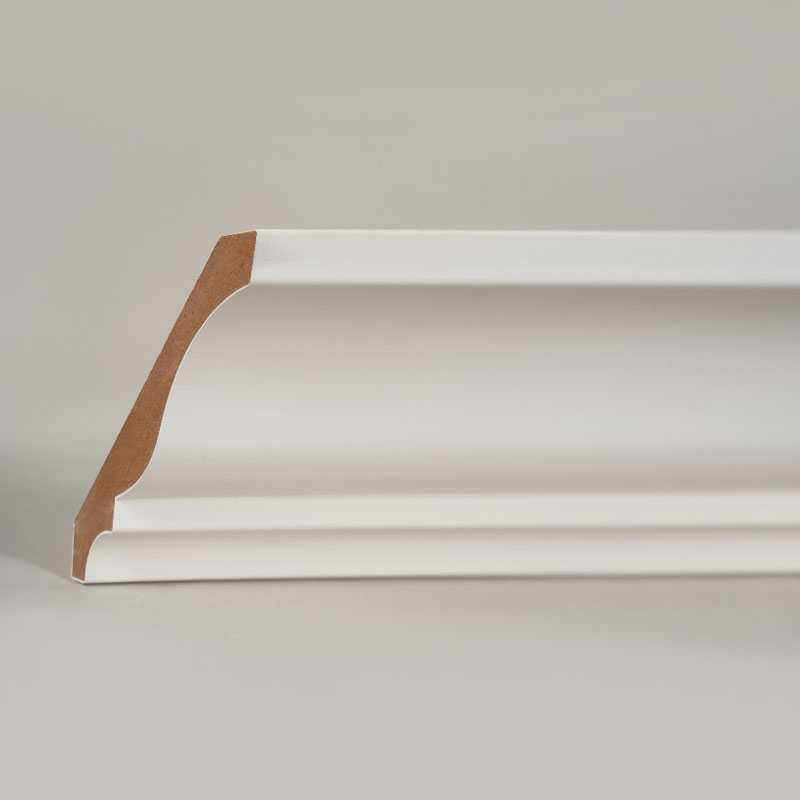
This uniformity is exactly why MDF has become the base material of choice for interior trim products such as mdf skirting board and mdf crown moulding. Both profiles depend on a substrate that routs cleanly, holds sharp detail, and accepts paint without the grain telegraphing through the finish.
MDF Density Explained: Why It Matters More Than Thickness
Density, not panel thickness, is the single biggest factor in how MDF performs once it becomes trim, cabinetry, or moulding. Density is measured in kilograms per cubic meter, and panels are generally grouped into three practical bands: standard MDF, medium-high density MDF, and high density fiberboard. Higher density typically means tighter fiber packing, which improves screw-holding strength, edge durability, and resistance to surface dents, but it also adds weight and can make the material slightly more brittle under sharp impact.
For interior mouldings and skirting boards, mid-to-high density panels strike the right balance: dense enough to hold crisp profile detail after routing, yet workable enough for standard woodworking tools without excessive blade wear.
Note: density ranges vary by manufacturing process and raw fiber source, so figures above represent common industry bands rather than a fixed standard.
High Density Fiberboard vs Standard MDF: Where the Difference Shows Up
High density fiberboard, often labeled HDF, is manufactured the same way as MDF but pressed to a tighter fiber density, usually above 800 kilograms per cubic meter. The practical difference between high density fiberboard and standard MDF shows up in five areas: raw density, moisture resistance, machinability, screw-holding strength, and material cost. HDF wins on strength and moisture tolerance, while standard MDF remains easier to rout at high speed and is generally more cost-efficient for large-profile trim runs.
In profile moulding production, the deciding factor is rarely density alone. It is whether the panel holds a routed edge cleanly at the specific profile depth being cut.
MDF Board Properties at a Glance
Beyond density, several other properties determine whether a panel is suited to interior trim work. The table below summarizes the core properties buyers and installers typically check before specifying MDF for skirting, architrave, or crown profiles.
| Property | Typical Range | Relevance to Trim |
|---|---|---|
| Density | 600 to 850 kg/m3 | Edge and profile detail retention |
| Internal Bond Strength | 0.5 to 0.9 MPa class | Resistance to delamination |
| Screw Withdrawal | Moderate to high | Fixing and installation stability |
| Surface Smoothness | Very fine, closed surface | Paint and primer finish quality |
| Moisture Sensitivity | Standard to moisture-resistant grades | Suitability near kitchens, bathrooms |
Moisture-resistant MDF grades use a modified resin system and are worth specifying for skirting boards in bathrooms, laundries, or any room with sustained humidity, even though standard interior MDF performs well in typical living spaces.
Choosing the Best Primer for MDF
MDF is porous at cut edges and readily absorbs standard wall paint, which leads to a fuzzy, uneven surface if primer is skipped. The best primer for MDF is one specifically formulated to seal the fiber structure rather than a general-purpose wall primer. Three primer categories work reliably on MDF trim:
- Water-based MDF sealer primers, which reduce fiber swelling and dry fast between coats
- Solvent-based shellac or stain-blocking primers, which seal tannin bleed and porous edges in a single coat
- High-build primer surfacers, which fill minor routing marks and create a smooth base for topcoat
Whichever primer is used, cut edges and mitered corners deserve an extra coat, since end grain fibers absorb far more liquid than the flat pressed faces of the board.
Applying MDF Undercoat Paint Without Raising the Grain
MDF undercoat paint sits between the primer and the finish coat, providing an even, sandable base that hides minor surface irregularities. The most common mistake is applying undercoat too heavily in one pass, which reintroduces moisture into the fiber surface and causes slight swelling, sometimes called grain raise, even on a material with no true wood grain.
A controlled two-thin-coat approach with light sanding between coats consistently outperforms a single heavy coat, both in surface flatness and in how long the finish holds up under handling.
How to Cut MDF Safely Without Damaging the Edge
Cutting MDF generates fine dust, and because the material has no grain to guide a blade, tear-out happens easily if the wrong blade or feed speed is used. A few practical steps keep both the cut edge and the operator safe:
- Use a fine-tooth carbide blade rated for engineered wood, not a general framing blade
- Score the top face lightly before a full cut on cross-grain profile trims to prevent chip-out
- Feed the material at a steady, moderate pace rather than pushing hard through dense sections
- Wear a fitted dust mask rated for fine particulates, since MDF dust is significantly finer than natural wood sawdust
- Support long skirting or crown lengths on both sides of the cut line to avoid snapping at the miter
For crown moulding specifically, a compound miter saw with a stop block produces more consistent repeat angles than a hand miter box, which matters when multiple corners need to match.
Prepping MDF for Molding Installation
Before installation, every cut edge, screw hole, and joint line should be filled and sanded so the finish reads as one continuous surface once painted. Standard prep sequence: fill nail holes and seams with a paintable wood filler, sand flush with fine grit paper, wipe down dust with a tack cloth, then apply primer before the final undercoat and topcoat. Skipping the tack-cloth step is a common cause of visible dust nibs in the finished coat.
Where Density Choice Actually Matters: Skirting vs Crown Profiles
Skirting boards sit at floor level, where impact resistance from foot traffic, vacuum cleaners, and furniture movement is the main stress factor, so a medium-high density panel is usually sufficient. Crown moulding, by contrast, carries less physical impact but requires cleaner detail retention on more intricate profile curves, which favors slightly denser, finer-fiber board. Buyers sourcing mdf skirting boards for high-traffic commercial corridors, for example, often step up one density grade compared to a standard residential hallway specification.
Frequently Asked Questions
Q1: What is MDF made of?
MDF is made from wood fibers derived from softwood or hardwood residuals, combined with wax and a resin binder, then pressed under heat and pressure into a dense, uniform panel.
Q2: Is high density fiberboard the same as MDF?
High density fiberboard is a denser subtype of the same manufacturing process, typically pressed above 800 kilograms per cubic meter, giving it more strength and moisture tolerance than standard MDF.
Q3: What is the best primer for MDF trim?
A dedicated MDF sealer primer or a shellac-based stain-blocking primer works best, since both seal the porous fiber surface more effectively than general wall primer.
Q4: Do I need MDF undercoat paint before the topcoat?
Yes, undercoat evens out the surface and improves topcoat adhesion, and applying it in two thin coats gives a flatter result than one heavy coat.
Q5: What blade should I use to cut MDF safely?
A fine-tooth carbide blade designed for engineered wood minimizes chip-out and produces a cleaner edge than a standard framing blade.