 English
 Español
What You Need to Know Upfront
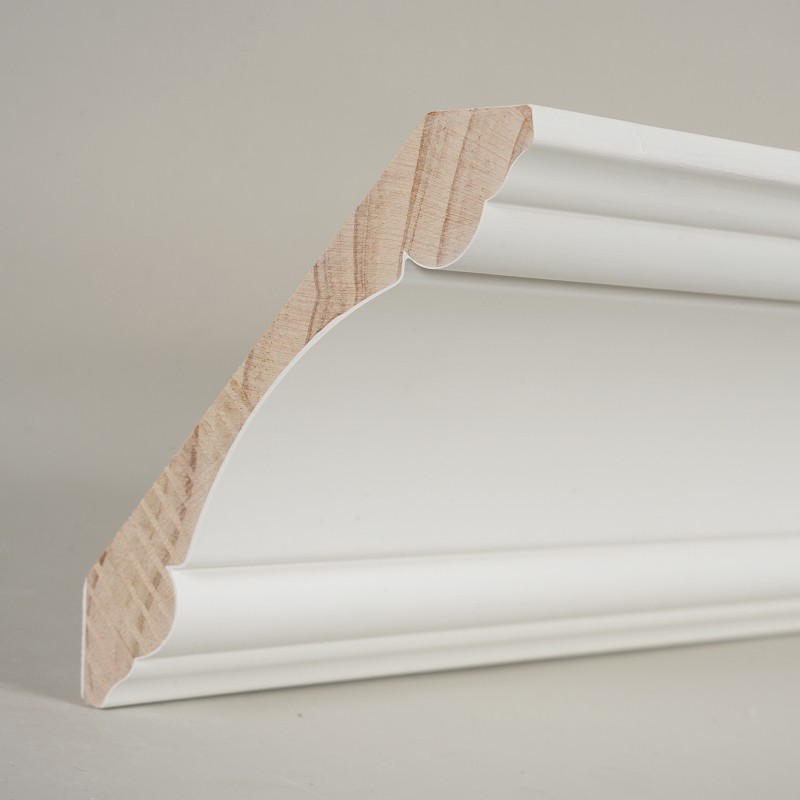
Installing crown moulding is achievable for most DIYers with the right tools and a clear understanding of angles. The most critical step is cutting accurate miter and bevel angles — typically 45° miters combined with 33.9° or 45° bevels depending on your wall-ceiling angle. Using MDF crown moulding simplifies the process because it is pre-primed, dimensionally stable, and easy to cut cleanly with standard woodworking tools. Whether you are finishing a living room, bedroom, or hallway, this guide walks you through every step.
Why MDF Crown Moulding Is a Popular Choice
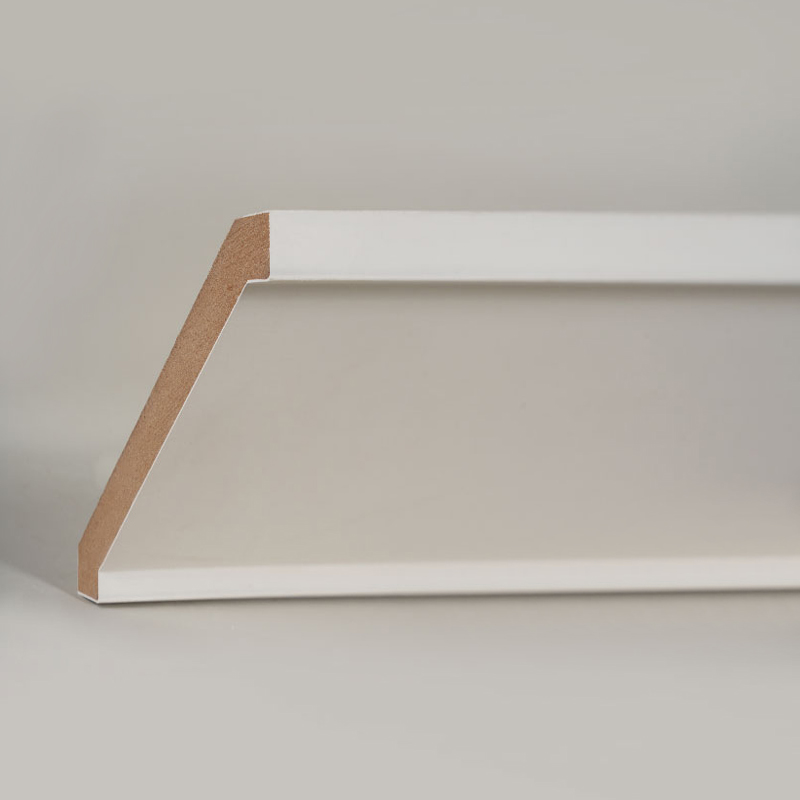
MDF (Medium Density Fibreboard) crown moulding has become the go-to material for interior trim work for several practical reasons:
- Consistent density — no knots, grain defects, or warping common in solid timber.
- Pre-primed surface — ready to paint straight from the pack, saving preparation time.
- Crisp profile edges — MDF holds fine detail better than many softwoods.
- Cost-effective — typically 20–40% cheaper than equivalent solid timber profiles.
- Easy to finish — takes paint evenly without raising grain or requiring multiple sealer coats.
Its main limitation is moisture sensitivity, so it is best suited to dry interior rooms rather than bathrooms or kitchens with heavy steam.
Tools and Materials You Will Need
Gathering the right tools before you start saves time and prevents costly mistakes. Here is a complete list:
Essential Tools
- Compound miter saw (sliding models handle wider profiles)
- Tape measure and pencil
- Stud finder
- Nail gun (15- or 16-gauge finish nailer) or hammer and finish nails
- Caulking gun
- Spirit level
- Putty knife or scraper
- Sandpaper (120 and 180 grit)
Materials
- MDF crown moulding lengths (measure each wall and add 10–15% for waste)
- Paintable caulk
- Wood filler or spackling compound
- Primer and topcoat paint
- Construction adhesive (optional for extra hold)
Understanding Crown Moulding Angles
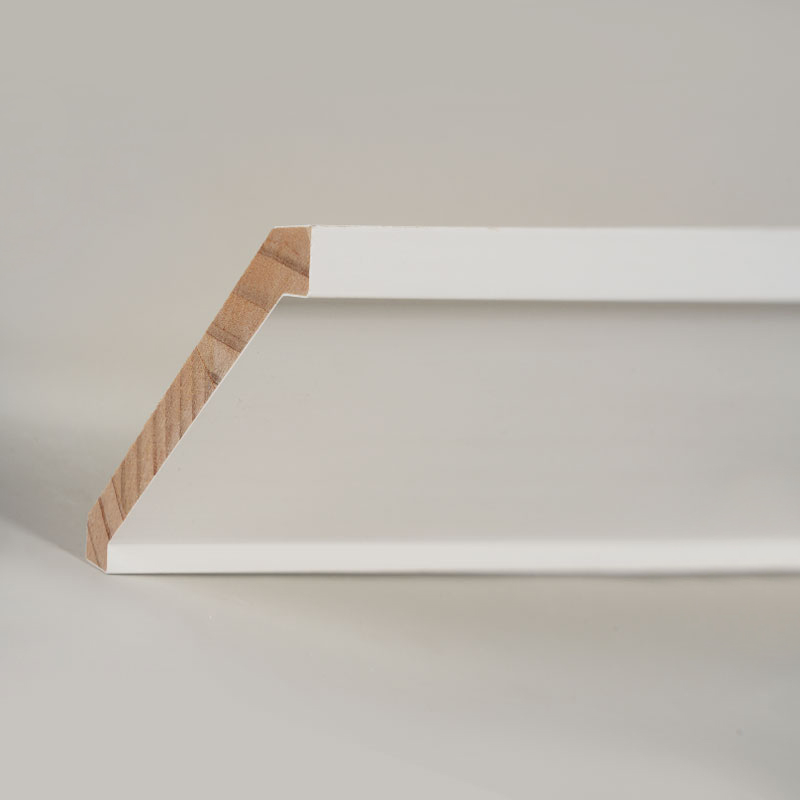
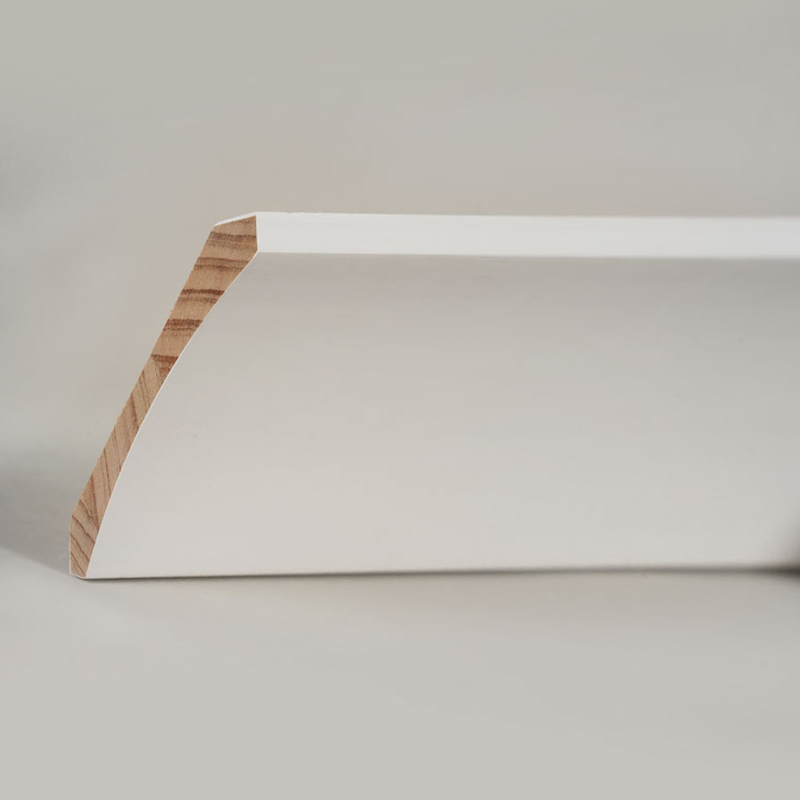
This is where most beginners struggle. Crown moulding sits at an angle between the wall and the ceiling — it does not lie flat against either surface. Most standard crown moulding is designed to sit at a 52°/38° spring angle, meaning it rests 52° from the wall and 38° from the ceiling.
To cut corners accurately, you have two approaches:
Method 1 – Flat on the Saw Bed (Compound Cut)
The moulding lies flat on the saw table. You set both a miter angle and a bevel angle simultaneously. For a standard 52°/38° profile joining at a 90° corner:
| Corner Type | Miter Angle | Bevel Angle |
| Inside corner (left piece) | 31.6° | 33.9° |
| Inside corner (right piece) | 31.6° | 33.9° |
| Outside corner (left piece) | 31.6° | 33.9° |
| Outside corner (right piece) | 31.6° | 33.9° |
Note: Direction of miter and bevel is mirrored between left and right pieces. Always test cuts on scrap first.
Method 2 – Nested Against the Fence (Spring Angle Cut)
The moulding is held upside down against the vertical fence of the saw, mimicking its installed position. You only set a miter angle of 45° — no bevel adjustment needed. This is simpler for beginners and works well when the moulding fits easily against the saw fence.
Step-by-Step: How to Cut Crown Moulding
- Measure each wall — measure along the ceiling line from corner to corner. Record all four walls if doing a full room.
- Mark your moulding — mark the length on the back of the piece, noting which end receives which cut direction.
- Set up your saw — choose your cutting method (nested or flat) and dial in your angles. Lock the settings firmly.
- Cut a test scrap — always make test cuts on off-cuts first. Hold them together at the corner to check fit before cutting your actual piece.
- Cut inside corners as cope joints — for inside corners, many professionals prefer coped joints over miters. Cut one piece square and butt it into the corner, then cope the second piece to overlap it. Coped joints stay tight even as timber expands and contracts.
- Cut outside corners as miters — outside corners use matching miter cuts. Outside corner joints are visible, so precision matters most here.
- Sand cut ends lightly — MDF can crumble slightly at cut edges. A light pass with 120-grit sandpaper cleans this up.
Step-by-Step: How to Install Crown Moulding
1. Locate and Mark Studs and Ceiling Joists
Use a stud finder to locate wall studs and ceiling joists. Mark their positions with a pencil just below where the moulding will cover them. Nailing into solid framing is essential — nails into plasterboard alone will not hold the weight of MDF moulding long-term.
2. Draw a Reference Line
Measure down from the ceiling the width of the moulding's wall contact point (typically 60–90mm depending on profile size). Snap a chalk line or draw a pencil guideline around the room. This gives you a consistent installation height on every wall.
3. Start with the Most Visible Wall
Begin installation on the wall directly opposite the main entry point — this is the most visible wall when you enter the room. Errors on less visible walls are easier to disguise.
4. Apply Adhesive (Optional but Recommended for MDF)
Run a thin bead of construction adhesive along the back of the moulding on both the wall and ceiling contact faces. This supplements nails and helps prevent the MDF from pulling away over time due to slight flexing of the building.
5. Nail the Moulding in Place
Hold the moulding firmly against your reference line. Nail at a slight downward angle into the wall studs and at a slight upward angle into the ceiling joists. Use 50–65mm finish nails for most standard MDF profiles. Space nails approximately every 400–600mm and always nail within 50mm of each end.
6. Work Around the Room
Install each piece in sequence. For inside corners, butt the first piece into the corner square-cut, then install the coped second piece so it overlaps cleanly. For outside corners, dry-fit both mitered pieces before nailing to confirm the joint is tight.
7. Fill Nail Holes and Gaps
Use wood filler or spackling to fill all nail holes. Allow to dry fully, then sand flush. Apply paintable caulk along the top edge (ceiling joint) and bottom edge (wall joint) of the moulding. Caulking is the step that separates a professional-looking result from an amateur one — it fills any minor gaps and creates clean, paint-ready lines.
8. Prime and Paint
MDF crown moulding is pre-primed, but applying one additional coat of primer — especially on cut ends — seals the MDF and prevents paint absorption issues. Once the primer is dry, apply two coats of your chosen topcoat, lightly sanding between coats with 180-grit sandpaper for the smoothest possible finish.
Common Mistakes and How to Avoid Them
| Mistake | Why It Happens | How to Avoid It |
| Gaps at inside corners | Miter cut instead of cope joint | Use cope joints on inside corners |
| Moulding pulling away from ceiling | Nailed only into plasterboard | Always nail into joists and studs |
| Uneven reveal on wall | No reference line drawn | Snap a chalk line before installing |
| Paint soaking into cut ends | MDF ends left unsealed | Prime all cut ends before painting |
| Outside corner joint opening over time | No adhesive used | Use construction adhesive plus nails |
Tips for Rooms with Out-of-Square Corners
Very few rooms have perfectly square 90° corners. If a corner measures anywhere from 88° to 92°, adjust your miter angles accordingly — divide the corner angle by two to get each miter cut. For example, an 88° corner requires two 44° miter cuts rather than two 45° cuts.
For corners significantly out of square (more than 3–4° off), use a digital angle finder or bevel gauge to measure the exact corner angle before setting up your saw. This small extra step can prevent hours of refitting and wasted material.
Frequently Asked Questions
Q1: Can I install MDF crown moulding by myself, or do I need a helper?
For shorter pieces (under 1.5m), one person can manage. For longer lengths, a second pair of hands — or a temporary support ledge nailed below the reference line — makes positioning and nailing much easier.
Q2: What is the best way to join two pieces of MDF crown moulding on a long wall?
Use a scarf joint: cut both pieces at a 45° angle so the joint is angled rather than a straight butt cut. Position the joint over a ceiling joist or wall stud so both ends can be nailed into solid framing.
Q3: Do I need to seal MDF crown moulding before painting?
Pre-primed MDF is ready for topcoat paint on face surfaces. However, always apply a coat of primer or end-grain sealer to freshly cut ends, as raw MDF edges absorb paint heavily and can appear rough without sealing.
Q4: How do I cut crown moulding for a vaulted or cathedral ceiling?
Vaulted ceilings require compound angle calculations based on the actual pitch of the ceiling. Measure the ceiling slope angle first, then use a compound miter saw angle chart or an online crown moulding angle calculator to determine the correct miter and bevel combination.
Q5: What size MDF crown moulding is best for standard ceiling heights?
For ceilings between 2.4m and 2.7m, a profile with a face width of 70–90mm is proportionate. For ceilings 3m and above, profiles of 100–150mm or wider create the right visual balance.
Q6: Can MDF crown moulding be used in a bathroom?
Standard MDF is not recommended in high-moisture environments like bathrooms. Persistent humidity can cause MDF to swell and paint to peel. Consider moisture-resistant MDF variants or alternative materials for wet areas.
Q7: How long does it take to install crown moulding in an average room?
An average 4m × 4m room typically takes 3–5 hours for an experienced DIYer, including cutting, nailing, filling, and caulking. Painting and drying time adds several more hours.