 English
 Español
You have probably stood in a bright open-plan office, a restaurant at lunch, or a lobby with stone floors, where every conversation seems to blend into one wall of noise. The culprit is not simply volume. It is reflection. Hard surfaces such as glass, drywall, tile and concrete bounce sound back into the room, and those reflections quickly turn ordinary activity into auditory clutter.
Acoustic wall panels fix this imbalance by absorbing the sound energy that would otherwise keep bouncing between surfaces. They shorten reverberation time, sharpen speech and bring a room's acoustics back in line with its purpose. For any space where people gather, work or rest, the acoustic wall panel benefits go far beyond decoration.
What Are Acoustic Wall Panels and How Do They Work?
An acoustic wall panel is a wall covering designed to absorb sound rather than reflect it. Some panels use a porous engineered wood core; others use slatted or grille geometry that lets sound travel into the panel structure, where the energy is gradually converted into small amounts of heat. The result is the same: less echo, shorter reverberation and a quieter listening environment.
It is important to separate absorption from soundproofing. Soundproofing stops sound from moving between rooms; absorption controls the sound inside a room. Acoustic wall panels belong to the second category. A panel with an NRC of 0.85 absorbs about 85% of the sound energy that reaches it. The remaining 15% reflects back into the space.
That distinction matters when you compare products. A panel that is excellent at reducing echo will not automatically block a neighbour's television sound, and a heavy partition that blocks transmission will not necessarily make a room feel quieter inside. Most interior noise complaints are about echoes, hard reflections and poor speech clarity, which is exactly what acoustic panels address.
The Main Benefits of Acoustic Wall Panels
When specifiers search for acoustic wall panel benefits, they usually have one of four goals: make a room quieter, make speech easier to understand, make the space look better, or protect the walls themselves. A well-chosen wall panel can deliver all four at once.
1. Sound Absorption That Cuts Echo and Fatigue
Rooms with too much hard surface produce a long reverberation time. Every word, footstep and chair scrape layers on top of the previous one, and occupants unconsciously raise their voices to compete. Acoustic panels bring reverberation down to a comfortable level, which reduces listening fatigue over the course of a working day.
2. Speech Clarity and Privacy
In offices, clinics and conference rooms, hearing a speaker without straining is worth more than raw silence. Absorptive panels stop speech from reflecting across the room and limit the distance a conversation travels. This creates a sense of privacy even in an open plan.
3. Design Flexibility and Visual Warmth
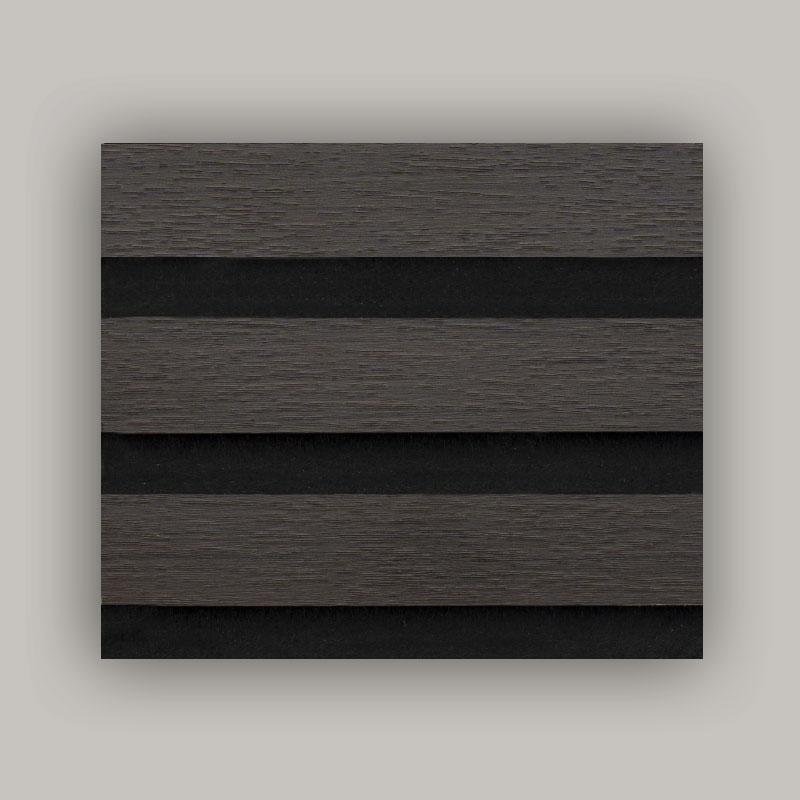
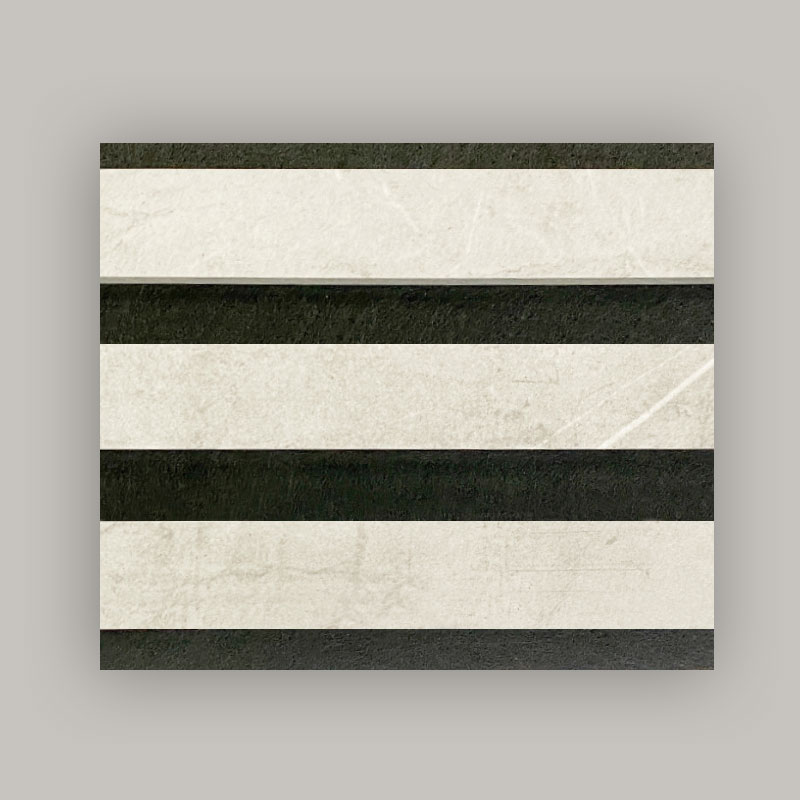
Modern acoustic panels are no longer limited to grey foam. Veneer-wrapped engineered wood panels bring the natural warmth of oak or walnut into a space, while PVC-wrapped surfaces offer fabric grain, leather grain, wood grain, stone and metallic looks. Hexagonal and three-sided slat formats add geometric rhythm to a feature wall.
4. Wall Protection and Easy Maintenance
Wrapped acoustic panels also function as protective wall linings. They resist scuffs from chairs, trolleys and daily traffic, and the sealed surface wipes down far more easily than bare painted drywall. In corridors and meeting rooms, this dual role is one of the most practical acoustic wall panel benefits.
| Benefit | How It Works | Where It Matters Most |
|---|---|---|
| Sound absorption | Porous core converts reflected sound into heat | Offices, restaurants, corridors |
| Speech clarity | Less reflected speech reaches unintended ears | Meeting rooms, clinics, classrooms |
| Design upgrade | Slat, grille and hexagonal patterns add texture | Lobbies, home theaters, retail |
| Wall protection | Durable wrapped surface resists scuffs | High-traffic corridors, schools |
Acoustic Performance Ratings: NRC and STC
Two ratings dominate acoustic wall panel specifications. The noise reduction coefficient (NRC) measures how much sound a surface absorbs on a scale from 0 to 1. It is the most useful number for comparing wall panels intended to reduce echo. If you want to know what NRC means for wood-based panels, our guide to the NRC of engineered wood panels explains the test method and typical values in detail.
The sound transmission class (STC) measures how much sound is blocked by an assembly. It answers a different question. Wall panels influence STC only when they form a meaningful part of a wall build-up, and the topic is covered separately in our guide to the STC rating of PVC-wrapped panels. As a rule of thumb, choose by NRC when the goal is a quieter, clearer room, and by STC when the goal is keeping sound from passing into the next space.
When comparing products, ask the supplier for the NRC value that matches the panel geometry you intend to use. A single-sided panel, a three-sided slat panel and a hexagonal panel can absorb differently at specific frequencies, so the rating should reflect the final configuration.
Where Acoustic Wall Panels Make the Biggest Difference
The value of acoustic panels rises with the amount of noise and hard surfaces in a room. These applications benefit most consistently:
- Open-plan offices and huddle rooms, where multiple conversations compete at once
- Restaurants, cafés and hotel lobbies, where hard surfaces dominate and speech needs to stay intelligible
- Conference rooms and training spaces, where every participant needs to hear clearly
- Classrooms and daycare spaces, where long reverberation reduces concentration
- Home theaters and media rooms, where controlled acoustics improve the sound experience
- Corridors, stairwells and reception areas, where footsteps echo and noise travels far
In these settings, acoustic wall panels deliver measurable results: lower background noise, calmer conversations and less stress for people who spend long hours in the room.
How to Choose the Right Acoustic Wall Panel
Start with the core material
Engineered wood panels wrapped in real wood veneer offer a natural surface profile with a stable structure, which makes them well suited to slat and hexagonal formats. A single-sided engineered wood veneer panel is the cleanest entry point for a feature wall that needs measurable sound absorption.
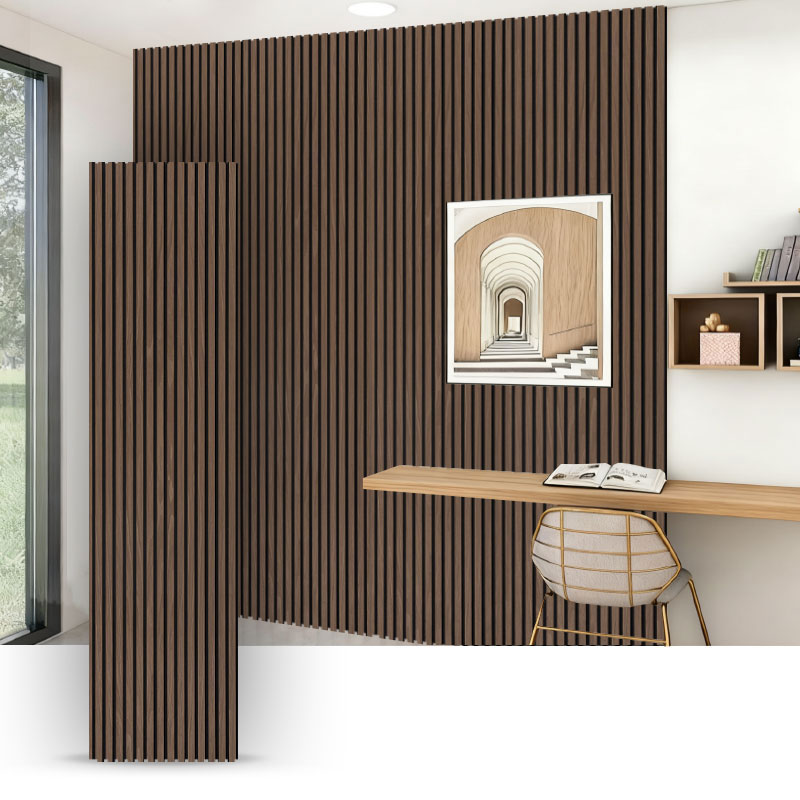 Single-Sided Engineered Wood Veneer Acoustic Wall Panel with Wood Grain FinishThis single-sided veneer panel offers a clean, natural wood look and stable construction, making it a simple yet effective choice for an acoustic feature wall with measurable sound absorption.View Product →
For spaces that need a larger absorbing surface, a three-sided slat profile adds vertical rhythm and increases the visible panel area. The three-sided engineered wood veneer panel gives a room that line-oriented architectural look while controlling reflected noise from multiple angles.
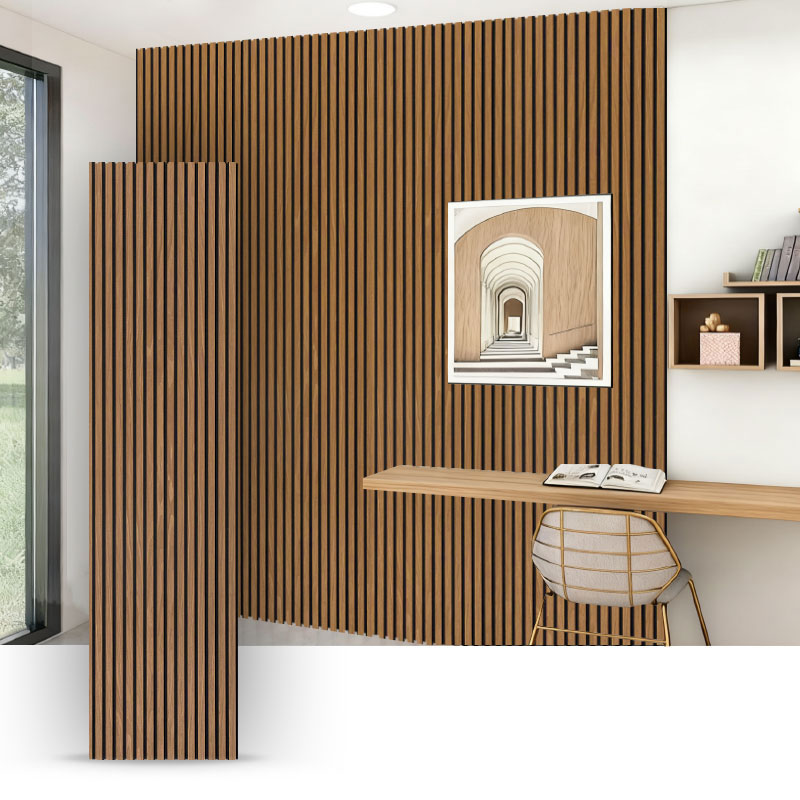 Three-Sided Engineered Wood Veneer Acoustic Slat Panel for Architectural WallsWith a three-sided slat profile, this veneer-wrapped panel adds vertical rhythm and larger absorbing surface, combining a line-oriented aesthetic with multi-angle noise control for architectural installations.View Product →
Consider the wrapped surface
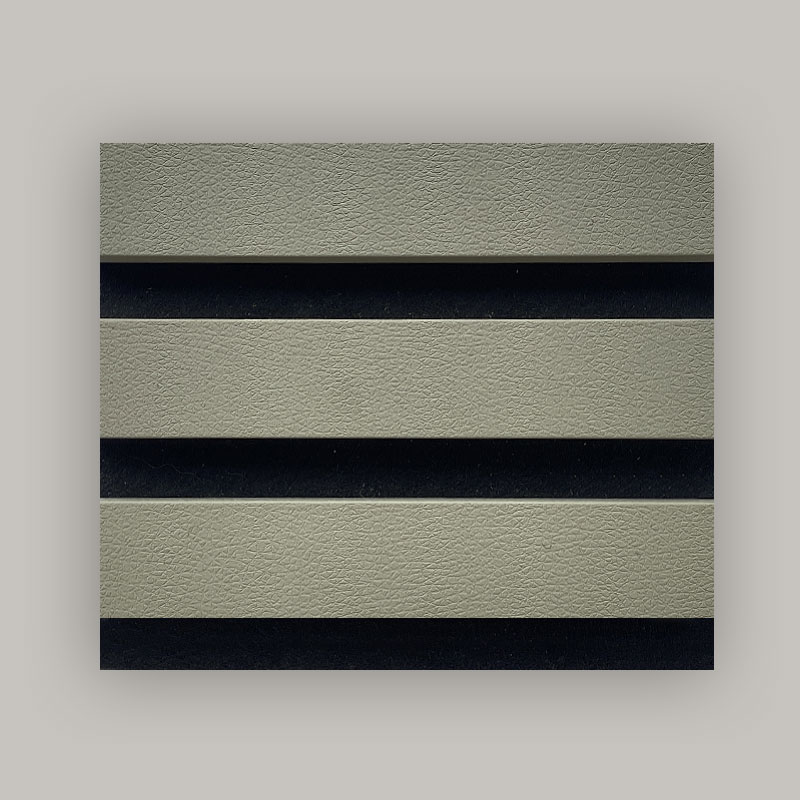
PVC-wrapped panels expand the design palette without compromising durability. Fabric grain and leather grain surfaces read as soft textiles but clean with a damp cloth, which is a clear advantage in hospitality and healthcare settings. The three-sided PVC-wrapped fabric and leather grain panel is a practical choice when a wall must look upholstered but perform like an industrial product.
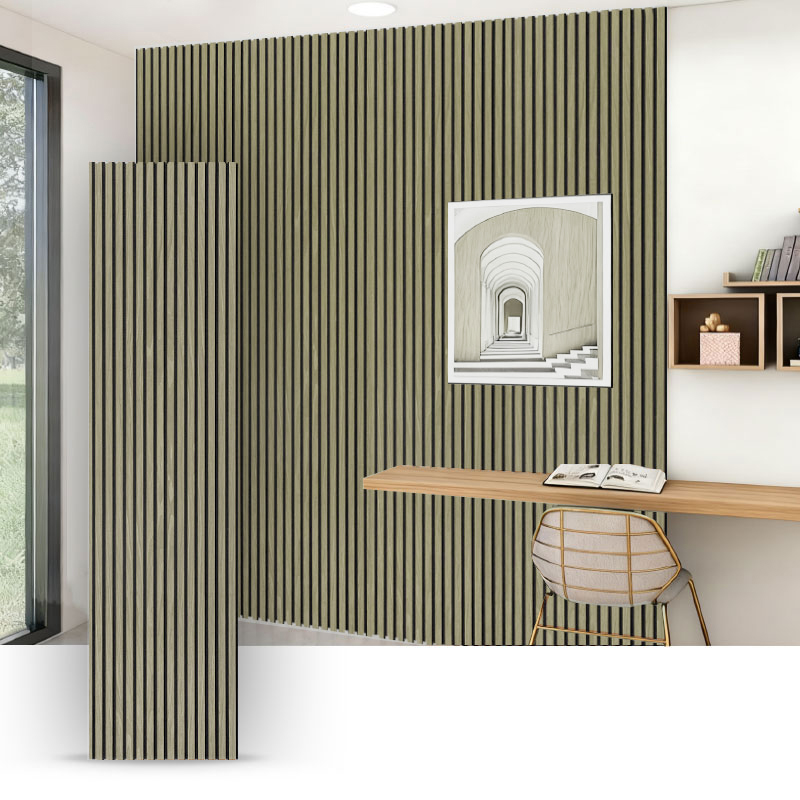 Three-Sided PVC-Wrapped Acoustic Wall Panel in Fabric or Leather GrainThis PVC-wrapped panel mimics soft fabric or leather textures while remaining wipe-clean and durable—an ideal practical option for hospitality and healthcare settings where an upholstered look and industrial performance are required.View Product →
Match the panel geometry to the room
Single-sided panels suit understated feature walls. Three-sided slat panels suit architectural installations on larger wall areas. Hexagonal panels work well in lobbies, children's spaces and feature niches, where the shape itself becomes part of the design language.
Verify dimensions and finish
Check the panel width, thickness and edge treatment against the wall layout before ordering. Confirm that the NRC value applies to the exact geometry and wrapping material you plan to use, and request a sample to judge the surface texture under real lighting.
Installation and Ongoing Care
Acoustic wall panels are designed to be installed over existing drywall, plaster or concrete. The wall surface must be clean, dry and level before mounting. Depending on the panel format and substrate, installers use direct adhesive, mechanical fixings or a simple frame system that leaves the rear cavity intact, since the cavity itself contributes to low-frequency performance.
When installing slat or grille panels, keep the designed gaps free of adhesive and debris. Those gaps are part of the acoustic system, and blocking them changes the absorption characteristics. For the same reason, avoid painting wrapped surfaces or adding thick coatings.
Day-to-day maintenance is simple. Wipe panels with a dry or slightly damp cloth, and use only mild cleaners that do not attack the wrapping layer. PVC-wrapped surfaces are especially forgiving in kitchens, corridors and any room where walls come into frequent contact with hands, carts or luggage.
Frequently Asked Questions About Acoustic Wall Panels
Q1: Are acoustic wall panels worth the investment?
For rooms where echo, background noise or speech clarity is a problem, yes. The panels reduce reverberation, cut listening fatigue and often remove the need for more expensive treatments. In a small conference room or office, a modest area of acoustic panels can change the perceived sound quality completely.
Q2: What is the difference between sound absorption and soundproofing?
Sound absorption reduces the sound energy reflected inside a room. Soundproofing prevents sound from traveling between rooms. Acoustic wall panels are an absorption product. If you need to stop sound leaking through a wall or ceiling, you need mass, decoupling or a combination of both.
Q3: Can acoustic wall panels be installed over existing drywall?
Yes. Panels mount directly onto most sound substrates with adhesive or mechanical fixings. Ensure the surface is flat and clean, and follow the gap and spacing requirements for the specific panel geometry.
Q4: Which material is better: engineered wood or PVC-wrapped panels?
It depends on the visual and cleaning requirements. Engineered wood with veneer wrapping gives a natural wood look and pairs well with slat and hexagonal designs. PVC-wrapped panels offer more surface choices, including fabric, leather, stone and metal looks, with easier wipe-down maintenance. Both provide comparable acoustic function when the geometry is similar.
The acoustic wall panel benefits come down to one principle: controlling the sound that would otherwise bounce around a room. Whether you are outfitting an open-plan office, a restaurant, a classroom or a home theater, panels that absorb reflected noise make the space more comfortable, more private and easier to listen in. With material options ranging from veneer-wrapped engineered wood to PVC-wrapped fabric and leather finishes, the acoustic solution no longer has to look like an afterthought. It can be the most intentional surface in the room.