 English
 Español
Renovating a staircase is the kind of project where one small element creates a big impression. The handrail is what your hand touches every day, and it is often the first detail visitors notice when they look at a stairwell. The challenge is that a handrail is not just a shaped length of wood: profile, base material, finish, mounting method, and code requirements all influence the final decision. The practical way to approach it is to work in order — confirm the safety and grip basics first, then choose the material, then the finish, and only then plan the installation. Start with the right order, and the whole selection becomes much easier.
Choosing stair handrails in the right order: verify height and grip clearance, compare base materials, pick a finish that matches your maintenance level, and only then plan the installation.
Start with Code Compliance and Basic Safety
Building codes exist to keep staircases predictable, and handrails are one of the most regulated parts of a residential stair. Most local codes in North America and Europe require a handrail on at least one open side of a stairway, and many require rails on both sides for commercial or multifamily buildings. The common residential rule is a handrail height of 34 to 38 inches, measured vertically from the front edge of the stair nosing. This range suits the average adult posture and keeps the rail consistent across the whole run.
| Parameter | Typical value | Why it matters |
|---|---|---|
| Rail height above nosing | 34–38 in. (864–965 mm) | Consistent arm support through the stair run |
| Clearance from the wall | At least 1.5 in. (38 mm) | Lets the hand wrap fully around the rail |
| Grip diameter | 1.25–2 in. (32–50 mm) | Comfortable grip for most adult hands |
| Bracket spacing | Usually no more than 48 in. apart | Prevents flexing and sagging under load |
Two details are worth repeating. First, clearance: a rail mounted flush against the wall is almost useless for gripping because you can only hook two fingers over it. Second, continuity: a handrail should be continuous between landings, with brackets strong enough to resist the 200 lb concentrated load that many codes specify. If you are budgeting a staircase or preparing instructions for an installation crew, verify this part before anything else. For a broader safety and style checklist, this home renovation safety guide covers the points that affect both code compliance and daily use.
Pick a Grip Profile That Feels Right
Once the height and clearance are settled, the next decision is shape. A handrail profile does more than set the visual style — it determines how comfortably your hand can grab and slide along the rail during daily use. The standard advice is to choose a grip diameter between 1-1/4 and 2 inches. Round profiles are the classic choice; they feel the same from any angle and are easy to wrap. Oval and egg-shaped profiles give a more natural resting position for the palm but need to be mounted at the correct rotation. Rectangular handrails look modern but offer less grip comfort, so they are better suited to low-use staircases or purely decorative installations.
For both contractor-led and homeowner-led projects, the most practical approach is to test the profile before buying. Hold a short offcut with the same dimensions, or ask your supplier for a sample. Also consider who uses the stairs: elderly family members and young children benefit from a slightly smaller 1-1/4 in. diameter that is easier to wrap, while commercial staircases often use 1-3/4 in. rails for a more substantial feel.
Run through a quick checklist before settling on a profile:
- The grip diameter fits the hand of the person who uses the stairs most often.
- The profile keeps a consistent diameter along the full run, including at turns.
- The clear gap between rail and wall stays above the local minimum.
- The profile matches the visual weight of the balusters or the stair skirt.
Choose the Material Based on Durability and Look
The base material decides how the rail responds to humidity, impacts, and time. The three options you will meet most often in interior stairwork are solid wood, primed MDF, and PVC-wrapped profiles. Each one has a different trade-off between appearance, stability, and maintenance.
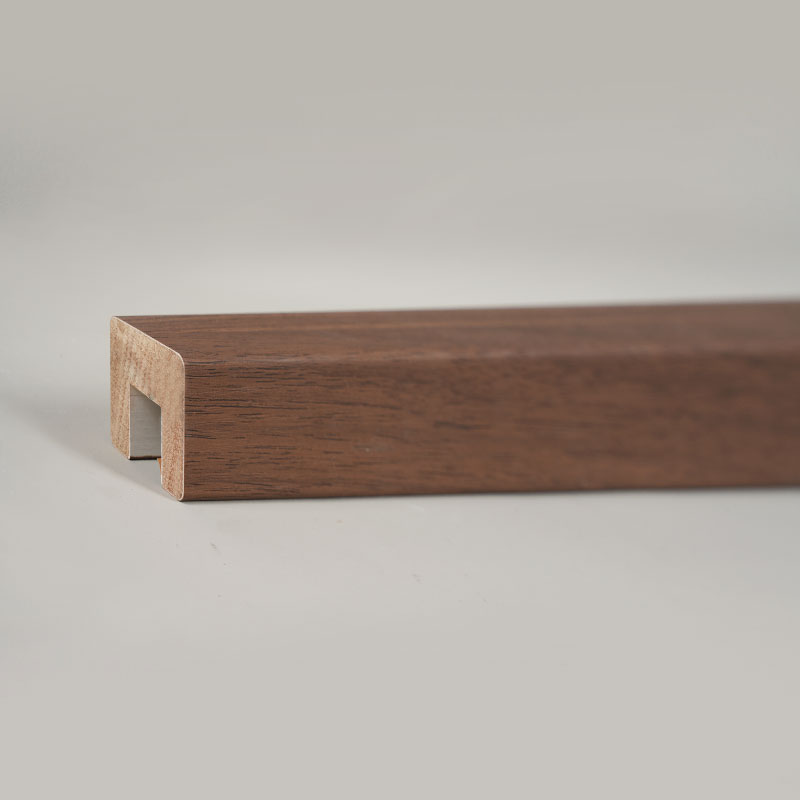
Solid wood handrails, usually made from red oak, white oak, black walnut, or pine, offer a classic texture that can be sanded and refinished when they get worn. They are the right choice when you want to stain the handrail to match hardwood treads or existing millwork. Primed MDF profiles are stable, smooth, and economical, and they take paint well, which makes them popular for painted staircases on a tighter budget. The catch is that bare MDF edges absorb moisture, so cut ends must be sealed before painting. PVC-wrapped handrails combine a stable wood core with a wear-resistant PVC film that copies wood grain, meaning they look like timber but resist scratches, staining, and cleaning chemicals better than most painted surfaces.
| Material | Durability | Moisture resistance | Finish flexibility | Best suited for |
|---|---|---|---|---|
| Solid wood | High; repairable | Moderate; needs sealing | Stain, paint, natural | Stained staircases, character homes |
| Primed MDF | Medium | Low to medium | Paint only | Painted budget stairs |
| PVC-wrapped | High; low maintenance | High | Fixed film grain or color | Busy homes, rental properties |
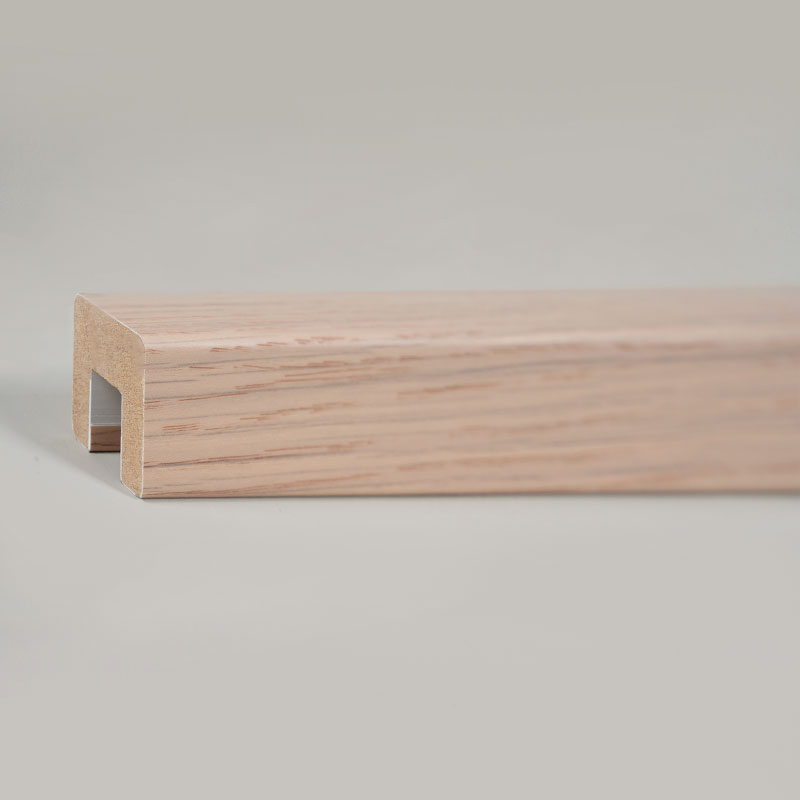
If your staircase is in a busy family home or a rental property, a PVC-wrapped profile is often the most sensible long-term investment because it will not show fingerprints or require repainting every few years. A wrapped oak handrail, for instance, delivers the warm color of oak without the maintenance schedule of a painted or lacquered surface.
 PVC-Wrapped Solid Oak Handrail in Warm Oak ToneThis wrapped solid wood handrail offers the look of oak without frequent refinishing, making it a practical choice for busy homes that need low-maintenance, fingerprint-resistant railing.View Product →
Match the Finish to Your Home and Maintenance Level
The finish is where most handrail decisions actually go wrong. People pick a style first and later discover that the paint chips, the film peels, or the wood grain does not match the treads. The safer route is to decide what level of upkeep you are prepared to accept, then choose the finish accordingly.
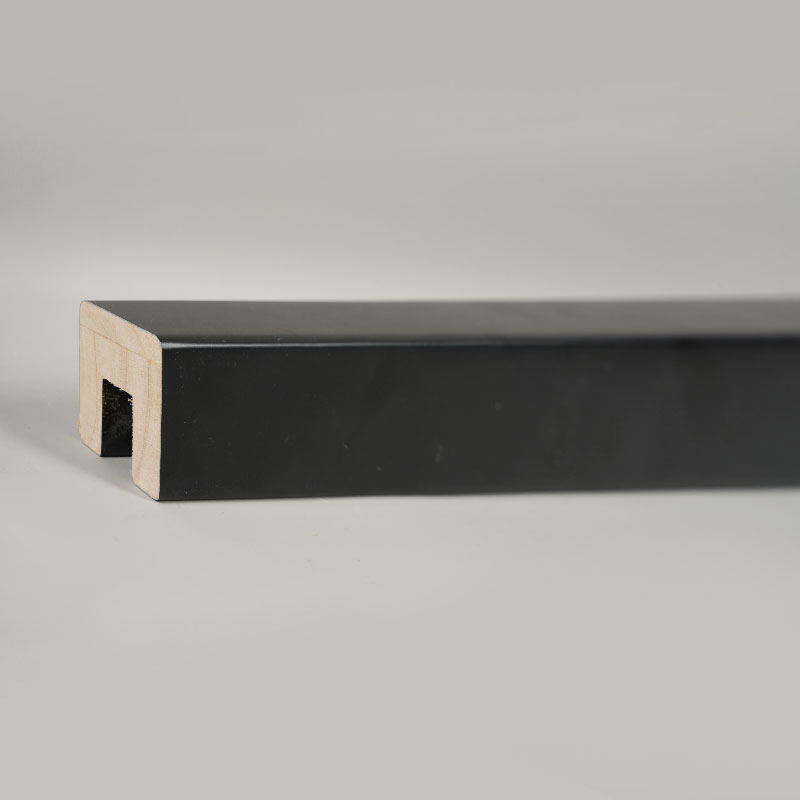
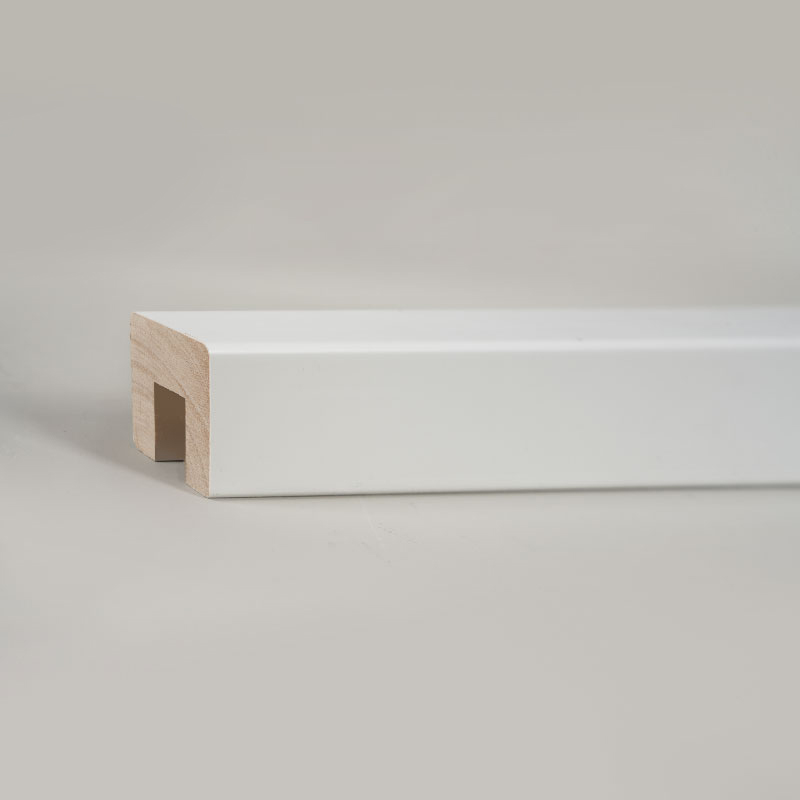
Primed and painted handrails are the workhorse of interior projects. A factory-applied primer with a painted topcoat, in colors such as Munich or Swiss white, gives a clean contemporary look with smooth, even coverage. White handrails are particularly popular because they match skirting boards, window trims, and door casings from the same paint range. If you need to match a specific paint color, ordering pre-finished rails from a factory that mixes and applies the paint in-house is more reliable than painting on site, where brush marks and inconsistent coats are common.
PVC-wrapped finishes cover the other end of the spectrum: the film brings the grain pattern of oak or dark walnut straight to the surface and seals it completely, so cleaning is as simple as wiping down with a damp cloth. On a busy staircase, that can easily save you a weekend of repainting every couple of years. If you are choosing between two similar profiles, let the maintenance level be the tie-breaker.
Color trends in indoor stair railing change slowly, but the bigger shift in recent years has been toward pre-finished surfaces and warm wood tones that fit both modern and traditional homes. If you want to check which directions are holding up in current renovation work, this article on modern indoor stair railing trends is a useful starting point.
 Filler-Primed and Painted Swiss White Solid Wood HandrailA bright Swiss White painted solid wood rail that suits modern interiors. Its finish resists fading and wear, while the clean color coordinates with a variety of stair and decor styles.View Product →
Check the Dimensions and Plan the Installation
Handrail product names usually include the section size in inches, such as 1-1/2 in. or 1-3/4 in., because the profile was designed around those physical measurements. Before ordering, measure your stair run carefully: the total lineal feet of railing required equals the horizontal run plus the nosing overhang for each tread, and it is standard practice to add about 10 percent for cuts, miter joints, and mistakes.
Installation planning matters just as much as the rail itself. Wall-mounted rails need blocking or suitable wall anchors behind the plaster at each bracket point. Brackets should be spaced at even intervals, usually no more than 48 in. apart, with end brackets set close to the turns and newel posts. For an open staircase, the handrail is typically mounted to posts with a return at the top and bottom rather than to the wall. Also remember that the handrail does not end the job: the front edge of each stair tread needs protection and a clean visual break.
A solid wood stair nose creates that finished edge and also helps prevent the tread from splitting under repeated foot traffic. For stairs with painted treads, a pre-finished stair nose in the same oak color ties the handrail, treads, and skirt together neatly.
 Unfinished White Oak Stair Nosing in Natural ColorThis pre-finished or unfinished white oak stair nose protects tread edges and ties handrail to stairs. Its natural grain and rounded profile balance safety with a warm, rustic look.View Product →
Count the Whole Staircase, Not Just the Rail
Experienced buyers treat the handrail as one piece of a larger system. The stair nose, reducer, transition strips, baseboards, and quarter round all sit in the same visual plane, and wood species or white paint tones must match across every one of them. That is why sourcing from a single manufacturer makes sense: a factory that produces solid wood handrails, stair nosings, skirting boards, and transition strips can guarantee the same base material, the same paint color, and the same PVC film across the whole stair and floor package.
For contractors, importers, and renovation companies, there is also an economic angle. Ordering handrails directly from a manufacturer with in-house CNC profiling, finishing, and painting lines removes the middle layer and lets you specify custom profiles or colors that are not available from general distributors. If a project requires an unusual dimension or a custom paint color, ask whether the supplier supports OEM drawings and ODM design support — a practical way to keep the staircase consistent without compromising the design.
Finally, confirm delivery and packaging details before you commit. Long lengths of solid wood always carry some movement risk, and a supplier experienced in packing and shipping mouldings will protect the profiles far better than a general courier.
Frequently Asked Questions
Q1: What diameter should a stair handrail be?
Most building guidelines recommend a grip diameter between 1-1/4 and 2 inches. A diameter of 1-1/2 inches is a comfortable middle ground for most adults, while 1-1/4 inches is easier for children and elderly users to wrap. The rail must also sit at least 1.5 inches away from the wall to allow a full grip.
Q2: Is solid wood or PVC-wrapped handrail better?
It depends on the maintenance level you expect. Solid wood can be sanded and refinished, and it accepts stain, which makes it a good match for hardwood stair treads. A PVC-wrapped handrail has higher moisture resistance and does not need repainting, so it is usually the better option for busy households, rental properties, and areas near entryways.
Q3: How much handrail do I need to order?
Measure the total run of the stair, including the projection of each tread nosing, and add around 10 percent for cuts and waste. For a straight stair with a typical 12-step run, that usually means ordering about 14 to 16 lineal feet of handrail, but your exact figure will depend on the stair pitch and any landing turns.
Q4: Can I get handrails in custom colors or profiles?
Yes, if you order from a manufacturer that runs its own priming, painting, and PVC-wrapping lines. A factory with OEM and ODM capability can produce non-standard profiles, match a specific paint color, or apply a particular film grain — which is commonly needed for renovation projects where the staircase must match existing millwork.