 English
 Español
Understanding MDF Skirting Board and Its Core Benefits
MDF, or Medium-Density Fibreboard, has become the gold standard for interior trim in modern construction. When asking "MDF skirting board what," the answer lies in its composition: a mix of wood fibers, resin, and wax, compressed under high pressure. Unlike traditional timber, MDF offers a consistent density that prevents warping, splitting, or knotting.
The versatility of MDF allows it to be molded into intricate profiles, ranging from classic Victorian styles to minimalist modern designs. One of the primary reasons homeowners choose MDF over other materials is its exceptional stability in environments with fluctuating humidity. While solid wood might expand or contract, MDF remains relatively inert, ensuring that your joints stay tight and your paint finish remains crack-free over time.
Furthermore, MDF is highly cost-effective. On average, MDF skirting can be 30% to 50% cheaper than high-grade solid oak or walnut equivalents, making it a preferred choice for large-scale renovations where budget and quality must be balanced.
Deep Dive into Painted & Paint-free Skirting Board Options
When selecting the right finish for your project, you will primarily encounter two categories: Painted & Paint-free Skirting Board. Each type serves a specific aesthetic and functional purpose depending on the room's requirements and your maintenance preferences.
The Characteristics of Painted Skirting Boards
Painted MDF skirting boards are usually supplied as "primed." This means they have undergone a factory coating process that seals the porous surface of the MDF, making it ready for a final topcoat of your choice. The primary advantage of a painted finish is complete color customization. Whether you want a traditional satin white or a bold, contemporary charcoal, a painted board allows the trim to blend seamlessly with your walls or stand out as a feature.
Professionally factory-primed boards often feature two or three layers of sanded primer, which provides a much smoother finish than hand-priming on-site. This smoothness is critical for achieving a high-end look, especially in hallways and living rooms where light hits the surface at an angle, highlighting any imperfections.
The Rise of Paint-free Skirting Board Solutions
Paint-free skirting boards, often referred to as pre-finished or wrapped boards, come with a decorative layer already applied. This layer is typically a high-quality PVC foil, melamine, or wood-grain veneer. The most significant benefit here is the elimination of drying times and paint fumes during installation.
For commercial spaces or quick residential "flip" projects, paint-free options are invaluable. They are highly resistant to scratches and moisture, as the protective wrap acts as a barrier. For instance, in high-traffic areas like kitchens or mudrooms, a paint-free board with a high-grade laminate finish can withstand up to 40% more impact friction compared to standard oil-based paint finishes.
Comparative Analysis: Painted vs. Paint-free
To help you decide which finish suits your specific needs, we have compiled a comparison table based on common performance metrics.
| Feature | Painted MDF | Paint-free MDF |
| Installation Speed | Slower (Requires topcoat) | Fast (Ready to use) |
| Color Flexibility | Unlimited | Limited to factory colors |
| Moisture Resistance | Moderate (Depends on paint) | High (Sealed wrap) |
| Maintenance | Requires repainting | Wipe clean only |
While painted boards offer the "classic" look that many homeowners prefer for luxury interiors, paint-free options are rapidly gaining market share due to their durability and low-labor requirements.
Technical Specifications and Profile Variety
When choosing an MDF skirting board, the profile (the shape of the top edge) defines the architectural character of the room. Here are some of the most common profiles used in modern interior design:
- Torus: Features a semi-circular curve; a timeless choice for traditional homes.
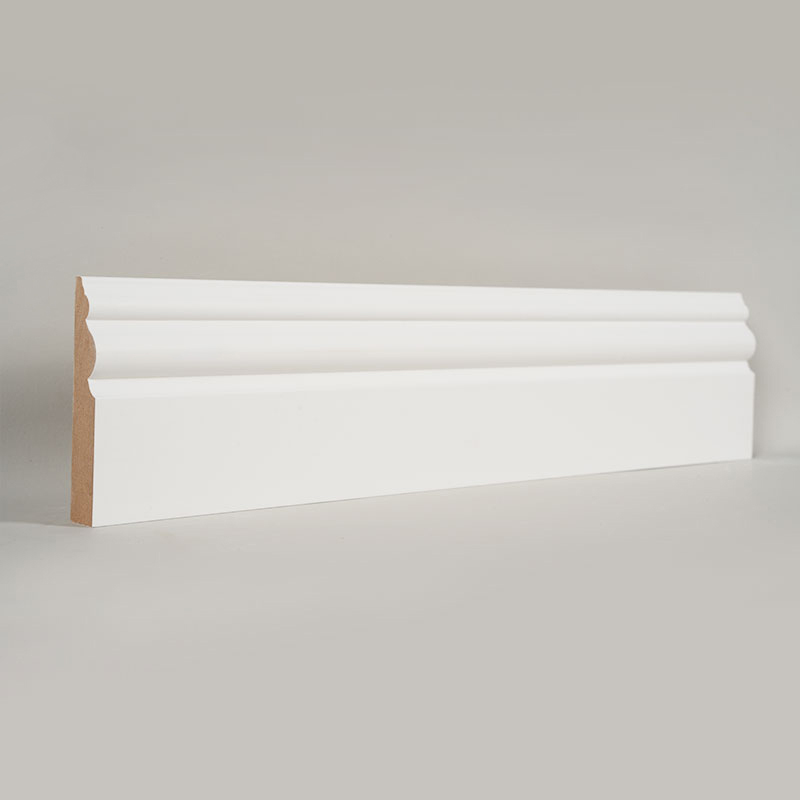
- Ogee: A more decorative, tiered curve that suits Victorian or Edwardian aesthetics.
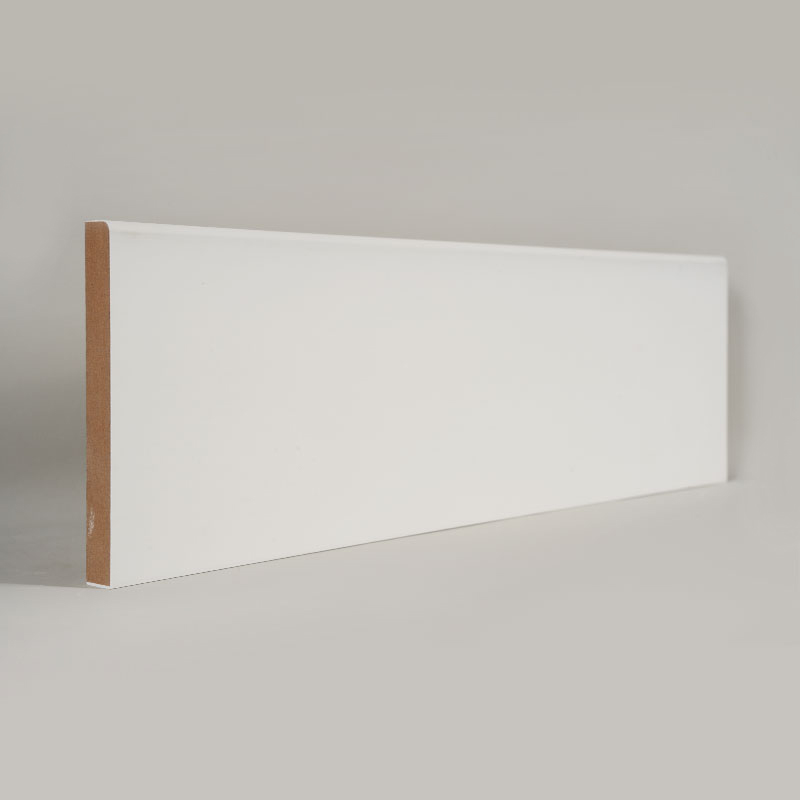
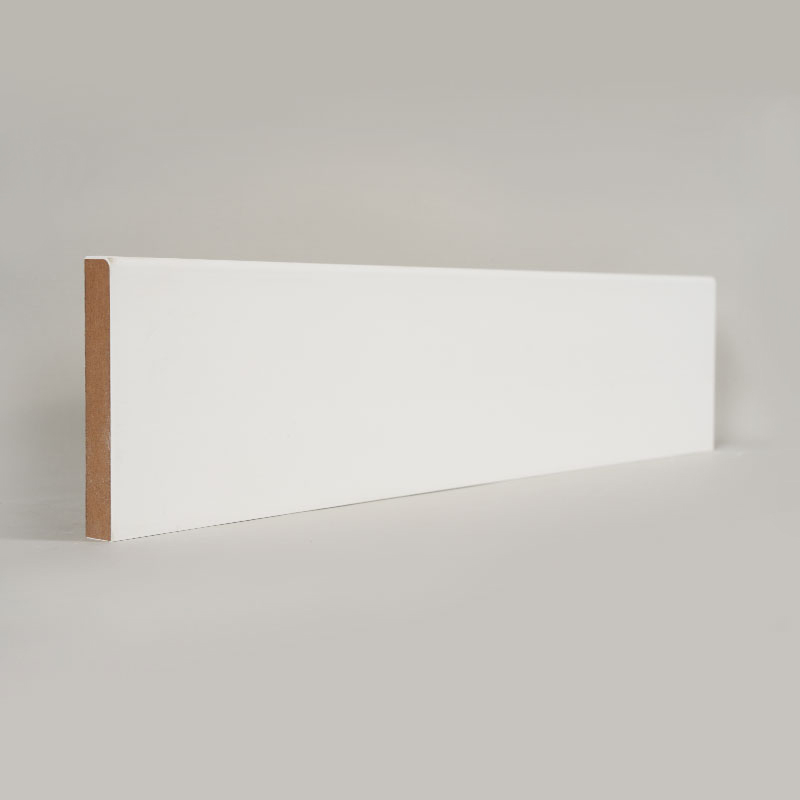
- Bullnose/Pencil Round: A simple, slightly rounded edge that is easy to clean and fits modern minimalist styles.
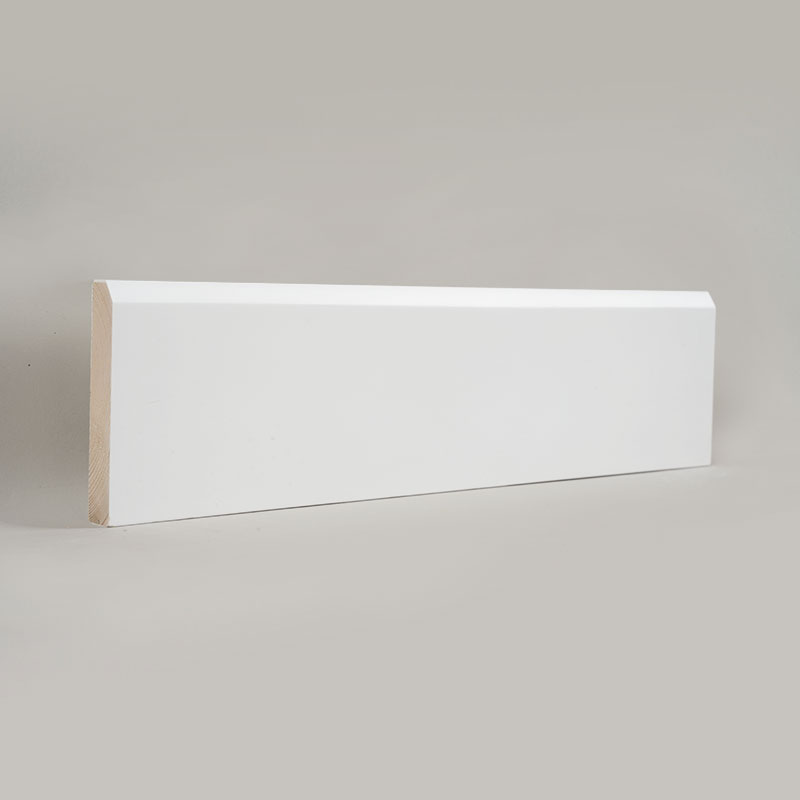
- Chamfered: A flat, angled edge that provides a crisp, geometric shadow line.
In terms of dimensions, MDF skirting typically comes in thicknesses ranging from 12mm to 25mm. The standard height for modern apartments is usually 94mm or 119mm, while period properties with high ceilings often utilize 168mm or even 219mm boards to maintain correct visual proportions.
Installation Best Practices for MDF Skirting
Proper installation is key to ensuring that your Painted & Paint-free Skirting Board looks professional and lasts for decades. Unlike solid wood, MDF should be handled with care to avoid crushing the edges before they are fixed to the wall.
Fixing Methods
There are three primary ways to secure MDF skirting:
- Adhesive Bonding: Using a high-strength "grip" adhesive is the cleanest method, as it eliminates visible nail heads. This is particularly recommended for paint-free boards where you cannot easily fill and hide nail holes.
- Nailing: Using a 16-gauge or 18-gauge finish nailer. This provides an immediate mechanical fix but requires filling and sanding on painted boards.
- Screwing: Only necessary if the walls are significantly bowed. Screws offer the strongest pull-back force but are the most labor-intensive to hide.
The Importance of Scribing
For internal corners, professionals never use a 45-degree miter. Instead, they "scribe" the joint. This involves cutting the profile of one board into the face of another. Scribing accounts for walls that are not perfectly square (which is common in 95% of buildings) and prevents gaps from opening up as the building settles.
Durability and Environmental Impact
Modern MDF manufacturing has evolved significantly. High-quality boards now utilize Moisture Resistant (MR) MDF, which is tinted green in its raw state. This material is essential for bathrooms and kitchens, as it can withstand occasional splashes and high humidity without swelling.
From an environmental perspective, MDF is often seen as a sustainable choice. It is made from "waste" wood fibers that might otherwise be incinerated. Furthermore, many manufacturers now use formaldehyde-free resins, ensuring that the indoor air quality of your home remains safe. Statistics suggest that using reclaimed wood fibers in MDF production reduces the pressure on virgin forests by up to 20% compared to solid wood production.
Maintenance and Longevity
To ensure your skirting boards remain in pristine condition, a regular maintenance routine is necessary. For painted boards, a light dusting weekly and a damp cloth wipe-down monthly are sufficient. If the paint becomes chipped, it can be easily touched up with a small brush, which is a significant advantage over other materials.
For paint-free boards, maintenance is even simpler. Because the surface is non-porous, it does not harbor allergens or dust as easily as traditional paint. However, it is vital to avoid harsh chemical cleaners that could delaminate the protective foil. A simple solution of warm water and mild soap is usually all that is required to maintain the factory-fresh sheen for 10 to 15 years.
Frequently Asked Questions (FAQ)
Q1: Can I paint over a paint-free skirting board if I change my mind later?
Yes, but it requires a specialized "multi-surface" primer designed to bond to non-porous surfaces like PVC or melamine. Standard wood primer will likely peel off.
Q2: Is MDF skirting better than plastic (uPVC) skirting?
MDF feels more substantial and offers a wider variety of architectural profiles. While uPVC is waterproof, it can sometimes look "cheap" in high-end residential settings.
Q3: How do I hide the gaps between the skirting board and a slightly uneven wall?
Use a flexible decorators' caulk. Apply a thin bead along the top edge, smooth it with a damp finger, and paint over it once dry for a seamless finish.
Q4: Does MDF skirting board expand?
MDF has very low thermal expansion, but it can swell if it absorbs direct liquid water. Always use Moisture Resistant (MR) grade in wet areas.
Q5: What is the best way to cut MDF to avoid frayed edges?
Use a fine-toothed saw blade (at least 60-80 teeth for a miter saw). Cutting with the finished side up usually results in the cleanest edge.