 English
 Español
Introduction
Wood skirting baseboard molding is an essential component in interior finishing, serving both functional and decorative purposes. Its primary role is to create a seamless transition between the wall and the floor while providing surface protection against impact, abrasion, and moisture. Understanding the standard profiles available in the market helps users make informed decisions based on design preferences, performance expectations, and installation conditions.
Understanding the role of wood skirting baseboard molding
Before exploring the standard profiles, it is important to clarify why wood skirting baseboard molding remains a widely used interior material. The molding not only hides the joint between different materials but also enhances the continuity of the room. Buyers who search for interior wood trims, wall-floor joint protection, and decorative room finishing components often look for products that balance durability, aesthetics, and installation efficiency.
Key functions of wood skirting baseboard molding include:
- Aesthetic enhancement: It frames the room and improves design coherence.
- Protection: It shields the bottom of walls from cleaning tools, furniture, and daily wear.
- Concealment: It hides expansion gaps of wood flooring and minor wall irregularities.
- Integration: It helps blend different construction materials and interior elements.
Because of these multi-functional roles, selecting the right profile is essential for achieving both functional and decorative objectives.
Standardized profile categories of wood skirting baseboard molding
A wide variety of profiles exist across global markets, but several designs have become standard because of their versatility, performance, and widespread acceptance. Below is an organized analysis of the most common profile types.
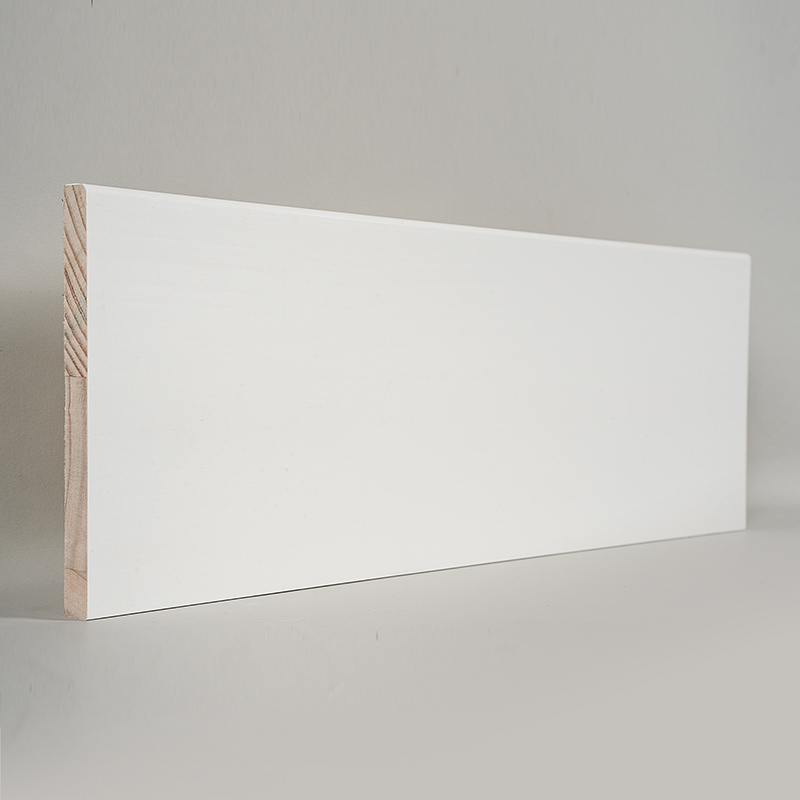
1. Flat profile skirting
The flat profile is one of the simplest and most widely used forms of wood skirting baseboard molding. It has a clean, rectangular shape with straight edges. The minimalist design works well in modern, contemporary, and Scandinavian-style interiors. Buyers often search for terms like flat wood molding, minimalist baseboard profile, and square edge skirting, which refer to this category.
Characteristics:
- Completely flat face with no decorative curves
- Sharp or slightly rounded top edge
- Suitable for painting or staining
- Ideal for modern commercial spaces and minimalist homes
Many interior designers prefer this profile due to its ability to create a streamlined look without drawing unnecessary attention.
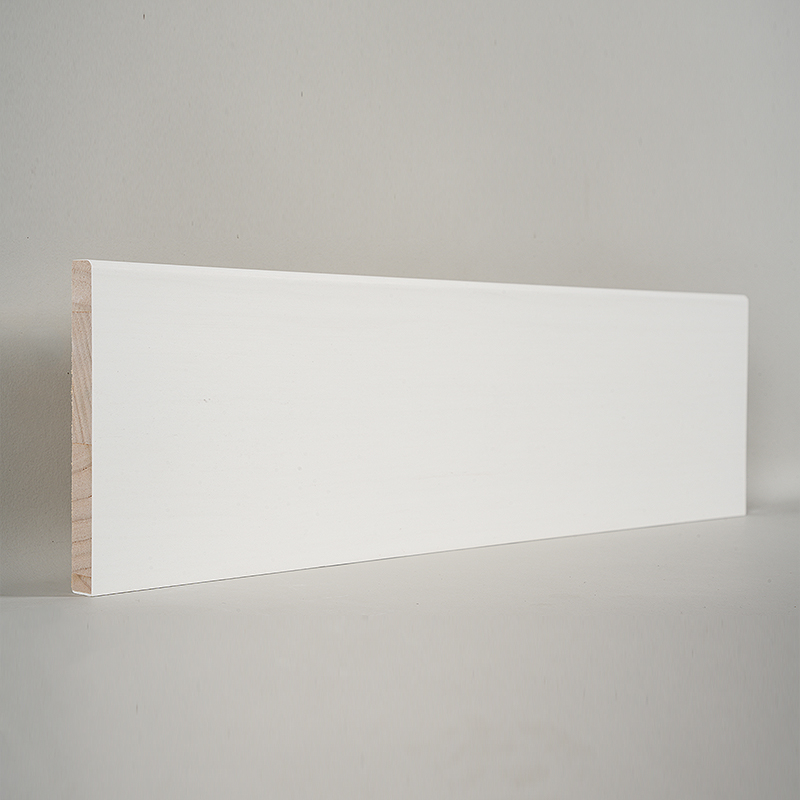
2. Rounded or bullnose profile
The rounded or bullnose profile features a curved top edge that softens the visual transition between the wall and the floor. Searches such as bullnose skirting, curved top baseboard, and rounded wood molding often refer to this style.
Characteristics:
- Soft, curved upper edge
- Reduces sharp surfaces, beneficial for homes with children
- Universally compatible with multiple interior styles
- Easy to maintain and clean
This profile is especially common in residential installations where safety and comfort are prioritized.
3. Chamfered profile
The chamfered profile features an angled cut at the top edge, providing a simple detail that adds subtle dimension. Buyers who search for angled edge skirting, beveled baseboard molding, or chamfer design wood molding typically refer to this category.
Characteristics:
- Slanted top edge forming a technical yet decorative line
- Suitable for modern, industrial, or transitional interiors
- Easy to combine with different wall and floor materials
- Provides a clean, engineered appearance
The chamfered style is often preferred by project managers seeking a balance between decorative detail and simplicity.
4. Colonial profile
The colonial profile is one of the most recognizable decorative options in wood skirting baseboard molding. It features curves, bevels, and detailed contours, commonly found in classic or traditional home designs. Many users search for classic wood molding, decorative colonial skirting, and traditional baseboard profile when exploring this option.
Characteristics:
- Multiple contours, curves, or stepped shapes
- Richer appearance that adds architectural value
- Works well with elaborate interior themes
- Commonly installed in upscale residential properties
This profile continues to be widely used in renovation projects where historical or traditional decor must be preserved.
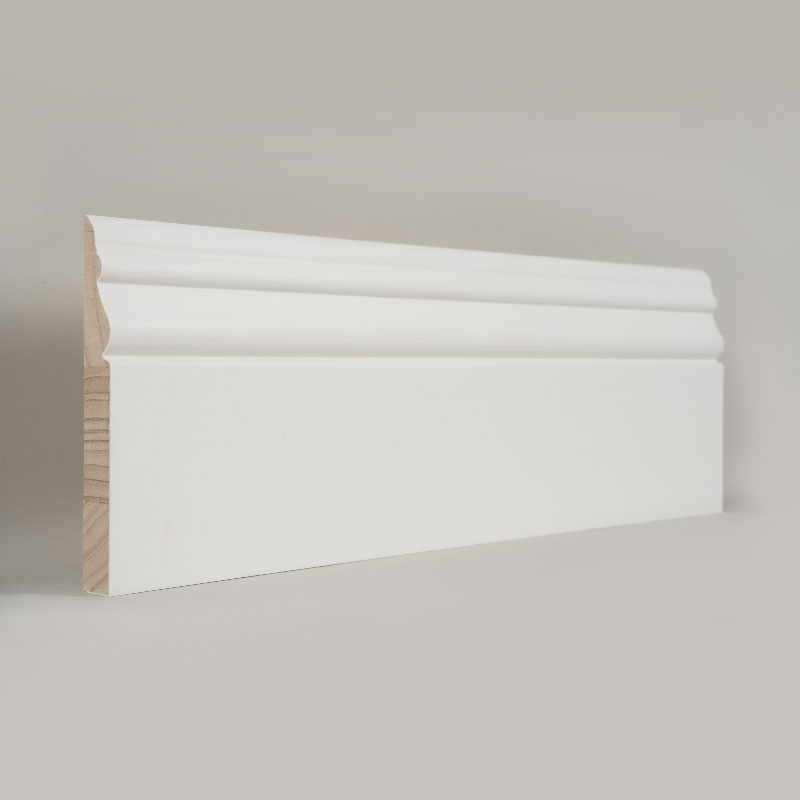
5. Ogee profile
The ogee profile includes an S-shaped curve that offers a blend of elegance and subtle decoration. It sits between modern simplicity and classical ornamentation. Professionals often refer to this type as S-curve baseboard, ogee wood molding, or decorative ogee skirting.
Characteristics:
- Distinctive double-curve contour
- Balanced visual style suitable for transitional interiors
- Often chosen for premium design-focused projects
- Provides soft, flowing lines without excessive complexity
The ogee profile is commonly used in living rooms, dining spaces, and interiors requiring refined aesthetics.
6. Torus profile
The torus profile features a rounded, projecting top section that adds a sense of volume and solidity.
Characteristics:
- Bold, rounded top detail
- Stronger decorative presence compared to minimalist profiles
- Often used in traditional or heritage-style interiors
- Provides a stable visual base to the wall
The torus profile is especially popular in European-style home construction.
7. Stepped profile
The stepped profile includes one or more horizontal steps that create a geometric appearance.
Characteristics:
- Layered appearance with multiple horizontal ridges
- Suitable for contemporary or transitional spaces
- Offers enhanced texture compared to flat or chamfered designs
- Works well in interiors with structured or architectural design themes
Stepped profiles can vary significantly in complexity, making them adaptable to both residential and commercial projects.
8. Cove profile
The cove profile features a concave curve, opposite of the torus style.
Characteristics:
- Smooth inward curve on the front face
- Subtle decorative effect
- Suitable for blending with curved wall elements or soft architectural features
- Often chosen for traditional or semi-classical designs
This profile works well in hallways, foyers, and decorative living spaces.
9. Combination profiles
Combination profiles merge two or more design elements, such as curves and angles or steps and ogee shapes.
Characteristics:
- Unique blend of visual details
- Suitable for interior designs that require customized aesthetics
- Useful for matching existing architectural elements
- Often chosen when standard profiles are not sufficient
These profiles are common in large-scale interior renovation projects or luxury home design schemes.
Comparison table of common wood skirting profiles
| Profile Type | Visual Style | Decorative Level | Best Application Areas | Maintenance Difficulty |
|---|---|---|---|---|
| Flat Profile | Clean, straight | Low | Modern interiors, commercial spaces | Very low |
| Bullnose Profile | Rounded | Low | Family homes, minimalist interiors | Low |
| Chamfered Profile | Angled | Medium | Modern, industrial, transitional | Low |
| Colonial Profile | Curved, detailed | High | Traditional or luxury residences | Medium |
| Ogee Profile | S-shaped | Medium–High | Transitional, refined interiors | Medium |
| Torus Profile | Rounded, pronounced | Medium | Classic or European-style homes | Medium |
| Stepped Profile | Layered geometry | Medium | Contemporary designs | Low–Medium |
| Cove Profile | Concave curve | Medium | Traditional, decorative interiors | Medium |
| Combination Profiles | Custom mixed | Medium–High | Custom projects, luxury interiors | Medium–High |
Factors influencing profile selection
When buyers or contractors choose wood skirting baseboard molding, several technical and practical aspects influence the final decision. These considerations help align the selected profile with performance requirements and installation conditions.
Material composition
Wood skirting baseboard molding may be made from various timber sources. The material type directly influences stability, appearance, machining compatibility, and finishing performance. Buyers should evaluate characteristics such as hardness, grain consistency, and compatibility with interior humidity levels.
Surface finish
Surface finishes determine visual effect, scratch resistance, and maintenance needs. Common finishes include painted, stained, lacquered, or raw surfaces prepared for on-site finishing. Painted finishes are common in flat or chamfered profiles, while stained finishes suit colonial or ogee profiles that highlight natural wood grain.
Room design and architectural style
The selected profile must match the wider interior design theme:
- Flat and chamfered profiles suit minimalism and contemporary aesthetics.
- Colonial, torus, and cove styles suit traditional, classic, or heritage interiors.
- Stepped and ogee designs work well in transitional or semi-modern environments.
Installation methods
Installation conditions—such as wall straightness, flooring expansion gaps, and adhesive or fastener preferences—can impact the suitability of certain profiles. Larger decorative profiles may require stronger bonding or more precise wall preparation.
Height and thickness specifications
Standard profiles typically come in heights ranging from 60 mm to 120 mm or more, depending on regional preferences and architectural norms. Thicker profiles provide greater shadow depth and visual weight but require more precise installation alignment.
Durability and performance
Durability considerations include resistance to scratches, impacts, and humidity. While all profiles can be durable when made from appropriate wood species, more complex profiles may require additional care to maintain their decorative details.
Market trends in profile selection
Buyers increasingly search for simple, modern profiles, reflecting current trends toward minimalism and contemporary interior design. Flat and chamfered styles have gained popularity due to easy cleaning and compatibility with diverse floor materials. At the same time, demand for premium decorative profiles remains steady in luxury and heritage renovation markets, where aesthetic detailing remains a priority.
Additionally, there is a growing interest in environmentally conscious materials and sourcing practices, leading to increased use of engineered wood options and sustainably harvested timber.
Conclusion
Wood skirting baseboard molding plays an integral role in both interior protection and decorative enhancement. The availability of varied profiles—from flat and bullnose to ogee, colonial, and combination types—ensures that buyers can match molding design to specific architectural styles and functional requirements. Understanding the characteristics, installation considerations, and ideal application scenarios of each standard profile allows decision-makers to choose wisely based on both performance and appearance.
FAQs
1. What height is most common for wood skirting baseboard molding?
Standard heights range from 60 mm to 120 mm, though higher options may be used for decorative or traditional interiors.
2. Can different profiles be combined in the same project?
Yes, but it is advisable to maintain consistency within the same floor level or room for visual coherence.
3. Are flat profiles easier to maintain than decorative profiles?
Flat profiles are generally easier to clean due to their smooth surface, while decorative profiles may require more detailed dust removal.
4. Does wood skirting baseboard molding need to be painted before installation?
It depends on the finish. Pre-painted or pre-stained molding can be installed directly, while raw wood typically requires finishing after installation.
5. Is engineered wood suitable for skirting profiles?
Yes, engineered wood offers improved stability and is commonly used for modern skirting products, especially in environments with fluctuating humidity.