 English
 Español
If you live in a room with 8-foot ceilings, the first thing you probably think when someone mentions crown moulding is: "That'll make the place feel smaller." The culprit isn't crown moulding itself; it's the wrong crown moulding for low ceilings. The right profile, installed at the right height and finished in the right colour, will actually push sight lines upward and make the ceiling feel higher. Here's how to choose it, measure it, and fit it without losing a single inch of perceived headroom.
Does Crown Moulding Make a Low Ceiling Look Lower?
The short answer is: only when it breaks proportion. Classic interior design rules suggest that a crown profile should be roughly 3 to 4 percent of the wall height. On a standard 8-foot wall, that works out to a crown that is 2.5 to 4.5 inches tall. Stay inside that window and the moulding reads as intentional detail; step outside it and it reads as a heavy beam pressing down.
You also need to separate height from projection. Height is how much moulding face you see against the wall; projection is how far it stretches toward the centre of the room. Low ceilings tolerate height better than projection. A 3.5-inch crown with a modest 2.75-inch projection adds decoration without intruding into the room's sight lines.
| Ceiling height | Recommended crown height | Recommended projection |
|---|---|---|
| 8 ft | 2.5 - 4.5 in | 2.25 - 3.5 in |
| 9 ft | 3.5 - 5.5 in | 3.25 - 4.5 in |
| 10 ft | 5 - 7 in | 5 - 6 in |
Notice the pattern: even a 9-foot ceiling pairs better with a compact 3.5-inch crown than with an opulent 7-inch profile if you want an airy feel. Light-coloured crown close to the ceiling finish also blurs the junction, removing the visual interruption that reads as "lowering."
The fastest way to visually lower an 8-foot ceiling is a 6-inch dark crown. The fastest way to raise it is a 3.5-inch white crown installed hard against the ceiling.
Why a thin profile looks taller
A crown painted to match the ceiling creates a continuous bright band, and because the moulding acts as a light shelf, the wall-to-ceiling boundary feels softer. Dark or strongly contrasted trim reverses that effect: it carves a dark line across the room, and that line pulls the eye down.
Choosing the Right Crown Moulding Size for an 8-Foot Ceiling
For most low-ceiling rooms, standardise on a 3- to 4-inch primed profile. A 3.5-inch crown hits the sweet spot: it is small enough to stay proportional on a 96-inch wall, yet tall enough to carry a proper step-and-cove silhouette that reads as crown moulding rather than a simple screen bead.
Pay attention to the spring angle as well. Crown is milled with either a 38-degree or 45-degree spring angle, which determines how it sits between wall and ceiling. The 38-degree option is the most common for residential work and gives a tighter fit against irregular ceilings. Compact profiles with a smaller spring angle also reduce the gap you need to fill, which matters when you are working with older plaster or textured ceilings.
Finally, consider the ceiling texture. If you have a heavy popcorn or knockdown texture, the line where the crown meets the ceiling can look ragged. A slightly taller profile at the top edge gives you more contact area to caulk and paint, hiding texture inconsistencies that would be glaring with a tiny 2-inch cove.
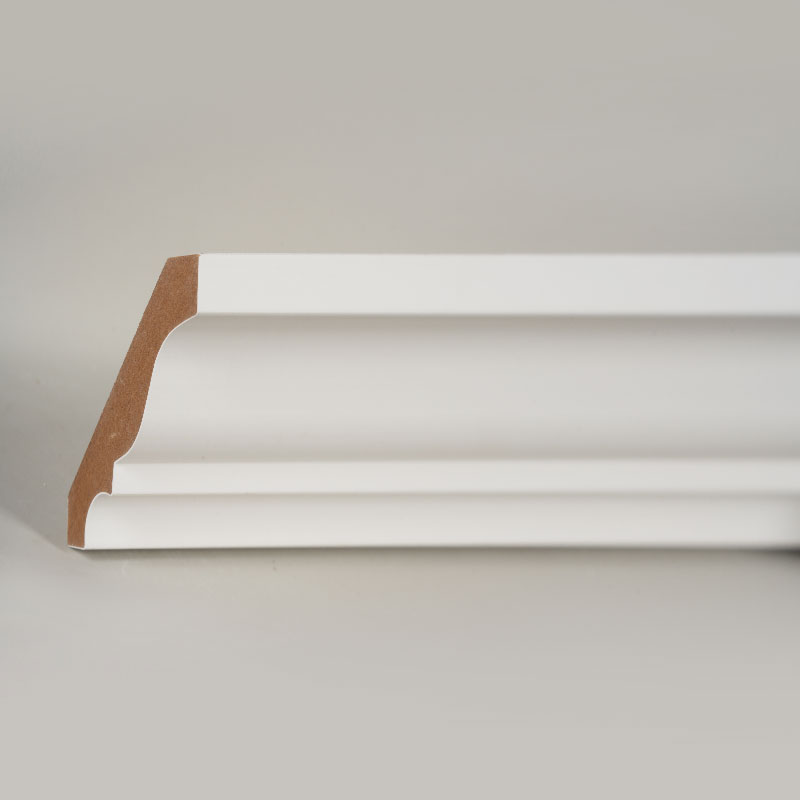
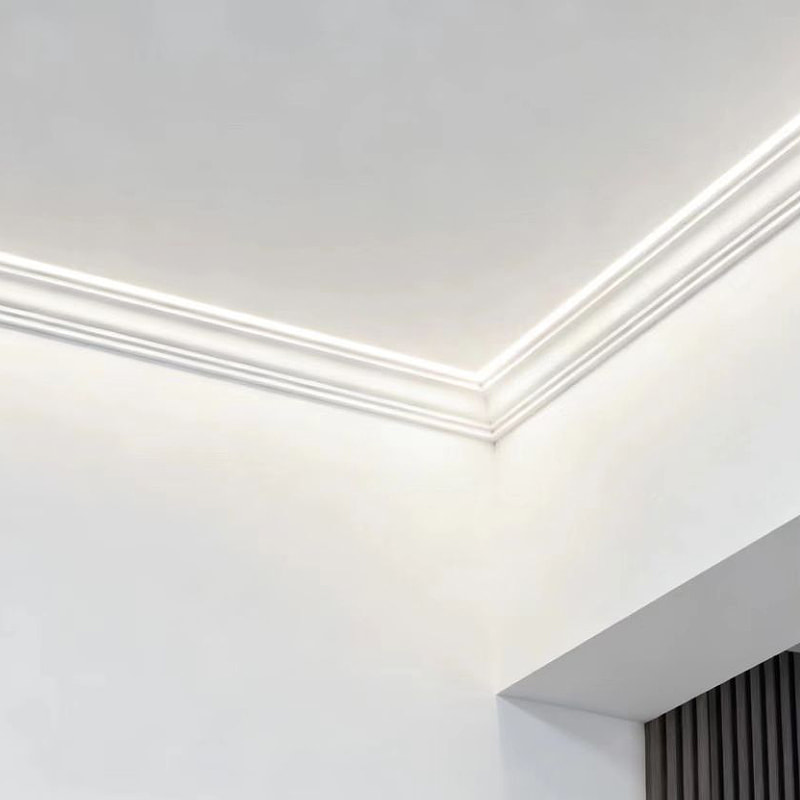 MDF Crown Moulding with Filler-Primed Pearl White Finish, 3/5" x 3 1/4"This MDF crown profile offers a smooth, grain-free surface that takes paint easily and resists moisture, making it a practical choice for hiding ceiling texture irregularities in compact rooms.View Product →
Best Crown Moulding Materials for Low-Ceiling Rooms
The material you choose affects how crisp the installed profile looks, how easily it takes paint, and how well it survives basement humidity or a steamy bathroom. Here is the comparison that matters for compact interiors.
| Material | Cost | Dimensional stability | Paint finish | Moisture resistance |
|---|---|---|---|---|
| MDF | Budget | Excellent | Smooth, grain-free | Moderate |
| Pine | Mid-range | Good | Even grain, needs primer | Low to moderate |
| Solid wood (oak, walnut) | Premium | Species dependent | Suitable for stain or paint | Depends on species |
MDF is the default recommendation for low ceilings where everything will be painted white or off-white. The primed surface means you need only one top coat, and because MDF has no grain, you avoid the raised wood texture that can make painted pine look wavy. MDF also expands and contracts less than solid wood, so mitre joints stay tight across seasons.
Pine is the best-value alternative when you want a real wood substrate at a reasonable price. It paints beautifully when primed properly, and if you ever decide to go natural, a clear finish remains an option. For rooms that move between warm and cool seasons, our pine crown moulding interior guide walks through the finishing steps that keep the grain from telegraphing through the topcoat.
Solid wood earns its place when you want a stained crown that matches oak or black walnut doors and flooring. With the smaller scale required for low ceilings, the price premium is modest in absolute terms because you simply need fewer board feet of material.
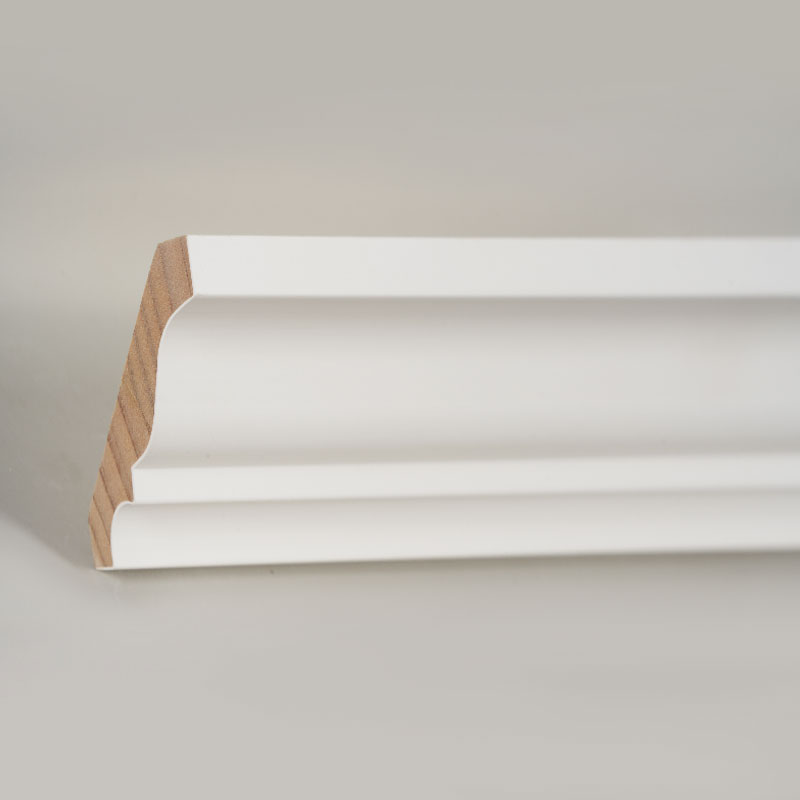
Pine Wood Crown Moulding with Filler-Primed Pearl White Finish, 3/5" x 3 1/4"Made from premium radiata pine, this crown moulding provides a stable, crack-resistant base that can be stained to match existing woodwork, ideal for low ceilings where a modest amount of material is needed.View Product →Design and Installation Tips That Protect Vertical Space
With the profile chosen, the next job is to install it without visually shortening the room.
Keep the crown against the ceiling
Unless you are deliberately creating a tray-ceiling effect, install the crown hard against the ceiling rather than dropping it a few inches down the wall. A dropped crown creates a horizontal shadow line that separates the wall from the ceiling, and that separation is what makes a low room feel lower.
Paint the crown lighter than the wall
White or off-white crown against a mid-tone wall is one of the most reliable tricks in the trade. The bright top band draws attention to the highest point in the room. If both wall and ceiling are white, use a slightly warmer white on the crown so it reads as intentional detail rather than a floating stripe.
Match the spring angle to ceiling flatness
Old ceilings are rarely flat. Verify the spring angle at a few points with a contour gauge before cutting. If the ceiling bows more than 1/8 inch over 4 feet, run a bead of flexible paintable caulk along the top edge rather than forcing the moulding flat, because forcing it flat will open the mitre joints at the corners.
Use the right joining technique
Coped joints at inside corners are more forgiving than mitres because they absorb out-of-square corners naturally. Outside corners still need precise mitres; pre-drill and use thin pin nails so MDF does not split near the end cuts.
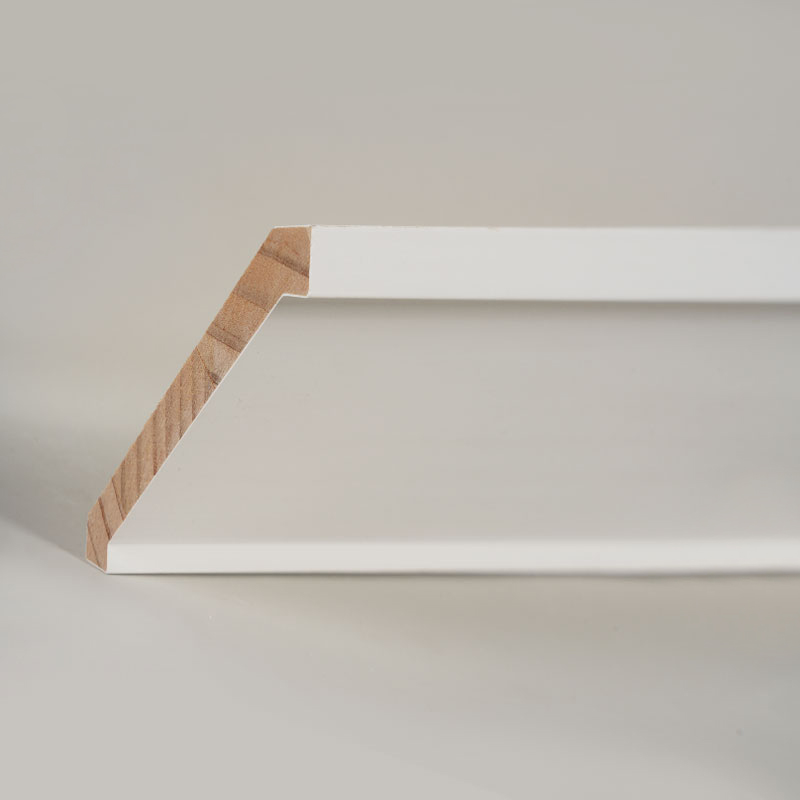
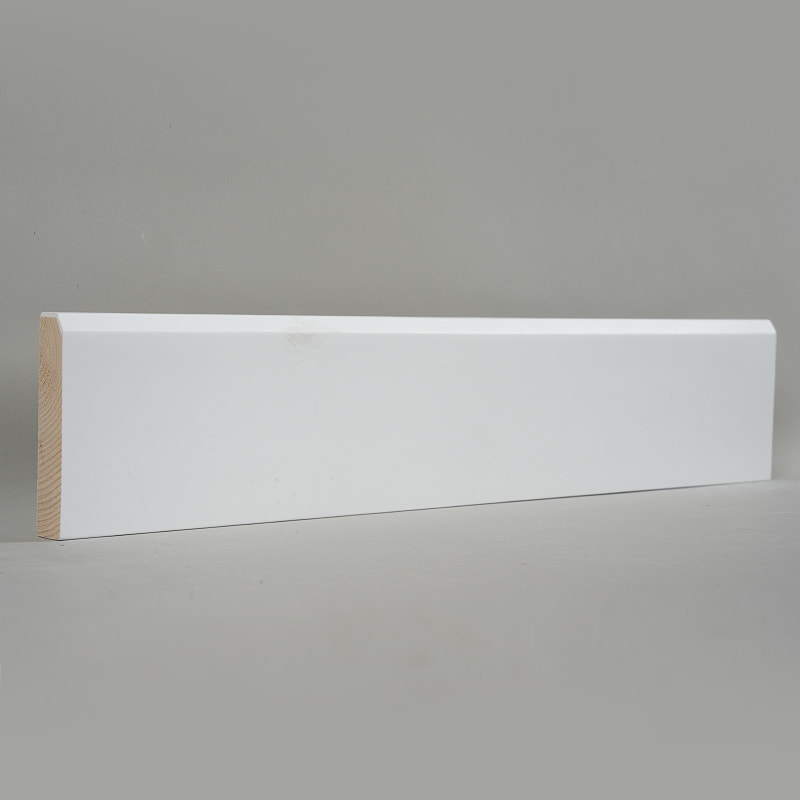 Customized White Primed Crown Moulding from ManufacturerThis white primed crown moulding is customizable to fit specific corner angles and installation conditions, helping achieve clean, precise joints even in out-of-square corners of compact interiors.View Product →
Common Crown Moulding Mistakes in Low Rooms
- Oversizing the profile. A 6-inch crown in an 8-foot room does not say luxury; it says the ceiling is closing in. Keep it at 4.5 inches or less.
- Using dark crown on dark walls. Without a tonal step between wall and ceiling, the moulding merges with the wall and the room loses all vertical direction.
- Skipping the sealer on MDF. Unsealed MDF edges absorb paint unevenly and swell when moisture gets in. Always seal cut ends before painting.
- Repeating one profile everywhere. A heavy traditional crown in a modern low-ceiling flat can feel overwrought. Match the ornament density to the room's style.
- Forgetting lighting. Crown moulding is largely a shadow line. If you plan to install LED strip lighting above it, leave a consistent 1.5-inch gap and test the light beam before fixing the moulding.
Frequently Asked Questions
Q1: Will crown moulding make a room with 8-foot ceilings feel smaller?
Not if you choose a profile in the 2.5- to 4.5-inch range and finish it in a light tone close to the ceiling colour. The moulding creates a crisp transition that draws the eye upward, and the perceived ceiling height actually improves compared with a bare, unattended wall-to-ceiling corner.
Q2: What is the smallest crown moulding size I should consider for a low ceiling?
About 2.5 inches. Below that, the profile starts to look like a simple cove or a quarter-round, and you lose the step-and-cove silhouette that people recognise as crown moulding. For an 8-foot ceiling, 3 to 3.5 inches is the practical sweet spot.
Q3: Can I use MDF crown moulding in a humid room where the ceiling is low?
MDF tolerates normal humidity but not constant wetness. For bathrooms with a shower and limited ventilation, solid wood or PVC-wrapped profiles are safer. If you prefer a painted MDF look in a damp basement, use a moisture-resistant primer and seal every cut edge.
Working With a Manufacturer for Consistent Low-Ceiling Crown
When you are trimming out an entire house or a multi-unit project, consistency matters more than the individual profile. A factory that mills, primes, and finishes crown moulding in one place can hold tolerances across thousands of linear feet: identical dimensions, primer coverage, and colour batch after batch. That is why many contractors choose to work directly with a wood moulding manufacturer instead of mixing retail boards from different lots.
Ask about these three capabilities before placing a production order:
- In-house CNC machining and moulding: custom profiles can be produced from your drawing without tooling surprises.
- Daily output and finishing capacity: a line that primes or paints thousands of feet per day keeps your schedule predictable.
- Custom spring angles: an OEM/ODM partner can adjust tooling for a non-standard angle instead of forcing you to compromise with off-the-shelf stock.