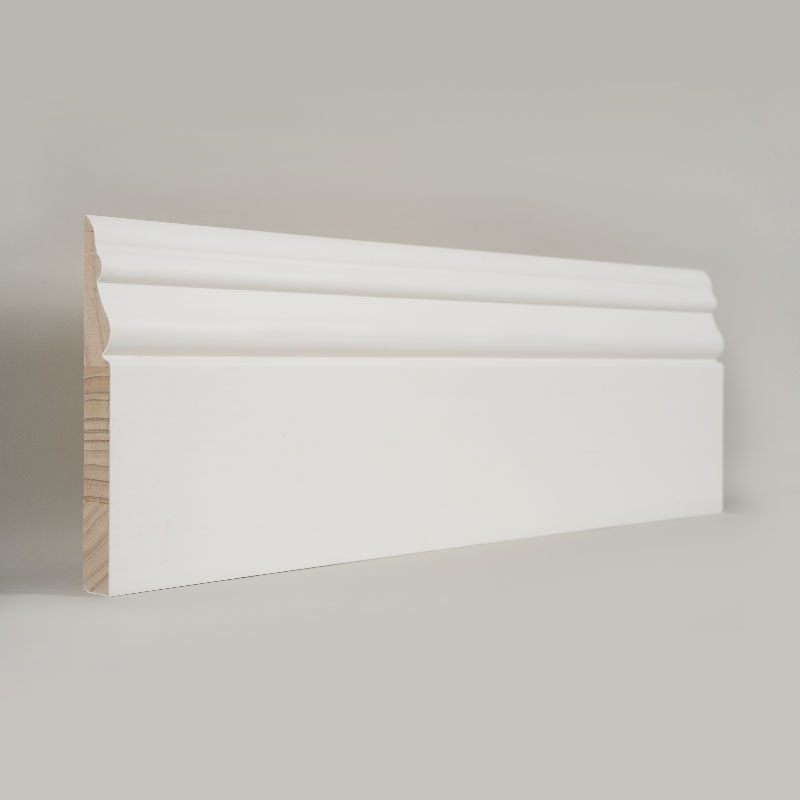
Pine Skirting Board (Filler-Primed & Pearl White) 3/5" x 5"
Specifications mm Length 2440 Width 127 Thickness 15 Core material Radiata pine Surface T...
View More →HUICHENG DECOR / PRODUCT TOPICS
Finger Jointed Pine Profiles are engineered wood trim components made by joining smaller pine sections into stable and consistent lengths. They are widely used for interior decoration, architectural trim, wall finishing, and moulding applications where uniform appearance and efficient material utilization are required. These profiles can be processed into different decorative shapes, surface finishes, and dimensions for various building projects.
PRODUCT CONNECTIONS
Specifications mm Length 2440 Width 127 Thickness 15 Core material Radiata pine Surface T...
View More →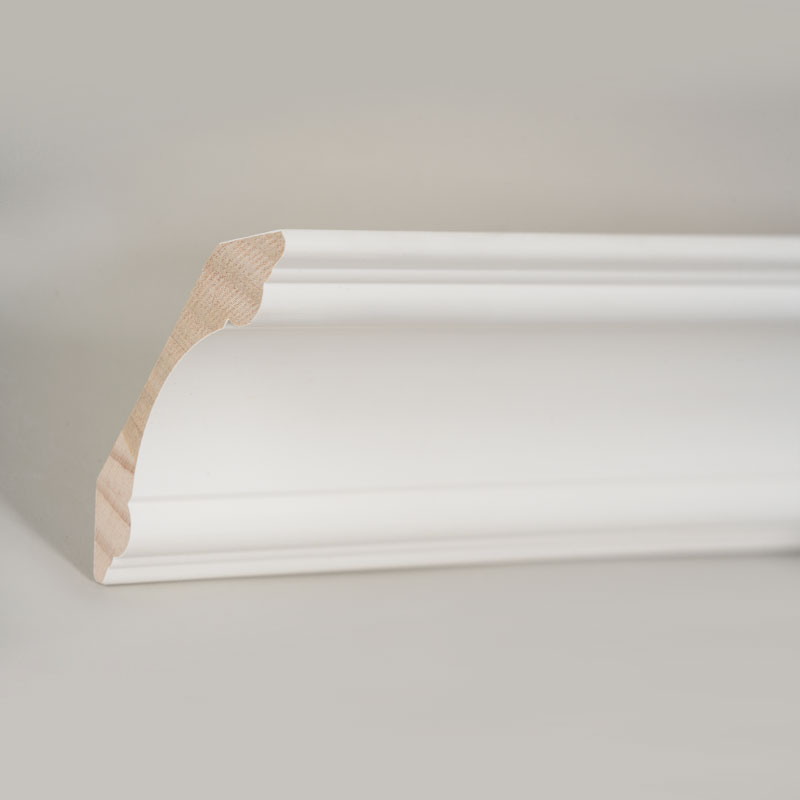
Specifications mm Length 2440 Width 86.7 Thickness 18 Core material Radiata pine Surface ...
View More →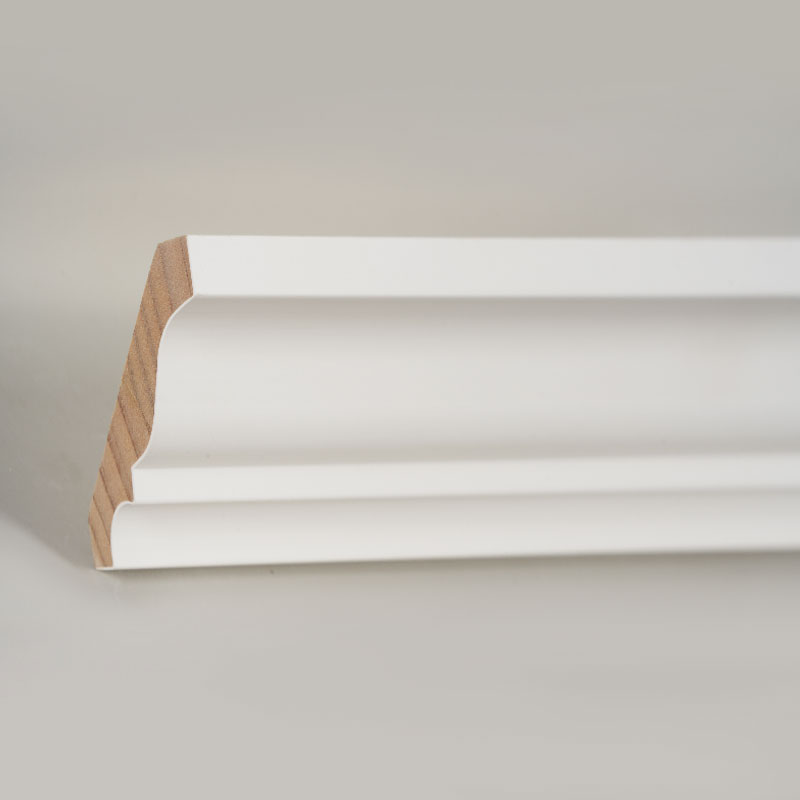
Specifications mm Length 2440 Width 82.5 Thickness 15 Core material Radiata pine Surface ...
View More →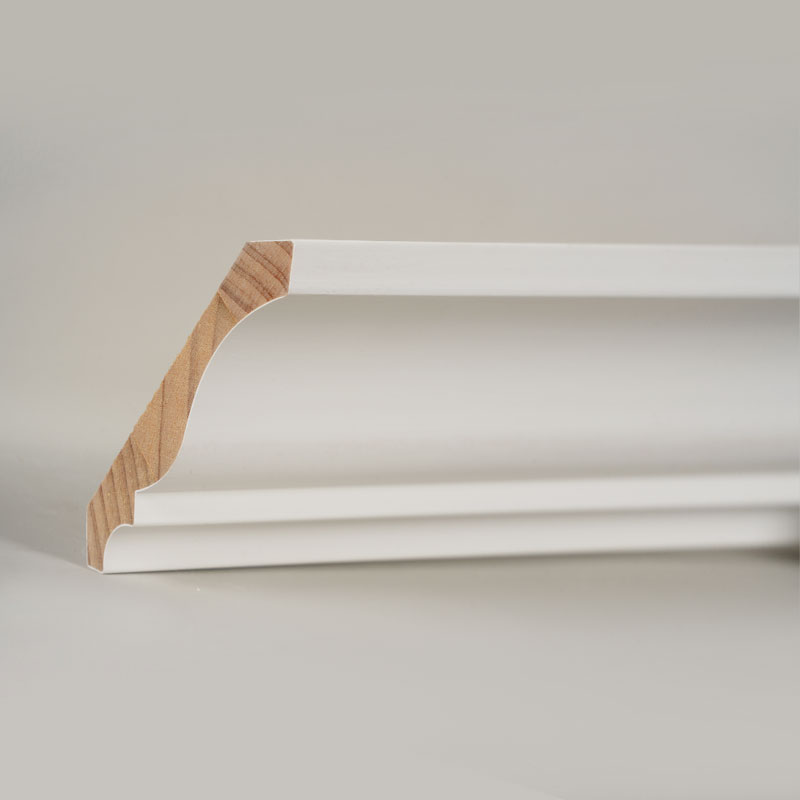
Specifications mm Length 2440 Width 108.3 Thickness 15 Core material Radiata pine Surface...
View More →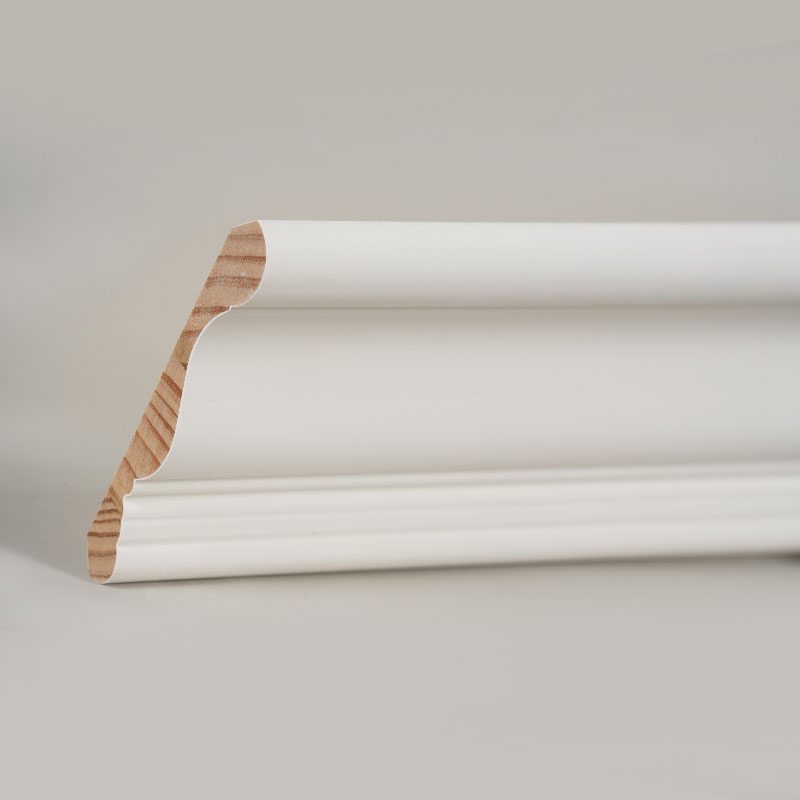
Specifications mm Length 2440 Width 109 Thickness 15 Core material Radiata pine Surface T...
View More →
Specifications mm Length 2440 Width 153 Thickness 15 Core material Radiata pine Surface T...
View More →TOPIC OVERVIEW
Key considerations for material selection, profile design and project planning.
Finger jointed pine profiles are interior wood mouldings made from short pine sections that are cut with interlocking finger joints, glued under pressure and then shaped into skirting, crown, quarter round, handrail and other trim sections. This construction turns shorter, defect-free pieces into long continuous lengths, which gives pine trim a more even grain structure and a more efficient use of timber than profiles cut from a single long board.
These profiles are mainly specified for painted interior finishing, where a stable, easy-to-machine and easy-to-coat substrate is needed. Importers, distributors and project buyers use them for baseboards, decorative mouldings and stair parts, with the cross section, length and surface treatment agreed at the order stage.
Short sections are joined end to end, so a single profile can run to the full length required for walls and stairs without relying on long clear boards.
Large knots, splits and discoloured areas are cross-cut out of the raw timber first, and only the usable sections go into the joining stage.
Because grain direction alternates along the length, the profile tends to resist bowing and twisting better than a long, wide single board of the same species.
Pine is a softwood that cuts cleanly, so precision moulds and CNC machining can reproduce detailed classical and modern cross sections accurately.
The even surface accepts filler primer, putty coating and topcoat well, which makes the profile a practical base for white and coloured interior trim.
Reusing shorter pieces reduces off-cut waste and supports more efficient sourcing, which matters for buyers who track material efficiency.
Understanding the production sequence helps buyers judge where quality is controlled. A typical workflow runs through the following stages, and each one is a point where an inspection can be agreed with the supplier.
The finish decides how the joints, grain and edges will look in the finished room. Manufacturers with automated coating lines can supply several treatments on the same pine base, so the finish should be confirmed together with the profile.
A sanded base with filler primer, ready for the installer to apply the final topcoat on site. This is the common choice for contractors who prefer to match wall colours.
Joints and small surface irregularities are levelled with putty before painting, giving a smoother factory finish with minimal visible joint lines.
A cured coating applied in a controlled line for a uniform film and consistent gloss level across large orders.
The pine core is wrapped with a wood veneer or PVC film to create a wood-grain, stone-grain or solid colour face on a stable core.
Sanded raw pine for buyers who apply their own paint or coating system in a local workshop.
The table below compares general characteristics of materials commonly specified for interior trim. It is a qualitative guide for material selection, not a specification of any individual product.
| Aspect | Finger Jointed Pine | One-Piece Solid Pine | MDF | Solid Hardwood |
|---|---|---|---|---|
| Length continuity | Long lengths from short sections | Limited by board length | Limited by panel size | Limited by board length |
| Clear finish appearance | Joint lines visible | Natural continuous grain | Not suited without wrapping | Natural continuous grain |
| Painted finish | Very suitable | Suitable | Very suitable | Suitable |
| Response to moisture | Moderate, seal all faces | Moderate, seal all faces | Sensitive to edge swelling | Varies by species |
| Profile detail | Crisp detail | Crisp detail | Very smooth detail | Crisp detail |
| Typical use | Painted trim and mouldings | Painted or stained trim | Painted trim in dry rooms | Stained and natural trim |
Store bundles flat, off the floor and away from direct water, and keep the original wrapping on until the installation date.
Provide a cross-section drawing with length, width, thickness and permitted tolerance, and approve a physical sample before bulk production.
Agree how visible joints, knots and colour variation are accepted on the show face, and which face is treated as the visible one.
State the destination climate so the drying target and packaging method can be matched to it.
Confirm primer, putty, paint or wrapping type, together with a colour or gloss reference.
Specify bundle size, protective wrapping, pallet type and carton marking for your warehouse and customers.
Ask about in-process inspection, pre-shipment checks and the management system certificates or timber sourcing documents the supplier can provide.
It means short pine sections are machined with interlocking finger-shaped ends, bonded with adhesive and pressed into a longer piece. The joint increases the glued surface area, which is why it is widely used for end-to-end joining of timber.
For interior trim, which carries almost no structural load, a well-made joint performs adequately. Strength depends on the adhesive, joint fit and pressing quality, so these points are worth confirming for stair parts and handrails that may be handled or leaned on.
With proper sanding, filler primer or putty coating, joint lines are largely hidden under paint. Under a clear or stained finish they remain visible, so painted finishes are recommended.
It can be stained, but colour differences between sections and the joint pattern will show. Request a stained sample first if a natural wood look is required.
Pine is a natural wood with grain and better screw and nail holding, while MDF is a fibre-based board with a very smooth surface and less natural movement. MDF is sensitive to water at cut edges, whereas pine needs all faces sealed against moisture.
It can be used in damp rooms if every face and cut end is sealed and the profile does not sit in standing water. For areas with frequent splashing, a moisture-resistant or wrapped alternative may be a safer choice.
Yes, a manufacturer with precision moulds and CNC machining can reproduce classical and modern profiles from a drawing or sample. Mould preparation time and the minimum order quantity should be confirmed at the enquiry stage.
Keep them flat, raised off the floor, in a dry space and in their protective wrapping. Allow them to adjust to room conditions before cutting and fixing.
Check straightness, joint gaps, surface finish uniformity, bundle labelling and dimensions against the approved sample. Photograph any damage before unloading is completed.
Provide the profile drawing or reference sample, length, quantity, surface finish, packaging requirements and destination country. Target use, such as skirting or handrail, also helps the supplier recommend suitable grades.

ABOUT THE MANUFACTURER
Huzhou Huicheng Home Technology Co., Ltd. is China wholesale Finger Jointed Pine Profiles manufacturers and Finger Jointed Pine Profiles suppliers, manufactures wooden skirting boards, crown mouldings, wooden acoustic wall panels, Finger Jointed Pine Profiles and customized decorative mouldings. Founded in 2002 in Nanxun, Huzhou, known as the Capital of Wooden Flooring, the company supplies eco-friendly wood products to customers worldwide.
With precision moulds, CNC machining and in-house quality inspection, the team can reproduce complex European, American, French and modern minimalist profiles and discuss material, dimension and surface treatment requirements for each project.
FROM DRAWING TO DELIVERY
A coordinated workflow covers profile development, machining, surface finishing and inspection, so specifications stay consistent from sample to bulk order.
OEM drawing processing and ODM design support, backed by precision moulds and CNC machining, turn a cross-section into a production profile.
Solid wood and MDF substrates are machined to shape, with wood veneer or PVC wrapping applied where a different surface is required.
An automated putty coating line, UV vacuum spraying and UV printing roll coating deliver filler-primed, painted or printed surfaces.
Finished profiles are checked, packed and stored in the company warehouses, then prepared for domestic and export shipment.
MANUFACTURING & SERVICE
From profile development to delivery coordination, Huzhou Huicheng Home Technology Co., Ltd. focuses on production consistency, flexible customization and responsive project communication.
Coordinated material sourcing, manufacturing and final delivery help maintain consistency across orders.
Materials, sizes, profiles and colours can be tailored to your drawings, from small-scale developments to larger commercial orders.
Mature mould and CNC machining technology supports accurate reproduction of complex decorative profiles.
Putty coating, UV vacuum spraying, UV printing and veneer or PVC wrapping give a wide range of surface options.
Daily capacity above 15,000 metres, including more than 8,000 metres of coated products, supports repeat orders and project schedules.
Inspection across production stages, supported by ISO 9001, ISO 14001 and ISO 45001 certificates, helps catch deviations early.
Shipment preparation and delivery arrangements support domestic and international purchasing workflows.
Support for initial enquiries, specifications and after-sales questions helps buyers manage ongoing cooperation.
INSIDE THE FACTORY
Our own production workshops and warehouses are equipped with complete production and quality inspection equipment. Select any photo to view it full size.
Factory building, Nanxun
 Timber
cutting
 Timber sorting and stacking
 Sawing and sizing
 Workshop floor
and material handling
 Profile machining
 Wrapping line
 Board
handling
 Automated machining line
 Coating and conveying equipment
 Spraying line
 UV curing
 Finished profiles
awaiting packing
 Painted boards on drying carts
 Warehouse racking
 Packing and strapping
 Finished product storage
 Reception
 Sales and order office
 Meeting room and sample display
QUALITY & MANAGEMENT
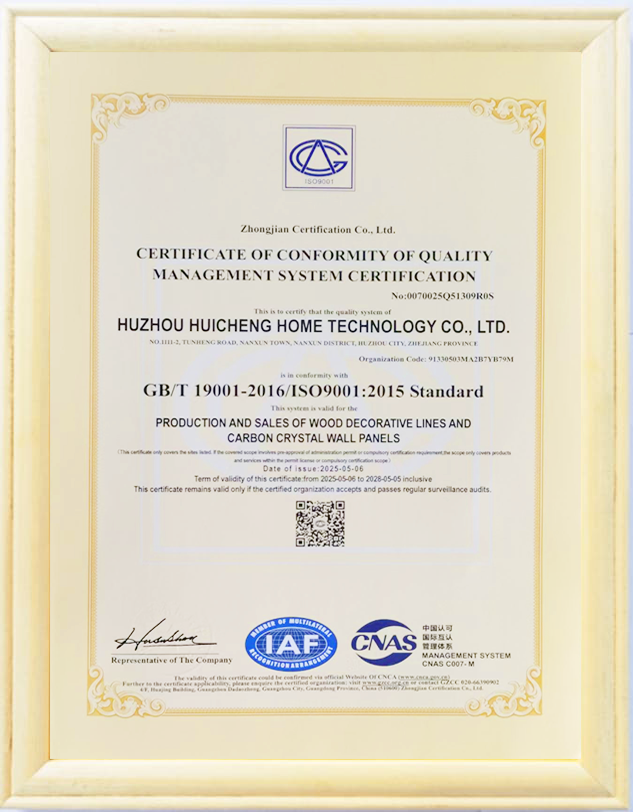
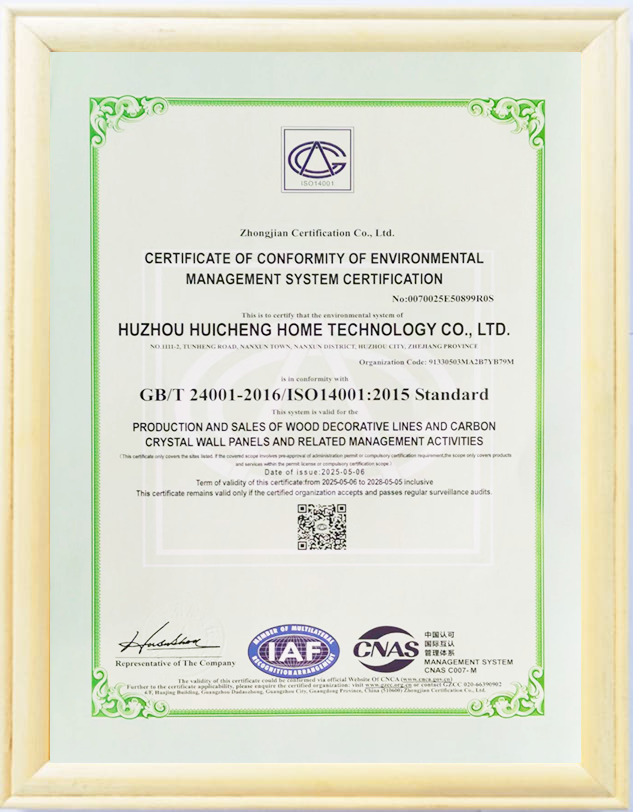
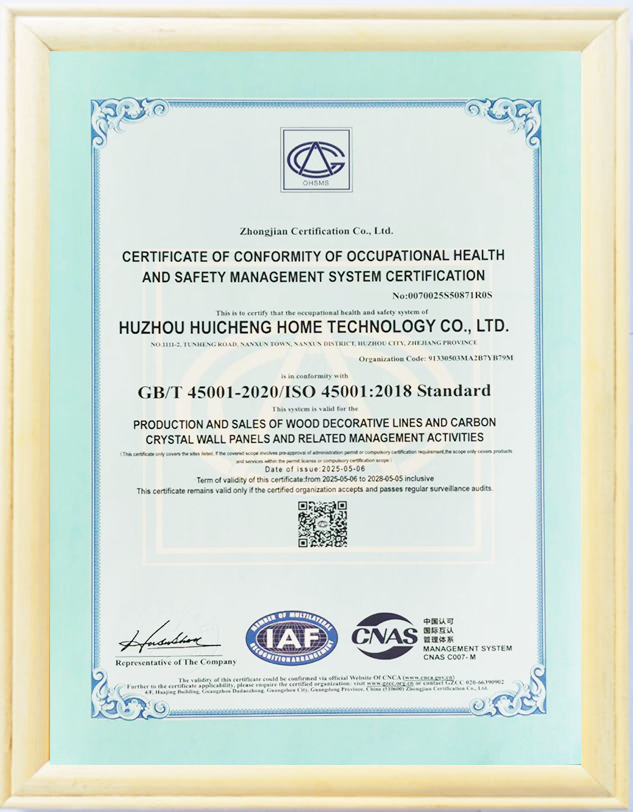
The following certificates are provided for reference. Buyers can request current documentation and scope details during supplier qualification.
RESPONSIBLE PRODUCTION
The company describes transparent, compliant wood procurement as a duty to the environment: suppliers are verified so that the legal and credible provenance of every piece of wood can be confirmed. Buyers can discuss relevant sourcing documentation and project-specific quality expectations.
Explore Sustainability →Supplier verification and material provenance considerations.
Inspection across production and packaging stages.
Profiles and finishes aligned to project needs.
SUPPLIER QUESTIONS
Quick answers on customization, materials, finishes and certification. For anything project-specific, send us your drawings and quantities.
Read the Full FAQ →Yes. The factory handles OEM drawing processing and offers ODM design support. Materials, sizes and colours can all be customized according to customer requirements.
Skirting boards and mouldings are produced in MDF and solid wood such as pine, white pine and white oak, while acoustic wall panels use polyester fibreboard cores. Surfaces include filler-primed, pearl white, painted, wood veneer or PVC wrapped and UV printed finishes.
Daily capacity is above 15,000 metres, of which more than 8,000 metres can be coated products. Please share your estimated quantities so the team can confirm scheduling.
The management system certificates shown above cover ISO 9001:2015 for quality, ISO 14001:2015 for the environment and ISO 45001:2018 for occupational health and safety. Current documentation can be requested during supplier qualification.
The factory is in Nanxun, Huzhou, Zhejiang Province, China, an area known as the Capital of Wooden Flooring. Visitors are welcome by appointment through the enquiry form.
PROJECT ENQUIRY
Send material preferences, drawings, dimensions, surface finishes and estimated quantities. Our team can review your request and discuss the next steps.
Email[email protected]
Phone+86-153 7223 8585
AddressHengjie Innovation Entrepreneurship Industrial Park, Building 6, No. 1111, Tunheng Road, Hengjie, Nanxun Town, Nanxun District, Huzhou City, Zhejiang Province, China
QUICK CONTACT
Share your product or sourcing requirements.