 English
 Español
In interior finishing and architectural detailing, the selection of trim products plays a significant role in defining the overall appearance and functionality of a space. Among the many available options, Decorative Top Corner Moulding is widely recognized for its ability to enhance aesthetics while contributing to structural order and design cohesion. Although many types of corner trim are used in residential, commercial, and renovation projects, the differences between generic corner trims and decorative top corner moulding are substantial.
Definition and Core Purpose of decorative top corner moulding
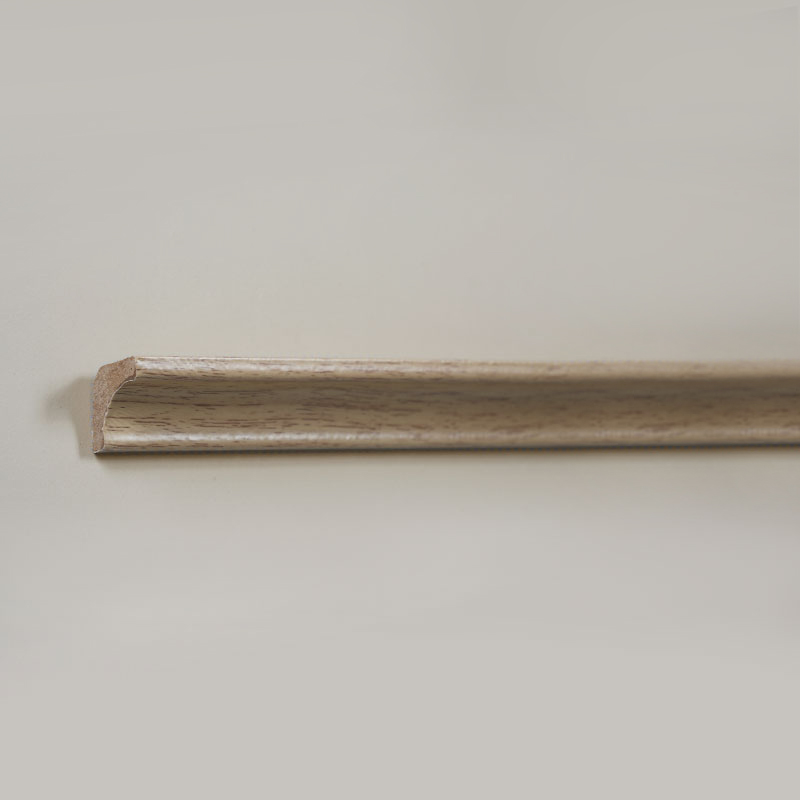
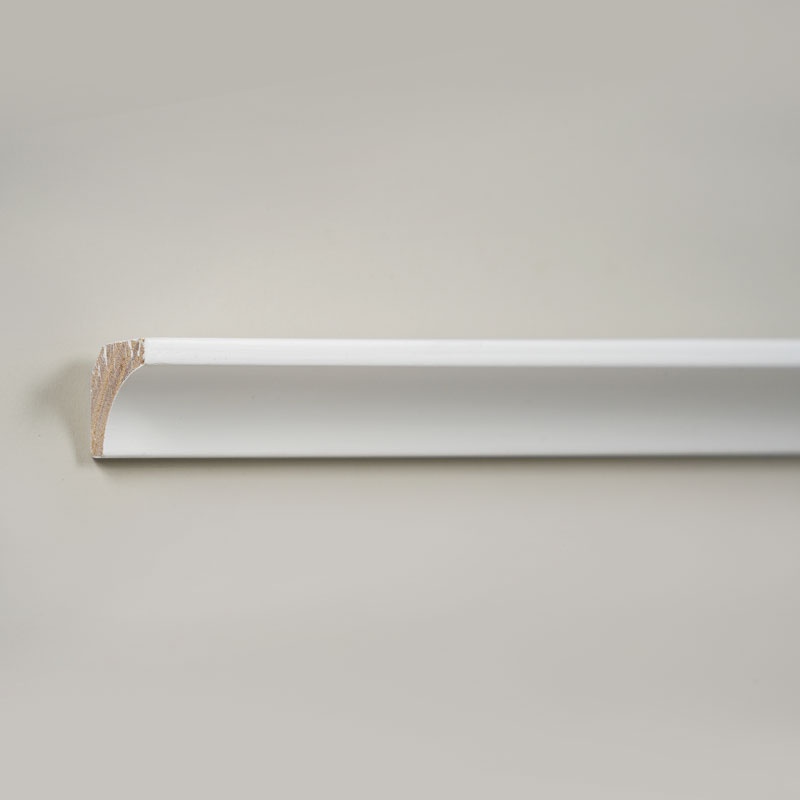
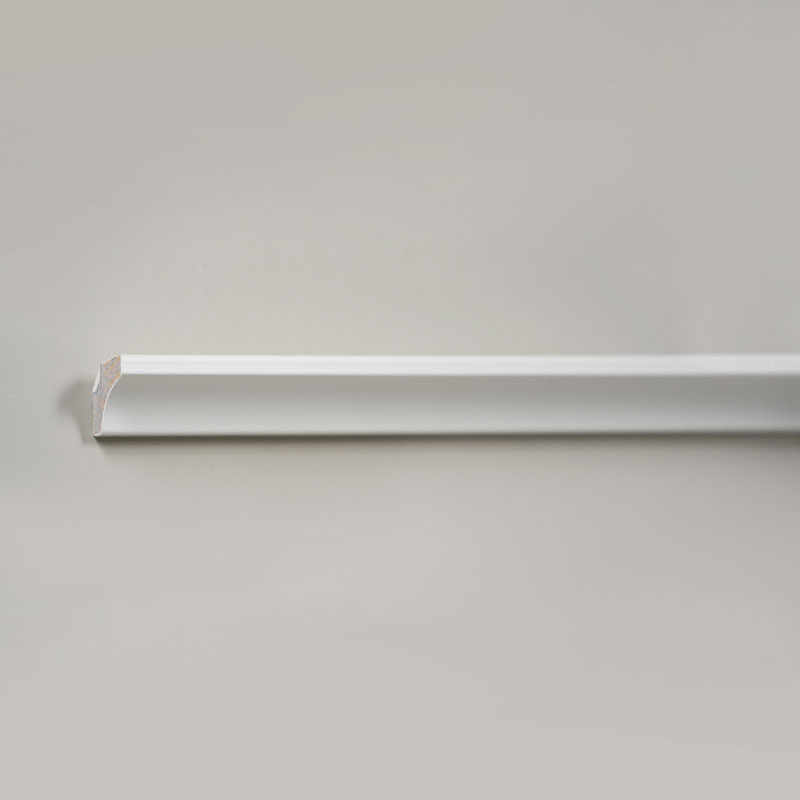
Decorative top corner moulding is a type of architectural trim installed at the upper corners of walls, door frames, cabinets, or ceiling intersections. Its primary function is to introduce ornamentation and create a refined transitional point where two surfaces meet. Unlike standard corner trim, which generally focuses on concealment and surface protection, decorative top corner moulding emphasizes visual enhancement.
Standard corner trim typically provides basic coverage for joints and prevents visible imperfections from detracting from the wall’s appearance. It may be used chiefly for impact protection, alignment concealment, or seam coverage, and these trims often utilize minimalistic profiles designed solely for utility.
In contrast, decorative top corner moulding serves a dual purpose:
- Aesthetic enhancement: Its profiles include ornamental designs, reliefs, contoured surfaces, or carved shapes.
- Architectural accenting: It can reinforce the stylistic direction of a room, supporting classical, modern, transitional, or decorative architectural themes.
Because of these expanded design expectations, decorative top corner moulding is not merely a construction finishing material but also a decorative component that bears visual significance. This distinction shapes its structure, material selection, and installation technique.
Material Composition Differences Compared with Standard Corner Trim
Material selection significantly affects how decorative top corner moulding differs from other corner trim products. Corner trim for general protection or coverage may be produced from low-detail or simple materials designed for straightforward utility. Common materials for basic corner trim include PVC, simple wood profiles, or lightweight polymer strips.
Decorative top corner moulding, however, is often produced using materials capable of supporting moderate to high levels of surface detail. These materials may be engineered for improved pattern reproduction, dimensional stability, and paint adhesion. They may include:
- Engineered polymers suitable for decorative contouring
- High-density wood composites
- Traditional wood profiles designed for carving or shaped detailing
- Polymeric materials suited for light ornamentation
While the specific materials vary by manufacturer and model type, the key difference lies in the detail support capacity. Decorative top corner moulding requires materials that can maintain crisp profiles, consistent reliefs, and stable shapes during installation and long-term use. This expectation differentiates it from standard corner trim, which relies more heavily on durability and impact resistance rather than ornamental precision.
In addition, decorative top corner moulding typically features surface treatment compatibility, enabling it to be finished with paints or coatings without losing design clarity. This reinforces its role as a decorative component rather than a purely protective one.
Structural and Visual Design Differences
One of the most notable distinctions between decorative top corner moulding and standard corner trim products lies in their structural forms. Standard corner trim is usually designed with basic angle profiles or smooth edges. Its primary purpose is to cover joints or mask inconsistencies; therefore, its profile seldom includes distinctive ornamentation.
Decorative top corner moulding, in contrast, incorporates structured patterns. These may include:
- Subtle curves
- Layered contours
- Raised relief elements
- Minimalist or classical motifs
- Edge accents designed to complement ceiling moulding or wall panels
Whether used in contemporary or traditional settings, decorative top corner moulding functions as a visual anchor in the corner area. Its presence supports other architectural features such as crown moulding, wall panels, ceiling beams, or doorcase trims. As a result, it offers a richer design contribution than products like simple L-shaped or rounded corner guards.
The design complexity of decorative top corner moulding often results in more refined production methods that enhance profile precision. Standard corner trims do not require this degree of detail replication, making decorative top corner moulding distinct in function and appearance.
Functional Differences in Practical Use
Although decorative top corner moulding and standard corner trim products both involve corner finishing, their functional applications diverge significantly.
Decorative function vs. protective function
Standard corner trim primarily acts as a protective or structural finishing element. It is typically used to:
- Provide corner reinforcement
- Protect vulnerable wall edges
- Cover inconsistencies between two intersecting surfaces
- Support smooth paint finishing
Decorative top corner moulding, however, is defined by aesthetic importance. It enhances:
- Visual coherence at upper corner intersections
- Architectural identity
- Perceived luxury or refinement in interior design
- Design continuity across wall and ceiling transitions
Selective placement vs. broad usage
Standard corner trim can be used anywhere corners require surface protection. Decorative top corner moulding is more selective, often used in:
- Feature areas
- Entryways
- Accent walls
- Cabinet upper corners
- Ceiling intersections
- Decorative niches
By contrast, standard corner trim often appears in high-traffic areas, utility environments, or commercial spaces where durability takes priority over aesthetic enhancement.
Installation Requirements and Technical Considerations
Another important distinction lies in how the products are installed. While both product types aim to fit at surface intersections, the installation requirements for decorative top corner moulding often demand greater care.
Precision alignment
Because decorative top corner moulding contains design details, its alignment must be precise. Any deviation becomes visually noticeable. Standard corner trim, with simpler geometry, allows more tolerance during installation.
Cutting and joining
Decorative top corner moulding usually requires:
- Clean, accurately measured cuts
- Proper inner and outer corner alignment
- High-quality finishing to maintain ornament continuity
This expectation is higher than that for standard corner trim, which may use straightforward straight cuts, particularly when the product has a uniform angle profile.
Surface preparation and adhesion
Decorative top corner moulding may demand well-prepared surface conditions to prevent gaps around detailed edges. Standard trim may allow for basic adhesive or nail-based installation without significant surface modification.
Finishing after installation
Decorative top corner moulding may require:
- Priming before painting
- Edge smoothing to maintain decorative transitions
- Careful joint filling to preserve visual unity
These finishing steps further differentiate it from simpler corner trim products.
Design Compatibility and Integration with Other Interior Elements
Decorative top corner moulding is often selected because it integrates seamlessly with broader interior design systems. Standard corner trim generally stands alone as an independent finishing element, but decorative top corner moulding is commonly part of a coordinated architectural set.
Decorative top corner moulding may support coordination with:
- Ceiling moulding
- Wall panels
- Decorative frames
- Cabinet edging
- Crown moulding
- Doorcase accents
In this sense, decorative top corner moulding enhances design consistency. Its form contributes to a cohesive interior scheme, whether the style is modern with minimal curves or traditional with carved details.
Standard corner trim rarely plays such a stylistic role and may appear as a neutral component rather than a decorative feature.
Performance and Durability Differences
Durability considerations differ significantly between decorative top corner moulding and standard corner trim.
Standard corner trim products emphasize physical durability and resistance to impact, particularly in high-traffic environments. They may be selected specifically for protection against collisions, abrasions, or cleaning tools.
Decorative top corner moulding, however, balances durability with design preservation. While still stable and long-lasting, the primary emphasis is on maintaining ornamental detail clarity, surface texture retention, and paint adhesion performance. Its durability considerations focus on:
- Long-term shape stability
- Resistance to deformation around detailed edges
- Consistency of decorative patterns under paint layers
Therefore, while both product types can provide many years of performance, they do so for different functional reasons.
Visual Impact and Architectural Value
The most prominent distinction between decorative top corner moulding and standard corner trim is the visual impact. Decorative top corner moulding provides architectural value that enhances interior depth and style. It frames the corner area as a design feature rather than a structural necessity.
This visual impact supports the creation of:
- Balanced room geometry
- Enhanced transitions between surfaces
- A defined architectural character
- Harmonized ceiling and wall relationships
Standard corner trim, by contrast, delivers a straightforward and neutral appearance. Its purpose is functional, and it does not contribute significantly to the architectural style of a room.
Comparison Table for Quick Reference
Below is a concise table summarizing the key differences between decorative top corner moulding and standard corner trim.
| Aspect | decorative top corner moulding | Standard Corner Trim |
|---|---|---|
| Primary Purpose | Decoration and visual enhancement | Structural protection and coverage |
| Design Detail | Detailed, contoured, ornamental | Simple, minimal, utilitarian |
| Material Expectations | Supports fine detailing | Basic impact-resistant materials |
| Installation Requirements | Precise alignment and finishing | Basic cutting and attachment |
| Placement | Selective decorative zones | Broad functional use |
| Visual Impact | High architectural value | Low visual presence |
| Integration | Often part of design systems | Usually standalone |
| Buyer Focus | Aesthetic consistency | Practical protection |
Practical Scenarios Where decorative top corner moulding Outperforms Standard Trim
Decorative top corner moulding offers advantages in many applications where visual refinement is essential. Such scenarios include:
Residential interiors with defined architectural themes
Homes featuring classic, transitional, or contemporary styles often benefit from decorative top corner moulding because it reinforces design cohesion and elevates the perceived quality of the space.
Renovations emphasizing ornamental restoration
Restoration projects that aim to preserve or highlight decorative elements commonly use decorative top corner moulding. This contrasts with standard trim, which may not contribute adequately to the intended aesthetic outcome.
Feature walls and design focal points
Decorative top corner moulding can highlight the edges of a feature wall, accentuating visual symmetry and depth.
Cabinet and furniture upper corner finishing
It can be applied to cabinetry or built-in furniture to provide a refined, integrated look that standard trim cannot achieve.
Decorative ceilings and angled transitions
When combined with ceiling moulding, decorative top corner moulding enhances the transition between structural levels and offers more visual definition.
These examples demonstrate the broader architectural contribution of decorative top corner moulding compared with standard corner trim, which is typically limited to impact resistance and surface coverage.
Long-Term Value and Maintenance Considerations
Long-term performance factors also differentiate decorative top corner moulding from standard options. Although both require minimal routine maintenance, decorative top corner moulding’s longevity is tied closely to the preservation of its surface detail and finish.
Key maintenance considerations include:
- Regular surface cleaning using non-abrasive methods to avoid damaging detailed contours.
- Periodic repainting, ensuring that decorative shapes remain clear and well-defined.
- Proper environmental conditions, where humidity levels do not compromise moulding shape.
- Inspection of joint areas to maintain continuity and prevent gaps that may interrupt the decorative appearance.
Standard corner trim requires fewer aesthetic maintenance steps because its purpose is functional rather than detail-oriented. However, decorative top corner moulding maintains its value primarily through sustained visual performance.
Conclusion
Decorative top corner moulding differs fundamentally from standard corner trim products in design, application, purpose, installation requirements, and visual impact. While standard corner trims offer structural protection and coverage, decorative top corner moulding contributes architectural value by enhancing the appearance and character of interior spaces. It integrates with broader design systems, supports detailed finishes, and helps define corner transitions with ornamentation or stylistic emphasis.
FAQs Related to Decorative Top Corner Moulding
1. What is decorative top corner moulding typically used for?
It is primarily used to enhance the appearance of upper wall corners, ceiling intersections, and architectural features while contributing to the overall design style of a space.
2. How is decorative top corner moulding installed?
It requires precise cutting, alignment, and finishing to ensure continuity of decorative details. Adhesives or small fasteners may be used depending on the material type.
3. Can decorative top corner moulding be painted?
Yes. It is usually designed for paint compatibility, allowing users to achieve a cohesive finish with surrounding trims or surfaces.
4. How does decorative top corner moulding differ in durability from standard corner trim?
It focuses on preserving detailed surface features, while standard trim emphasizes impact resistance. Both offer durability but serve different functional roles.
5. Is decorative top corner moulding suitable for modern interiors?
Yes. Modern profiles with minimalistic designs are available, allowing it to complement contemporary architectural themes.
6. Can it be used with other mouldings such as crown or base moulding?
Yes. It integrates effectively with various moulding systems to create consistent and coordinated architectural detailing.